InsertChat journal · field notes for customer-facing AI
Build assistants people can trust.
Practical advice for launching branded assistants that capture intent, route support, and show what visitors need.
Current edition
135 articles on grounded answers, useful workflows, launch decisions, and measurable customer outcomes.
Follow via RSS
AI Phone Receptionist Setup Checklist for Approved Answers
Build a call-ready source register that defines what your AI receptionist may answer, collect, do, refuse, and escalate.
Browse the archive
Latest field notes

Chatbot Booking Flow Checklist: Test Every State
Test answers, routing, calendar states, confirmation, mobile usability, notifications, and fallback before opening chatbot booking to visitors.
Read field note

RAG Chatbot Evaluation: A Source-Trace Test
Test whether a RAG chatbot retrieves approved sources, supports its answers, handles conflicts, and abstains when guidance is missing.
Read field note

Chatbase Alternatives: Choose by Deployment Fit
Use deployment-fit gates to decide whether to stay with Chatbase, verify an unknown, trial an alternative, or consider migration.
Read field note

Cart Abandonment Chatbot: A Recovery Decision Tree
Design a permission-aware cart recovery flow that diagnoses blockers, uses approved answers, escalates risk, and stops without pressure.
Read field note

Custom Domain Checklist for a White-Label AI Chatbot
Use four evidence gates to approve, fix, narrow, or hold a white-label chatbot custom-domain cutover before changing public routing.
Read field note

AI Customer Support Automation: Build a Go/No-Go Pilot Brief
Build a one-page brief for one bounded support pilot, with approved sources, human boundaries, tests, cost inputs, and clear launch and expansion gates.
Read field note

Set AI Chatbot Service Levels Without Impossible Promises
Build a defensible chatbot support SLA with clear severity, ownership, clock, escalation, dependency, and closure rules.
Read field note

Test a Chatbot Before Adding a New Support Language
Use a release matrix and seven separate tests to approve, narrow, repair, or postpone a multilingual customer support AI rollout.
Read field note

Before You Consolidate AI Tools, Run a Cost Gate
Compare full operating costs and workflow requirements to choose separate AI tools, one workspace, or a deliberate hybrid.
Read field note

Stress-Test an AI Chatbot Reseller Quote Before Approval
Calculate fully loaded contribution and break-even clients before approving, narrowing, piloting, or pausing a reseller quote.
Read field note

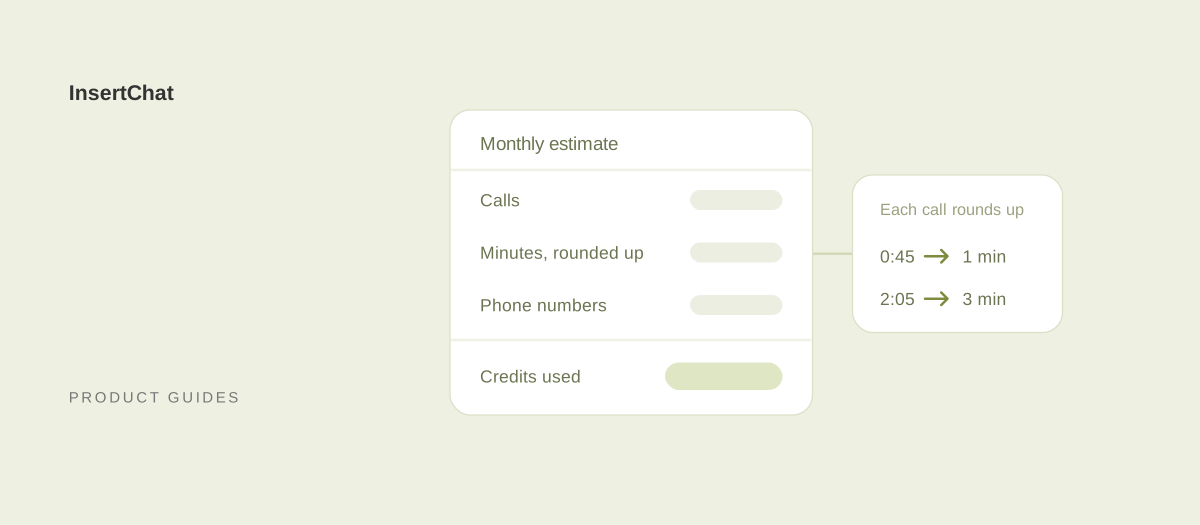
AI Receptionist Cost: Calculate One Call Workflow Before You Buy
Calculate AI receptionist cost for one call workflow, including platform, usage, labor, connected services, and unresolved commercial terms.
Read field note

Apps Like ChatGPT for Business Teams: A Renewal Audit
Build a dated AI tool register and make defensible keep, combine, replace, or retire decisions before each renewal.
Read field note

Missed Call Automation: Build a Closed Recovery Loop
Map, test, and measure a missed-call workflow that preserves caller intent, assigns ownership, and completes the appropriate next step.
Read field note

Embed an AI Chatbot on Your Website by Matching the Surface to the Visitor Job
Choose the right chatbot surface, page placement, trigger, and rollback path for a controlled website release.
Read field note

How to Test a Chatbase Alternative Before You Switch
Use a controlled replacement trial, matched prompts, an evidence log, and severity-weighted decision gates to test a Chatbase alternative safely.
Read field note

Multi-Client Chatbot Rollout Plan: Scale by Exception Load, Not Client Count
Use a portfolio control board and phase gates to admit, pilot, replicate, pause, narrow, or prepare client chatbots for offboarding based on evidence and operating capacity.
Read field note

Product Recommendation Chatbot: A Constraint-First Framework
Design and test a product recommendation chatbot with explicit eligibility rules, approved evidence, safe handoffs, and practical pilot gates.
Read field note

Shopify Chatbot Integration Checklist: Five Go-Live Gates
Decide whether one Shopify chatbot workflow should launch, be revised, or pause based on sources, access, tests, ownership, and evidence.
Read field note

White Label Chatbot Migration: A Reversible Plan
Inventory dependencies, prove service parity, pilot a representative assistant, and cut over with evidence-based acceptance and rollback rules.
Read field note

White-Label Chatbot Migration: A Controlled Cutover
Build a dated portability register, test one client workflow in parallel, and cut over with explicit acceptance and rollback gates.
Read field note

AI Chatbot Agency Pricing: Calculate a Client Price Floor
Calculate one client’s expected and adverse price floors, test the proposed fee, and choose whether to quote, narrow, pilot, or decline.
Read field note

AI Chatbot Client Offboarding Checklist: Renew, Transfer, Pause, or Close
Choose and authorize the right client chatbot route before changing live access, data, domains, integrations, deployments, credentials, or billing.
Read field note

AI Chatbot Client Offboarding: Five-State Exit Checklist
Close or transfer a live client assistant with clear owners, dependencies, access checks, evidence, and an accountable exit register.
Read field note

Calculate the Real Cost of AI Customer Service Automation
Build a dated workflow cost estimate, calculate break-even, and decide whether to trial, narrow, postpone, or reject automation.
Read field note

Calculate Your AI Chatbot Agency Price Floor
Build a dated client-level worksheet to test setup and monthly chatbot costs before approving, raising, narrowing, or declining a quote.
Read field note

AI Chatbot Reseller Break-Even: Cost and Capacity
Calculate platform-only, cash, and labor-adjusted break-even, then test whether your client target fits delivery capacity.
Read field note

AI Chatbot Reseller Program Red Flags: When to Pause or Walk Away
Identify AI chatbot reseller program red flags, score their severity, document unresolved risks, and decide when to proceed, pause onboarding, or walk away.
Read field note

AI Model Routing for Business: A Task-Level Policy
Classify business tasks, assign one of four model routes, test the path, and change it only when your team’s evidence supports the move.
Read field note

AI Workspace for Business: A 7-Part Fit Test
Use a seven-part scorecard and bounded trial to decide whether to consolidate AI workflows, keep specialist tools, or pause.
Read field note

AI Workspace Governance: A Six-Layer Boundary Matrix
Use a six-layer matrix to decide which AI workflows can share context, which need separation, and which should wait for stronger controls.
Read field note

Chatbot Service Unit Economics: An Account Operating System
Map each chatbot account’s lifecycle costs, workload, contribution, and capacity demand to make evidence-based portfolio decisions.
Read field note

How to Consolidate AI Tools Without Breaking Workflows
Inventory AI-supported workflows, classify migration options, test parity, and retire subscriptions only after operational and contract checks pass.
Read field note

Who Should Your Chatbot Let Book an Appointment?
Use a route-change test to keep only the questions that control calendar eligibility, appointment type, routing, or human review.
Read field note

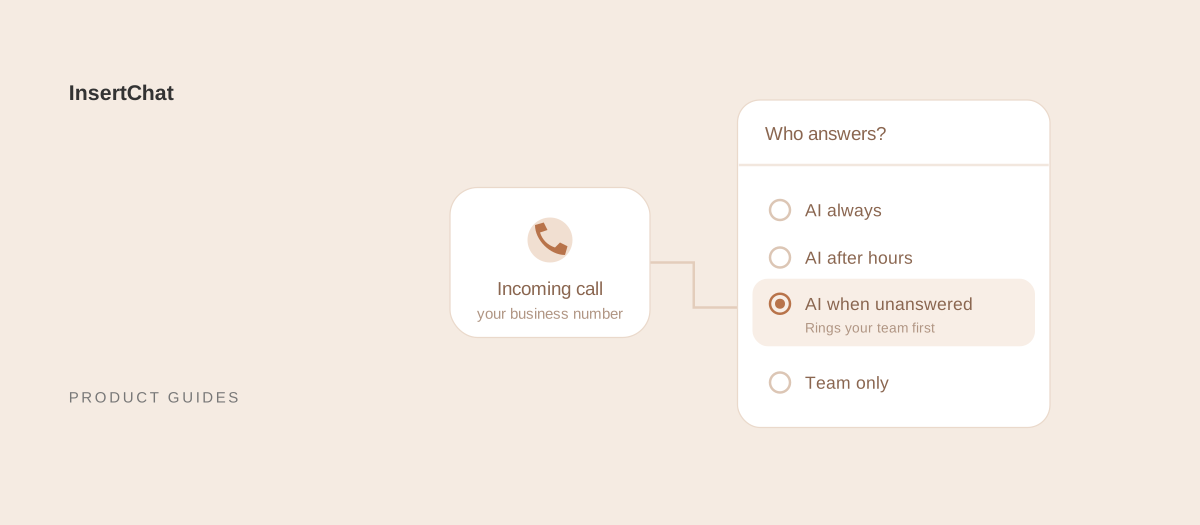
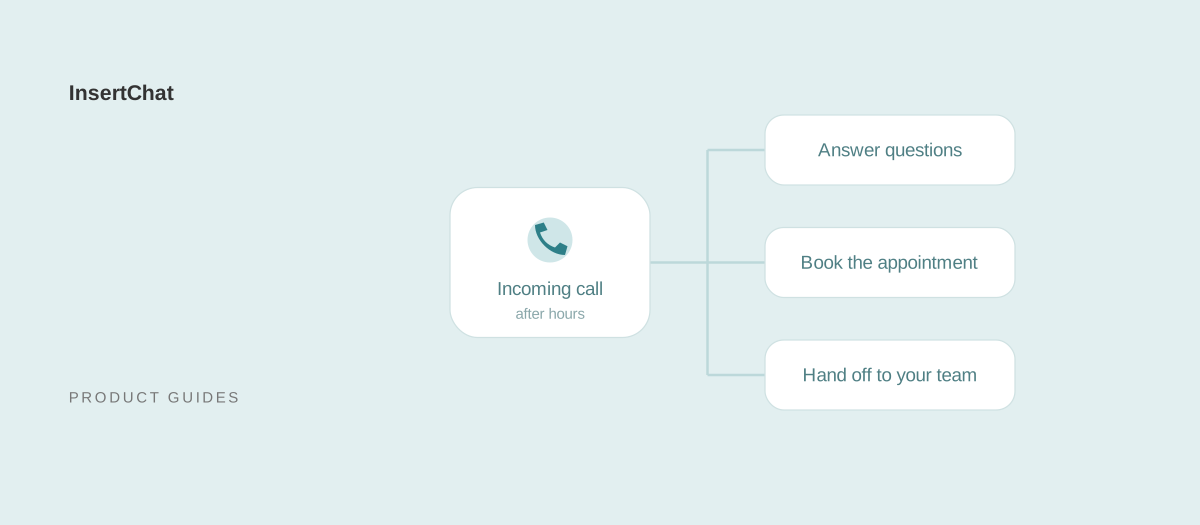
After-Hours Call Handling: Build an Operating Policy
Create scripts, escalation rules, transfer fallbacks, and follow-up ownership for consistent after-hours call handling.
Read field note

ChatGPT Replacement for Your Website: A Two-Layer Test
Classify the AI job, test public readiness, and decide whether to keep your current tool, add a website assistant, or use both.
Read field note

AI Chatbot for Lead Generation: Five Decision Gates
Turn one known website lead leak into a controlled path for approved answers, qualification, booking, routing, and follow-up.
Read field note

How to Run an AI Chatbot Pilot for Your Website
Build a bounded website chatbot pilot with clear baselines, failure gates, handoff rules, and a launch, revise, or stop decision.
Read field note

White Label Chatbot Client Offboarding Runbook
Use an asset register and phased checklist to separate chatbot assets, remove access, resolve records, and document a client exit.
Read field note

Chatbase Pricing: Calculate Your First-Year Cost
Build a dated cost worksheet to decide whether to upgrade Chatbase, trial an alternative, or pause until critical terms are verified.
Read field note

Remove Powered by Chatbase: A Five-Surface Audit
Inspect every customer-facing branding surface, document what appears, and decide whether to stay, verify removal, or evaluate an alternative.
Read field note

Choose an AI Chatbot for Your Website With an 8-Part Test
Test website chatbots for reliable answers, lead capture, safe handoff, and workflow fit with a practical 16-point scorecard.
Read field note

AI Receptionist for Small Business: Missed-Lead Checklist
Test whether an AI receptionist can answer missed calls, capture qualified leads, book appointments, and route complete follow-up context.
Read field note

Map the Ecommerce Chatbot Customer Journey by Need
Map shopper questions to journey stages, response types, sources, and escalation triggers, then choose a focused first use case.
Read field note

What Should You Automate First in Customer Service?
Rank support requests with five practical factors, then select one bounded workflow to automate, prepare, or keep human-owned.
Read field note

Website Visitors Not Converting to Leads? Find the First Leak
Trace where qualified visitors abandon the inquiry path, establish a baseline, and choose the first measurable lead leak to test.
Read field note

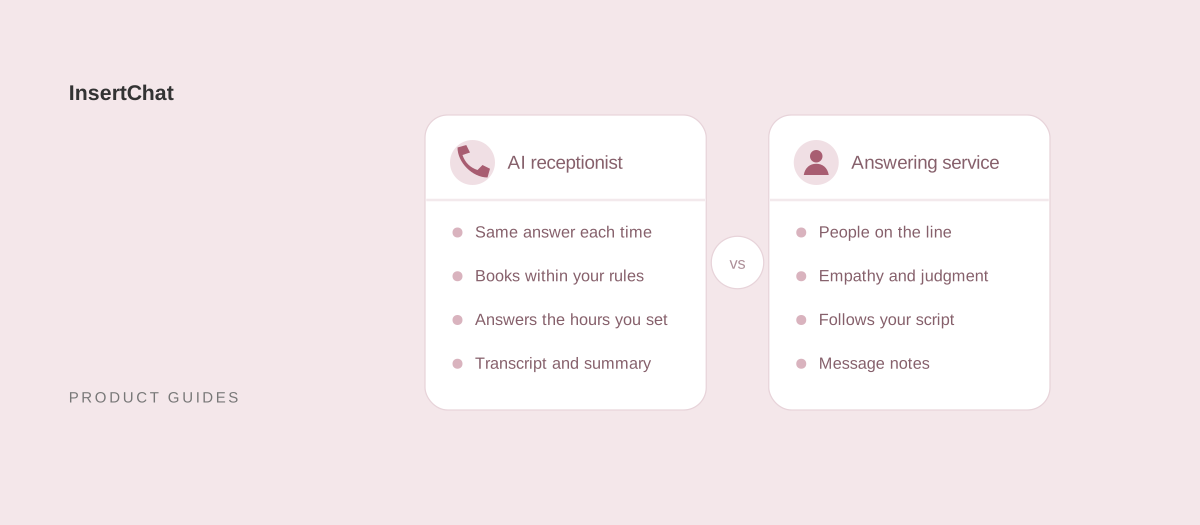
AI Receptionist vs Answering Service: Pick Your Model
Compare AI, human, and hybrid call coverage by call type, judgment, escalation risk, control, availability, and review work.
Read field note

AI Assistant Agency Capacity Planning by Workload
Build an event-based capacity sheet, reserve exception headroom, and set account ceilings and staffing triggers from observed demand.
Read field note

Build an AI Assistant Service Catalog Clients Can Choose
Use an eight-field worksheet and five admission tests to create clear, repeatable AI assistant service choices.
Read field note

AI Chatbot Reseller Niches: Choose a Market
Compare AI chatbot reseller niches by buyer access, workflow fit, content readiness, repeatability, and delivery risk.
Read field note

How to Choose a White-Label AI Chatbot Platform
Choose a white-label AI chatbot platform with shortlist gates, sourcing checks, trial evidence, alternatives, and value readiness.
Read field note

How to Sell AI Chatbot Services as an Agency
Build a credible agency sales process for AI chatbot services, from positioning and demos to proposals, objections, readiness, and CTAs.
Read field note

How to Pick a Niche Before Launching an AI Chatbot Reseller Offer
Use a practical scorecard to choose one AI chatbot reseller niche to validate before building sales materials.
Read field note

When an Agency Should Not Sell an AI Chatbot Yet
Use seven readiness filters to decide when to pause, narrow, decline, or sell prep work before offering a client chatbot.
Read field note

When Is a White-Label AI Chatbot Worth Paying For?
Decide if a white-label AI chatbot is worth paying for using value drivers, cost categories, readiness signals, and pilot rules.
Read field note

AI Chatbots for Coaches and Consultants: Bundle Ideas
Choose coach and consultant chatbot bundles for intake, resources, follow-up, and handoff without replacing human expertise.
Read field note

Client Objections to AI Chatbots and How Agencies Should Answer
Use a practical response framework for ai chatbot client objections around accuracy, security, workload, cost, brand voice, handoff, and fit.
Read field note

White Label AI Chatbot Alternatives by Fit
Compare white-label platforms, custom builds, embedded tools, workflow tools, and manual validation before choosing a path.
Read field note

AI Chatbot Proposal Template Sections for Agencies
Build a chatbot proposal that defines value, scope, client responsibilities, verification gaps, and next steps before work starts.
Read field note

AI Chatbots for Local Business Resellers
Choose local business chatbot packages that are easier to explain, scope, review, and measure without overpromising.
Read field note

White-Label AI Chatbot Demo Checklist
Use this demo checklist to test branding, workflow fit, answer quality, security questions, analytics, and support before you commit.
Read field note

AI Chatbot Demo Script for Agency Sales Calls
Run client chatbot demos that prove one workflow, use approved source content, handle misses, and close with a clear next step.
Read field note

AI Chatbots for Email Marketing Agencies
Plan email-agency chatbot offers around campaign briefs, segment prompts, copy guidance, review controls, and one starter validation test.
Read field note

Build vs Buy for a White-Label AI Chatbot
Choose whether to buy, build, or use a hybrid white-label AI chatbot path based on timeline, control, integrations, and upkeep.
Read field note

AI Chatbots for SEO Agencies: Reseller Use Cases to Package
Choose lower-risk SEO chatbot workflows to package first, with internal use cases, accuracy limits, and a starter package.
Read field note

How to Pitch an AI Chatbot to Existing Agency Clients
Turn known client pain, website evidence, pilot scope, and honest limits into a credible chatbot pitch for existing accounts.
Read field note

White-Label AI Chatbot Platform Features to Compare
Compare white-label AI chatbot platform features by the business fit each one proves before you commit to a vendor.
Read field note

AI Chatbot Services Agencies Can Offer by Client Type
Choose the right first chatbot service offer by agency model, client content readiness, risk, and maintenance burden.
Read field note

AI Chatbot Governance for Multi-Client Agencies
Build agency chatbot governance with owners, client approvals, change logs, permission reviews, and incident basics across accounts.
Read field note

AI Chatbots for Content Agencies and Newsletter Teams
Plan chatbot workflows for archive navigation, newsletter support, audience Q&A, and editorial guardrails without diluting voice.
Read field note

How to Measure AI Chatbot Results for Reseller Clients
Define chatbot usage, quality, workflow, reporting, and optimization metrics for live reseller client engagements.
Read field note
AI Chatbots for Ecommerce Agencies
Choose ecommerce chatbot workflows by journey stage, static content, integration risk, payment boundaries, and handoff needs.
Read field note
Human Handoff Rules for AI Chatbots
Define when an AI chatbot should stop answering, what it should say, what context to collect, and who owns the handoff.
Read field note
Security Questions Clients Ask About AI Chatbots
Learn how to route client AI chatbot security questions to vendor documents, legal review, or a bounded answer.
Read field note
White Label AI for Agencies: Choose, Package, Sell
Decide whether to proceed, pilot, narrow, verify, or pause a white-label AI offer before selling it to clients.
Read field note
AI Chatbots for Web Design Agencies After Launch
Plan a post-launch chatbot add-on with timing, content readiness, care plan scope, brand fit, QA, and maintenance checks.
Read field note

AI Chatbot Testing Checklist for Client Launch
Test chatbot accuracy, boundaries, brand voice, handoffs, and client approval evidence before you decide whether it is ready to launch.
Read field note

Branded AI Chatbot Data Privacy Before Collection
Map chatbot data, minimize collection, assign ownership, and resolve retention and consent decisions before accepting visitor input.
Read field note
AI Chatbots for SEO Content Discovery
Use chatbot conversations to find content gaps, FAQ needs, internal link prompts, and SEO retainer actions without overstating demand.
Read field note

How to Audit Client Content Before AI Chatbot Setup
Turn scattered client content into an approved, bounded source pack before chatbot configuration begins.
Read field note

How to Set AI Chatbot Guardrails for Client Answers
Create a testable answer policy that tells your chatbot when to answer, clarify, decline, or escalate customer questions.
Read field note
AI Chatbots for Local Marketing Agencies
Plan local business chatbot offers around service-area answers, lead capture, source content, and update ownership.
Read field note

AI Chatbot Client Onboarding Checklist for Resellers
Collect the goals, content, rules, owners, access, and platform decisions needed to move a signed chatbot project into build.
Read field note

White Label AI Chatbot Security Questions for Buyers
Ask better data, access, model, retention, and incident questions—and turn vendor answers into an evidence-based approval record.
Read field note
AI Chatbot Implementation for Agencies
Map each client chatbot stage, owner, artifact, and decision gate from onboarding through launch, maintenance, and reporting.
Read field note

How to Choose an AI Chatbot Reseller Program
Compare AI chatbot reseller programs by fit, terms, support, security, pricing risk, and due-diligence gaps before you commit.
Read field note

Launch a Branded AI Chatbot With Phase Gates
Use a staged launch roadmap to assign owners, prepare sources, test readiness, and improve a branded AI chatbot after publishing.
Read field note
AI Chatbot Implementation Mistakes Agencies Should Avoid
Spot seven chatbot implementation risks before launch, prevent each one, and decide when to delay or narrow scope.
Read field note
AI Chatbot Reseller Program Red Flags to Avoid
Spot AI chatbot reseller program red flags before unclear terms, data gaps, or support issues put client relationships at risk.
Read field note

Post-Launch Optimization for AI Chatbots: What to Improve First
Use first-month chatbot conversations to prioritize answer fixes, unresolved questions, conversion paths, and monthly updates.
Read field note
AI Chatbot Reseller Pricing Models: What to Compare
Compare chatbot reseller pricing models, cost inputs, labor, usage risk, and quote-readiness before setting client prices.
Read field note
AI Chatbot Testing Checklist Before Launch
Run pre-launch QA for a white-label AI chatbot with tests for accuracy, coverage, brand voice, escalation, and workflow paths.
Read field note
How to Maintain an AI Chatbot After Launch
Plan weekly, monthly, and quarterly chatbot maintenance tasks that keep client answers useful and renewal reviews defensible.
Read field note
AI Chatbot Brand Voice Guide for Consistent Answers
Define chatbot tone, structure, vocabulary, uncertainty wording, escalation language, and client overrides for branded AI answers.
Read field note
AI Chatbot QA Checklist Before Client Launch
Run a pre-launch chatbot QA pass with test prompts, failure logs, retest rules, and client signoff gates before publishing.
Read field note
Questions to Ask Before Joining an AI Chatbot Partner Program
Use this vendor-call question bank to compare AI chatbot partner programs by role, margin, ownership, security, support, and exit terms.
Read field note

AI Chatbot Knowledge Base Preparation
Clean, approve, and organize source content before chatbot configuration so answers have a stronger factual base.
Read field note

Best AI Chatbot Reseller Program Features to Look For
Compare AI chatbot reseller program features by the reseller jobs they support: sales, onboarding, branding, controls, support, and expansion.
Read field note

How to Train a Client Chatbot on Website Content
Prepare client website content for chatbot training with source selection, cleanup, exclusions, freshness checks, and gap logs.
Read field note

AI Chatbot Onboarding Checklist for Agency Clients
Collect the client goals, content, owners, access, approvals, and baseline inputs your agency needs before chatbot build work starts.
Read field note

AI Chatbot Reseller Program Checklist Before You Apply
Verify commercial, billing, branding, feature, security, and support questions before joining a chatbot reseller program.
Read field note

Choose Your First Branded AI Chatbot Workflow
Pick one branded AI chatbot workflow with clear value, owned-source answers, handoff rules, and a measurable outcome.
Read field note

AI Chatbot Proposal Checklist for Resellers
Use this AI chatbot proposal checklist to define scope, inputs, acceptance criteria, support, and open platform questions.
Read field note

AI Chatbot Reporting Metrics Clients Can Act On
Choose client-facing AI chatbot reporting metrics that show usage, answer quality, leads, content gaps, and next actions.
Read field note

White Label AI Sales Collateral Agencies Need Before Launch
Build the seven sales assets agencies need to pitch white-label AI without vague demos or unsupported vendor claims.
Read field note

AI Chatbot Proposal Template Clients Can Approve
Use this AI chatbot proposal template to define goals, scope, client responsibilities, review steps, success measures, and exclusions.
Read field note

How Agencies Should Explain AI Data and Security to Clients
Answer client chatbot security questions with clear data, access, retention, vendor documentation, and escalation rules.
Read field note

Objection Handling for Selling AI Chatbots to Clients
Handle AI chatbot sales objections by narrowing scope, clarifying inputs, setting safeguards, and spotting poor fit.
Read field note
White Label AI Pricing Models Agencies Can Test
Compare white-label AI pricing models by setup work, support load, usage risk, client complexity, and assumptions to validate.
Read field note

AI Chatbot Client Onboarding Checklist: Build the Approval Packet Before Setup
Turn a signed white-label chatbot project into an approved, build-ready packet without guessing through missing client inputs.
Read field note

AI Chatbot Pitch Deck Outline: A 10-Slide Decision Chain
Build a client-ready chatbot deck that moves from verified pain to a bounded pilot without relying on feature lists or unsupported ROI claims.
Read field note
How to Evaluate White Label SaaS AI Before You Resell It
Use a due-diligence checklist to verify product fit, branding, data, support, billing, analytics, and resale risk.
Read field note

AI Chatbot Discovery Questions: Build a Pre-Proposal Qualification Record
Use practical AI chatbot discovery questions to evaluate workflow fit, source readiness, data expectations, ownership, and measurable success before preparing a proposal.
Read field note

White-Label AI Chatbot Pricing Models for Agencies
Choose a chatbot pricing model by matching setup, support, software, and usage charges to the responsibilities your agency owns.
Read field note

How to Package AI Chatbot Services for Small Business Clients
Build chatbot service packages around client outcomes, setup inputs, content scope, testing, and support boundaries.
Read field note

Package White Label AI Chatbots Without Scope Creep
Create agency chatbot packages with clear tiers, setup inputs, review rounds, support limits, and scope controls.
Read field note

White Label AI vs Client-Branded Chatbots
Compare white-label AI resale, client-branded assistants, and managed service delivery before choosing an agency model.
Read field note

AI Chatbot Reseller Guide for Service Businesses
Plan an AI chatbot reseller service with a clear sequence for fit, model choice, validation, trust controls, and vendor research.
Read field note

AI Chatbots for Agencies: Services and Use Cases
Choose the right agency chatbot service path, qualify client fit, scope the first build, and measure what supports retention.
Read field note

White-Label AI Chatbot Guide for Agencies and SaaS Teams
Plan a first white-label AI chatbot offer with the right use case, positioning, requirements, validation path, and platform-fit checks.
Read field note

AI Chatbot Metrics Agencies Should Report to Clients
Build client-ready chatbot reports that connect usage, handoffs, leads, unanswered questions, and content gaps to monthly action.
Read field note

Common AI Chatbot Reseller Mistakes That Hurt Client Trust
Prevent AI chatbot reseller mistakes around promises, content, data, support scope, and workflow focus before clients lose trust.
Read field note

How to Validate a White-Label AI Chatbot Offer Before Selling It
Test demand for a white-label chatbot offer with one buyer segment, one workflow demo, interview questions, and pilot criteria.
Read field note

How to Scope an AI Chatbot Project Without Overpromising
Define AI chatbot scope, client inputs, launch checks, and change-control rules before agency implementation starts.
Read field note

How to Validate Demand Before You Sell AI Chatbots
Test client demand for AI chatbot services with discovery questions, workflow audits, pilot criteria, and go/no-go signals.
Read field note

White-Label Conversational AI Requirements Before Build
Create a practical requirements brief for white-label conversational AI across branding, sources, workflows, data, analytics, and rollout priorities.
Read field note

Affiliate vs Reseller vs White Label AI Chatbots: Which Path Fits?
A practical comparison of affiliate, reseller, and white-label AI chatbot partner models by brand control, implementation effort, sales ownership, support load, and delivery capacity.
Read field note

AI Chatbot Discovery Questions for Agency Client Calls
A practical intake checklist agencies can use to qualify chatbot opportunities before promising scope, covering audience fit, content readiness, handoff, risk, and measurement.
Read field note

White-Label AI Agent vs White-Label AI Chatbot: Which Should You Sell?
Choose accurate offer language for a white-label AI agent, chatbot, branded AI assistant, or conversational AI product based on autonomy, approval boundaries, risk, and delivery scope.
Read field note

AI Chatbot Use Cases for Agencies: First Client Pitches by Business Pain
A practical guide to choosing credible first AI chatbot use cases for agency clients by client type, business problem, risk, and next-step workflow fit.
Read field note

White-Label AI Chatbot Use Cases for Client-Facing Teams
A practical guide to choosing the first white-label AI chatbot use case by buyer segment, urgency, repeatability, setup effort, and service scope.
Read field note

Who Should Sell AI Chatbots? Agency, Consultant, and Creator Fit
A practical fit check for agencies, consultants, creators, and service businesses deciding whether they have the trust, workflow knowledge, and onboarding capacity to sell AI chatbots.
Read field note

How Agencies Can Turn AI Chatbots Into a Retainer Service
A practical guide for agencies packaging chatbot setup, training content, testing, monitoring, updates, and reporting into a bounded monthly retainer service.
Read field note

What Is an AI Chatbot Reseller? The Business Model Explained
A plain-English guide to the AI chatbot reseller model: what resellers sell, how the role differs from affiliate, white-label, and agency paths, who may explore it, and what work follows the sale.
Read field note

What Makes an AI Chatbot Truly White Label?
Learn the practical difference between cosmetic chatbot branding and true white-label AI chatbot ownership before you commit to a platform.
Read field note