TL;DR
- Inventory the active service, including knowledge, branding, deployment surfaces, integrations, access, records, billing, and operating procedures.
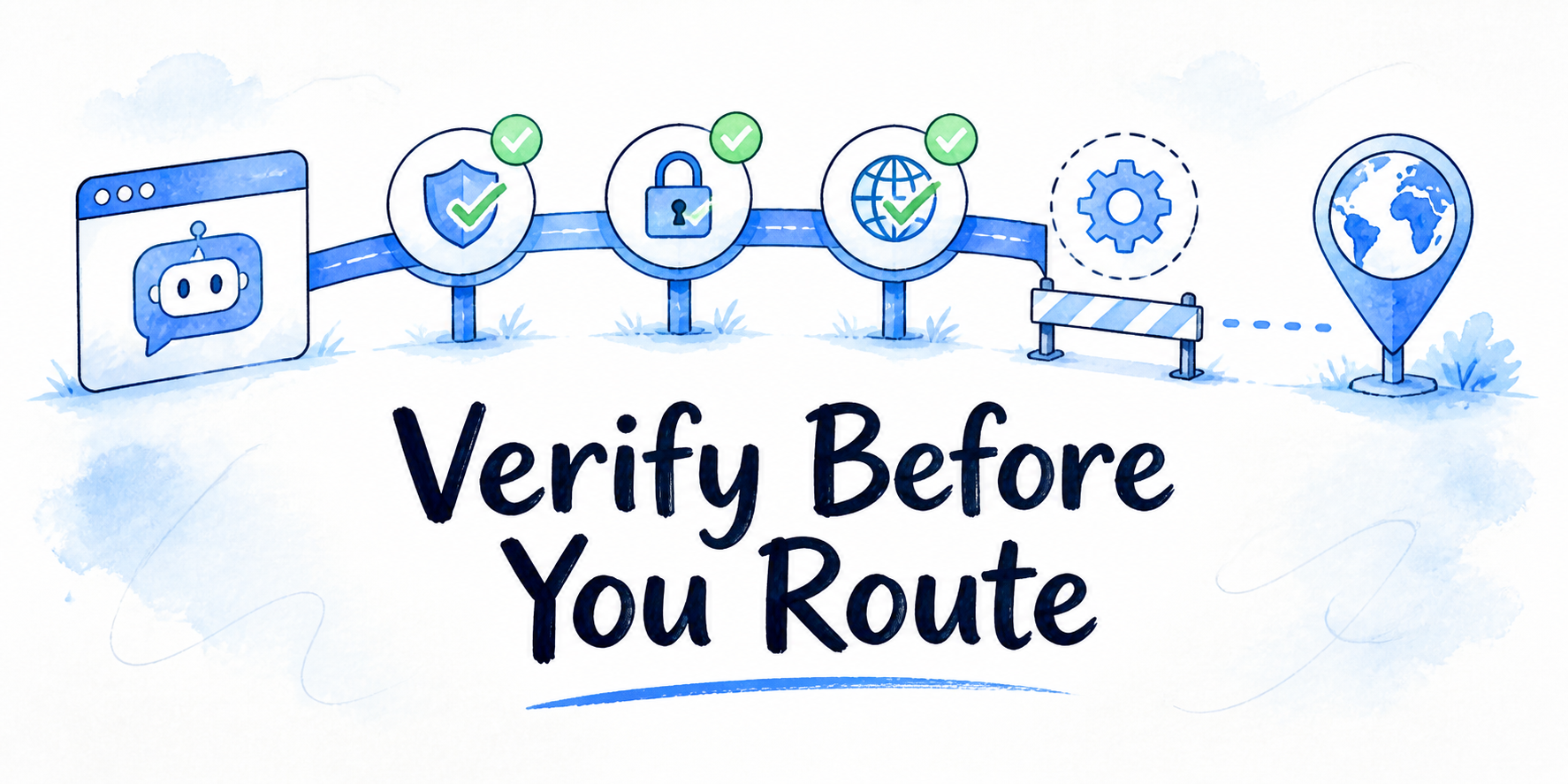
- Prove portability before changing production routing; target support alone does not show that an asset can leave the source platform or import unchanged.
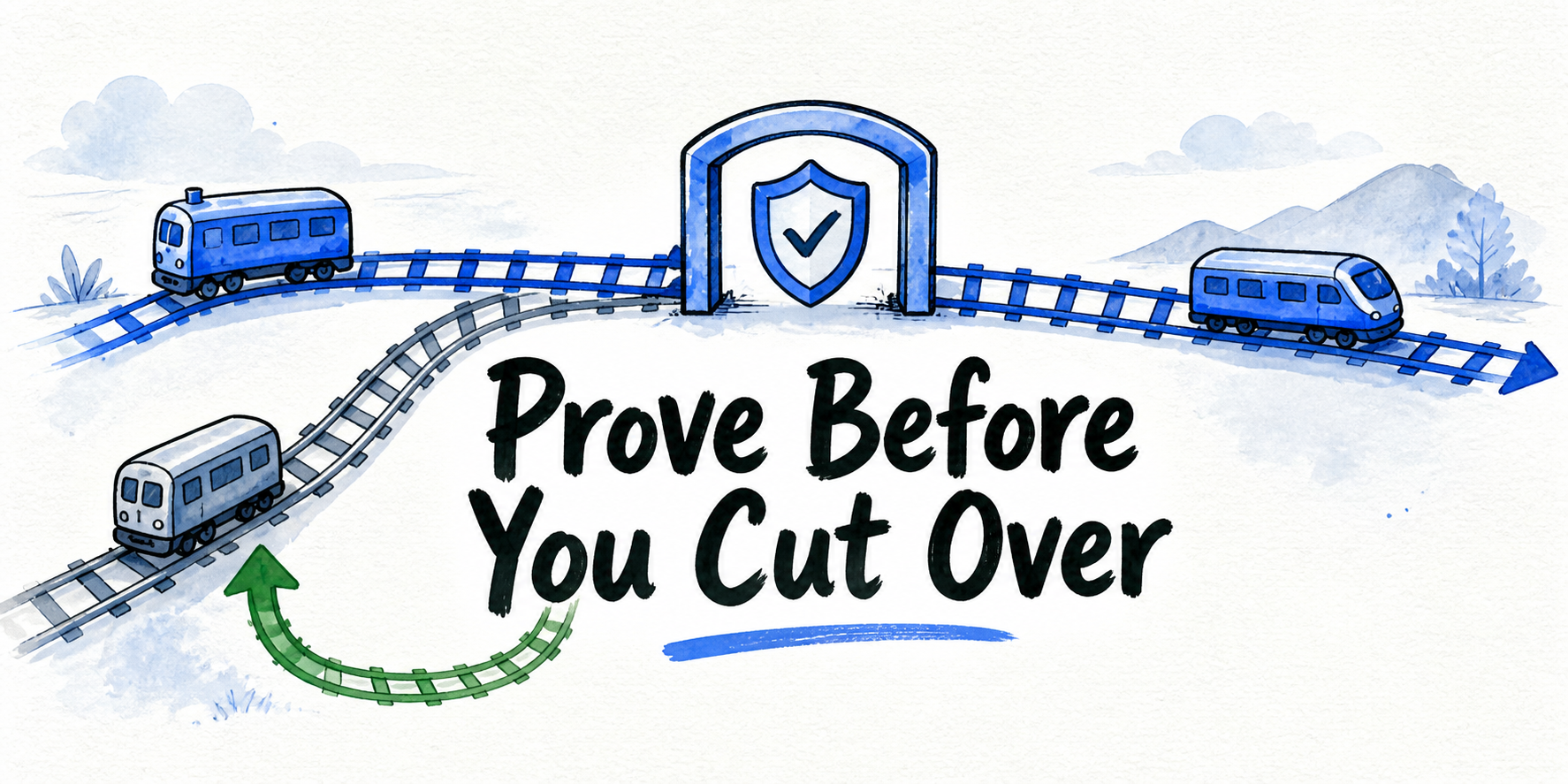
- Recreate one representative client workflow on the target and test it beside the current service.
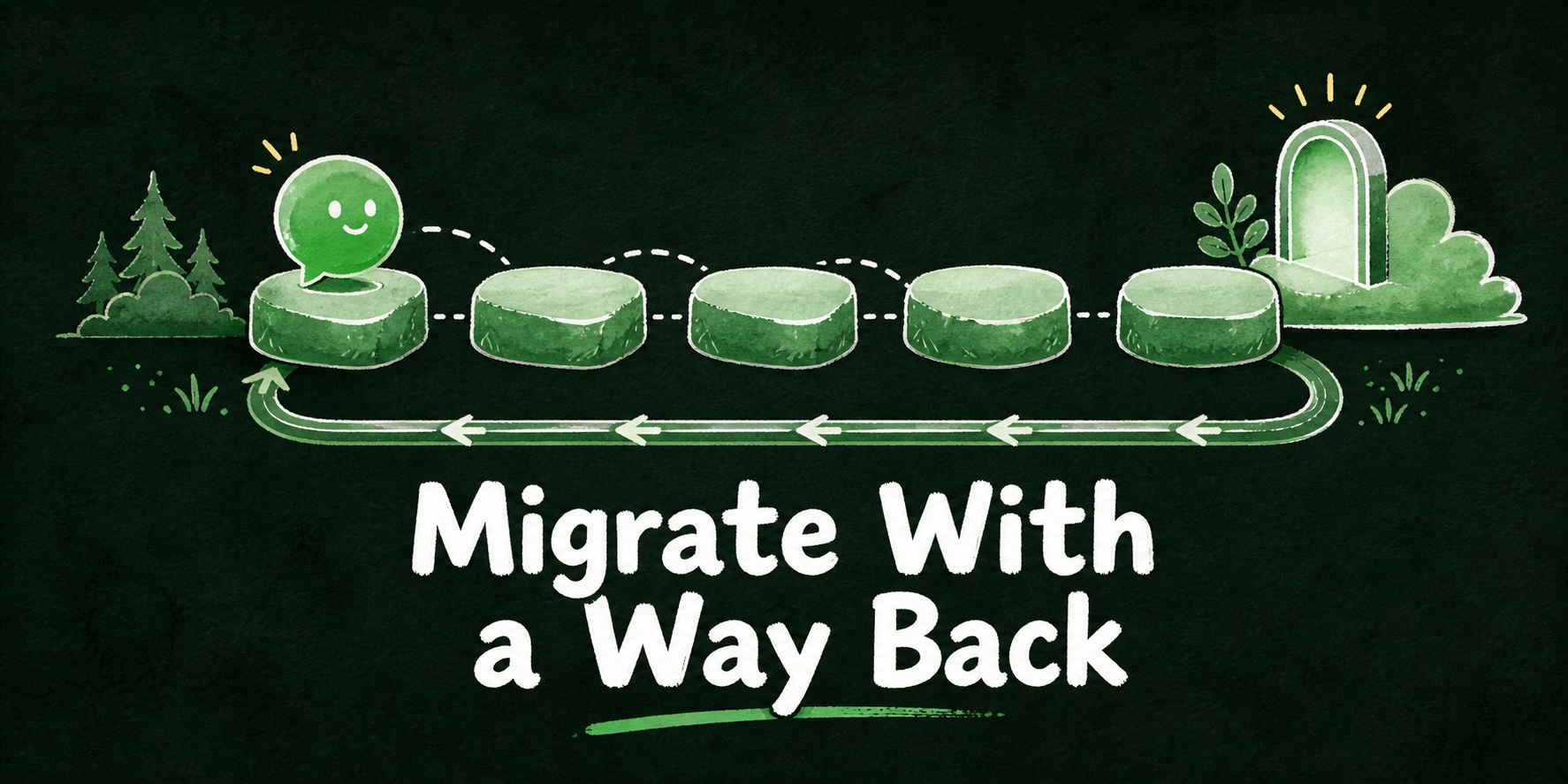
- Cut over one bounded surface while preserving the known-good configuration and a timed rollback path.
- Pause or narrow the migration when a continuity-critical asset remains unverified, a critical path fails, or safe rollback is no longer possible.
A white label chatbot migration is not a widget swap: approved knowledge, branding, routing, access, records, integrations, and support ownership can all determine continuity. A lower future platform cost must therefore be weighed against migration labor, duplicate running costs, retraining, client communication, and interruption risk.
Key Takeaways
- Transferability and target capability are different questions and need different evidence.
- Unverified assets are escalated, retained, or excluded—not assumed portable.
- The incumbent configuration deserves credit for strengths that current observations prove, including established routing, working integrations, historical context, and demonstrated continuity.
- A representative client workflow must pass side-by-side tests before production routing changes.
- Parallel operation should last until representative traffic and critical paths produce stable evidence; there is no universal duration.
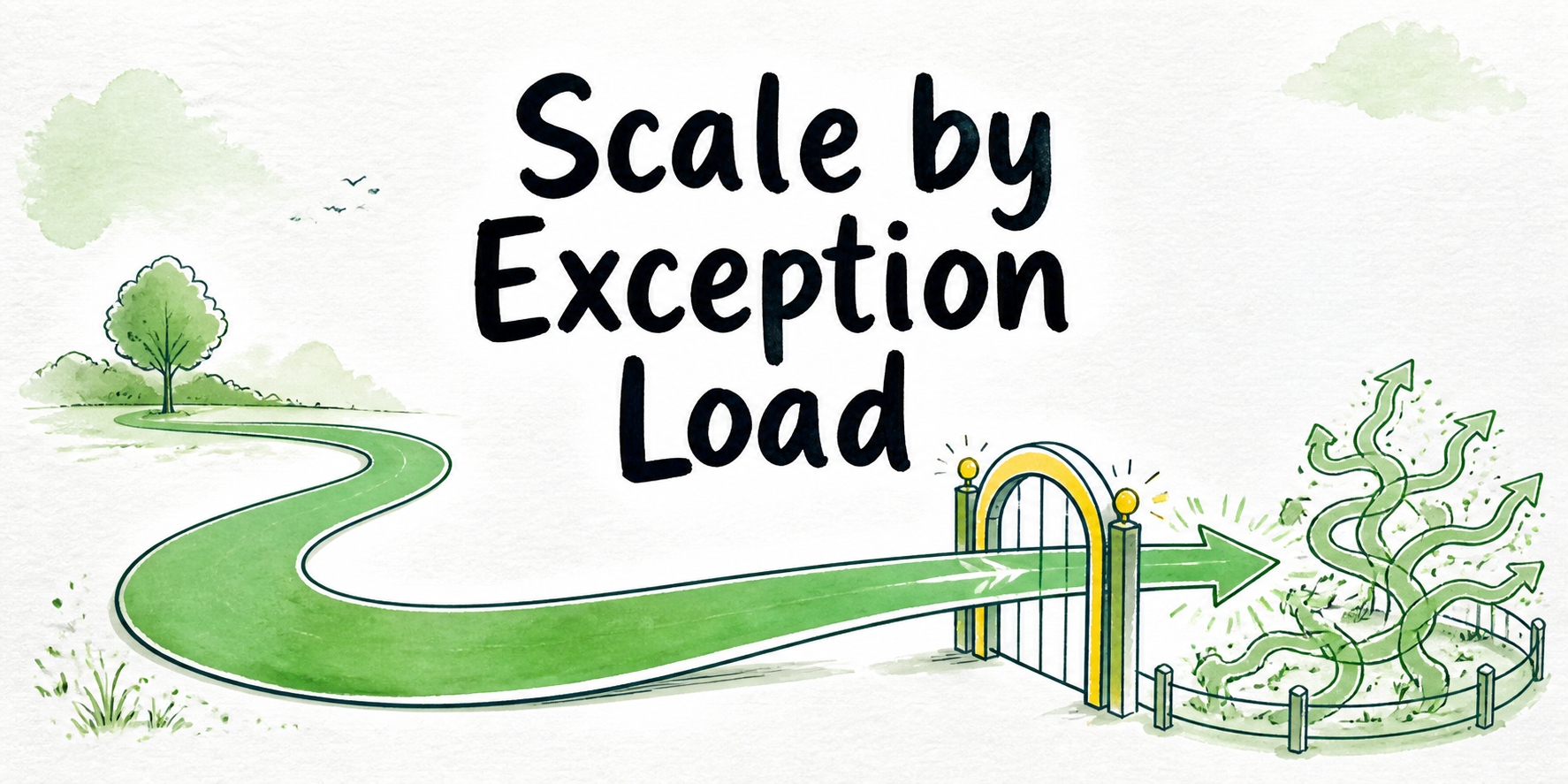
- Portfolio migrations should proceed in risk-based waves.
- Rollback authority, triggers, steps, and the decision deadline must be agreed before cutover.
1. Pass the proceed-or-pause gate
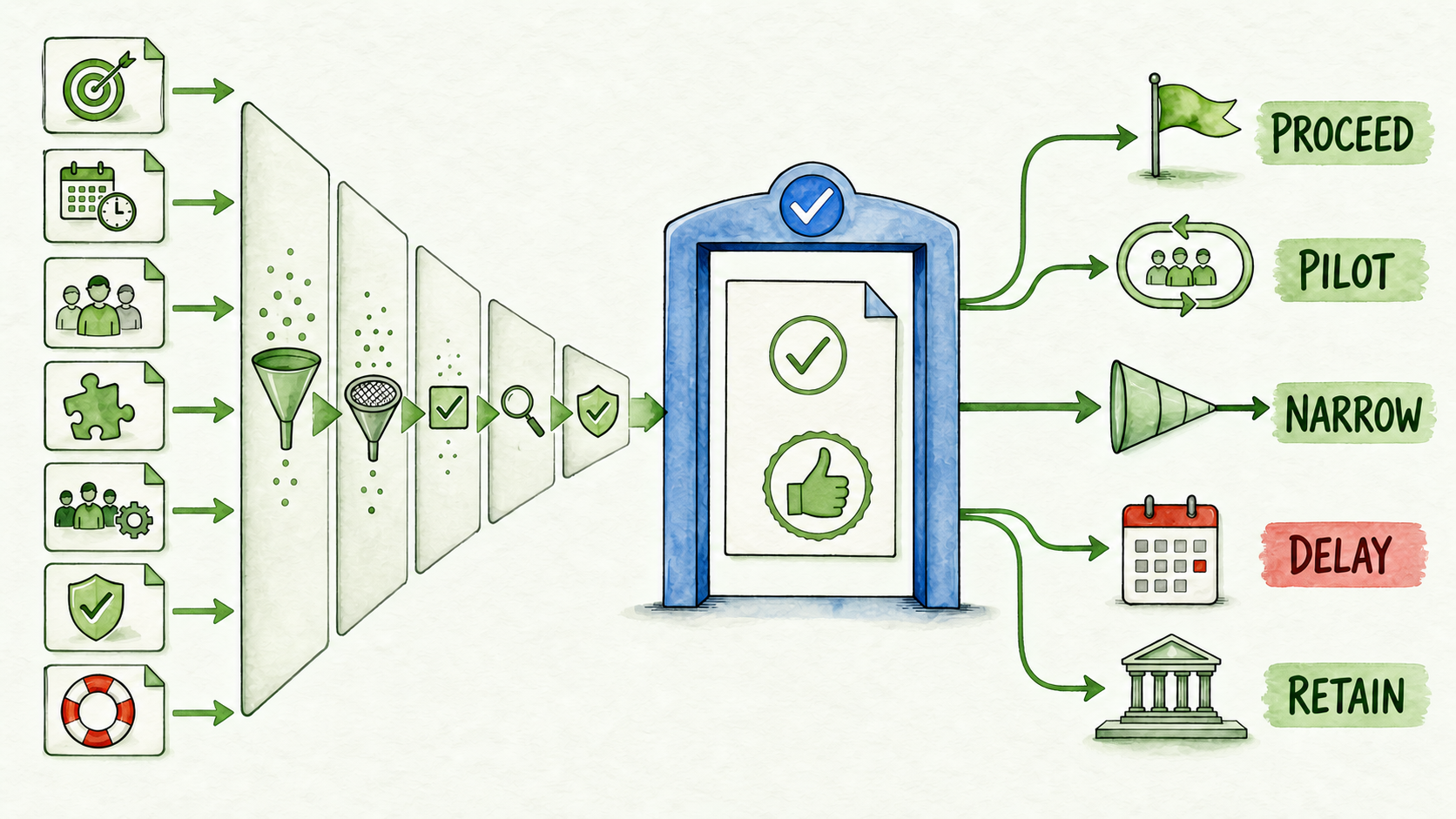
An acceptance gate is a documented decision point that must be passed before execution continues. Start by recording why the migration is being considered and what must improve: consolidation, operational control, target fit, contract timing, or another defined outcome. Compare that benefit with the full transition cost, including parallel subscriptions and the people needed to reconstruct, test, communicate, monitor, and reverse the change.
Before selecting a target, use a white-label platform feature comparison to document required capabilities. Treat that comparison as a requirements handoff, not as portability proof.
Proceed only when these questions have defensible answers:
- Business reason: Is the expected gain clear enough to justify the transition?
- Contract timing: Do renewal, notice, cancellation, and billing terms leave enough room for parallel operation?
- Client impact: Which client experiences could be interrupted, and what interruption has each client accepted?
- Target fit: Can the target support the required sources, behavior, surfaces, access boundaries, integrations, and oversight?
- Migration capacity: Are named people available to rebuild, test, communicate, monitor, and reverse the change?
- Portability evidence: Does every continuity-critical asset have a documented disposition?
- Rollback feasibility: Can the known-good service be restored within the approved window?
Current terms matter. InsertChat states that cancellation takes effect at the end of the paid term and that customers remain responsible for account access, source content, deployment choices, and transmitted data (Terms of Service). Its privacy policy describes access, deletion, and portability request paths, but those rights do not prove that platform-specific assets can be imported elsewhere unchanged (Privacy Policy). For personal data, its DPA addresses deletion or return after service cessation, subject to the agreement (Data Processing Agreement). Obtain account-specific written answers whenever cancellation, export, retention, deletion, or post-cancellation access could affect continuity.
Give the incumbent a fair assessment. Its strongest evidence may be the live configuration rather than a feature page: established routing may already reach the correct teams, integrations may be working, operators may know its failure modes, active conversations may contain useful context, and the service may have demonstrated continuity. Record these as strengths only where logs, tests, configuration records, or operator observations support them. Do not treat an unidentified vendor or missing documentation as proof that the current service is weak.
Apply the same scrutiny to its limitations. Obtain current documentation and written confirmation for export scope and format, retention, deletion, cancellation, post-cancellation access, domain release, phone assets, provider keys, usage credits, credentials, conversations, analytics, and integrations. A target with more desirable capabilities may still be a worse immediate choice if replacing the incumbent would break a proven workflow or strand required records.
The gate can produce five valid outcomes: proceed, run a limited pilot, narrow the scope, delay, or retain the current platform. If required records could become inaccessible after cancellation, the correct decision is to pause even when the target passes its feature checks.
2. Build a dated asset and dependency register
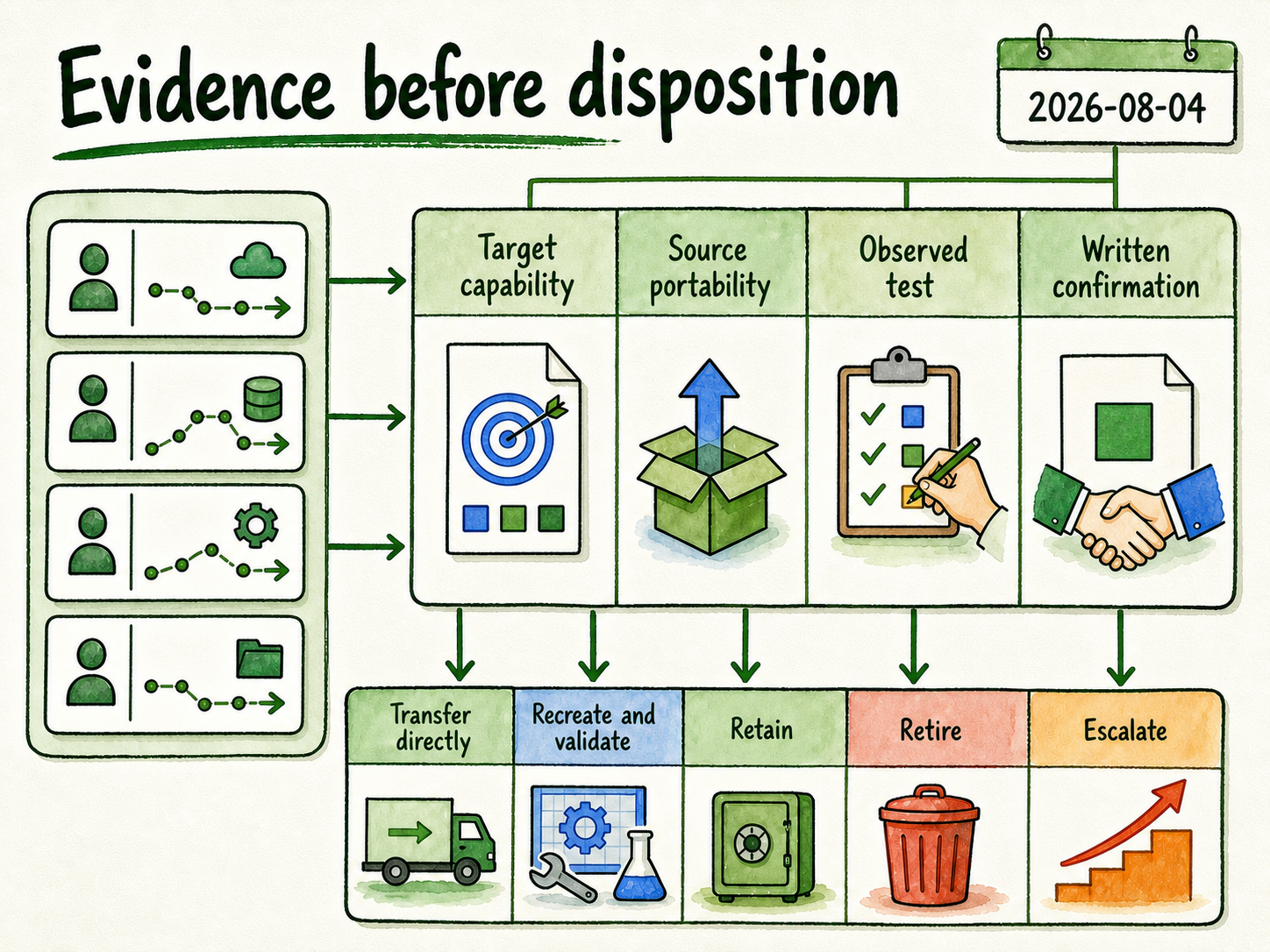
A dependency is anything another asset or workflow needs in order to operate correctly. The migration register is the dated control record that connects each dependency to its owner, evidence, test, decision, and recovery path. Review it immediately before cutover because documentation, entitlements, configurations, and account terms can change.
Inventory at least:
- assistants and their business and technical owners;
- approved sources, files, URLs, metadata, refresh rules, and approval status;
- prompts, guardrails, refusal rules, fallback behavior, and disclosure copy;
- logos, colors, avatars, names, layouts, and other brand assets;
- domains, DNS control, widgets, scripts, iframes, hosted pages, in-app embeds, voice channels, and phone surfaces;
- inboxes, active conversations, historical records, leads, reports, and analytics;
- workspace roles, client-scoped access, private assistants, and permissions;
- integrations, webhook destinations, API credentials, SMTP, and provider keys;
- billing ownership, credits, contracts, renewals, and cancellation rules; and
- operating documentation, escalation contacts, monitoring routines, and support ownership.
For every row, distinguish four kinds of evidence:
- Target capability: Current documentation or an account entitlement shows what the target can support.
- Source portability: Source documentation or written confirmation shows what can be exported, released, retained, or transferred.
- Observed test: A recorded export, rebuild, import, routing, permission, or recovery test shows what actually happened.
- Written confirmation: An account-specific vendor, client, legal, security, or technical response resolves an ambiguity that documentation and tests cannot settle.
Assign one disposition:
- Transfer directly: A documented export and import path has passed an observed test.
- Recreate and validate: The required outcome can be rebuilt, but unchanged transfer is not proven.
- Retain: The asset stays accessible under an approved contractual, privacy, operational, or recordkeeping requirement.
- Retire: The owner deliberately removes it from scope and accepts the consequence.
- Escalate: Evidence is insufficient for a continuity-safe decision.
The following matrix is an illustrative register dated 2026-08-04. It is a usable starting structure, not evidence of a completed customer migration. Replace every placeholder and unrun test with account-specific evidence before approval.
| Critical asset | Client / owner | Sensitivity / criticality | Dependencies | Target-capability evidence | Source-portability evidence | Observed test | Written confirmation | Unresolved vendor question | State | Acceptance evidence required | Rollback step |
|---|---|---|---|---|---|---|---|---|---|---|---|
| Approved FAQ sources and metadata | Pilot client / Content owner | Public / High | Source approvals, URLs, files, refresh rules | InsertChat documents website, sitemap, document, video, FAQ, and policy sources with refresh and citations (Knowledge Base); verified 2026-08-04 | Not supplied; obtain source export format, metadata coverage, and completeness terms | Not run; export a sample, rebuild or import it, and compare source count, metadata, and retrieval | Not obtained | Can all approved source content and required metadata be exported before cancellation? | Escalate as unverified | Approved test questions retrieve the correct current sources and required citations | Restore the previous source-backed assistant and routing |
| Prompts, guardrails, refusals, and fallback rules | Pilot client / Assistant owner | Internal / High | Policy approvals, source coverage, escalation path | Target behavior can be configured, but unchanged prompt transfer is not established | Not supplied; obtain exportability and format details | Not run; recreate rules and execute known-answer, missing-source, and high-risk cases | Client approval required for changed behavior | Are system instructions exportable, and which hidden platform behaviors cannot be reproduced? | Recreate and validate | Required refusal, disclosure, and escalation outcomes pass the fixed test set | Restore the prior configuration and preserve the target test log |
| Widget, brand assets, and disclosure copy | Pilot client / Brand owner | Public / Medium | Approved assets, page layout, mobile behavior | InsertChat documents logo, colors, launcher, avatar, greeting, prompts, tone, disclosure, widget, embed, hosted-page, and custom-domain presentation (Branding); verified 2026-08-04 | Brand originals may be operator-controlled; source widget configuration export remains unconfirmed | Not run; rebuild and compare approved desktop and mobile views | Client visual approval not obtained | Can source-specific styling or configuration be exported in a reusable form? | Recreate and validate | Approved visual identity, disclosure, placement, and mobile behavior pass | Reinsert the preserved source embed |
| Custom domain and DNS routing | Pilot client / Domain owner | Public / High | Registrar access, DNS records, TLS, hosted page | InsertChat documents custom-domain launch paths (Launch Channels); verified 2026-08-04 | Not supplied; domain ownership, release mechanics, and DNS control must be confirmed | Not run; validate target hostname in a nonproduction or bounded route | Domain owner and both relevant vendors have not confirmed the transition | Who controls the domain, what must be released, and how quickly can the prior route be restored? | Escalate as unverified | Correct hostname, certificate, content, monitoring, and reversible DNS or routing change | Restore the recorded prior DNS or routing values under the named domain owner |
| Lead webhook and CRM routing | Pilot client / Integration owner | Personal data / Critical | Credentials, field map, consent, destination, alerts | InsertChat documents webhook routing of conversation context, contact details, source page, and intent (Integrations); verified 2026-08-04 | Not supplied; source webhook configuration and credential handling are unconfirmed | Not run; submit synthetic approved test data and inspect every required destination field | Destination owner has not approved the mapped fields | Can the source configuration be exported, and must credentials be rotated rather than transferred? | Recreate and validate | Correct client queue receives complete permitted fields once, with errors observable | Disable target webhook, restore source routing, and rotate exposed credentials if required |
| Roles and client-scoped access | Pilot client / Workspace owner | Confidential / Critical | Identity list, role design, assistant scope, billing permissions | InsertChat documents role-based and client-scoped access to assigned assistants and relevant conversations (Team Workspaces); verified 2026-08-04 | Not supplied; source role export and identity mapping are unconfirmed | Not run; test owner, manager, client, and denied-access cases | Client access approver has not signed off | Which permissions require manual recreation, and what access remains after cancellation? | Recreate and validate | Every test identity can access only the approved assistants, sources, conversations, and actions | Remove target access and restore the prior workspace assignments |
| Active and historical conversations | Pilot client / Records owner | Personal data / Critical | Export format, attachments, metadata, retention, deletion, post-cancellation access | InsertChat documents conversation transcripts, page context, source usage, metadata, feedback, handoff status, and review state (Conversation Inbox); verified 2026-08-04 | Not supplied; export completeness, import support, retention, and post-cancellation access are unconfirmed | Not run; sample exported records and compare required fields | Legal, privacy, client, and source-vendor decisions not obtained | Which records can be exported, what will be deleted, and what remains accessible after cancellation? | Escalate as unverified | Required records are readable, attributable, protected, and covered by an approved retention or deletion decision | Keep active threads on the source; preserve approved exports and source access for the rollback window |
| Provider keys, API credentials, SMTP, and phone assets | Pilot client / Security owner | Secret or personal data / Critical | Key ownership, billing, rotation, number ownership, integrations | InsertChat documents authentication, API surfaces, provider-key governance, SMTP options, and phone workflows, but these do not prove transferability (API, Security, Pricing); verified 2026-08-04 | Not supplied; key ownership, credential export, phone-number portability, and billing consequences remain unconfirmed | Not run; create or rotate target credentials and test bounded calls or messages | Written confirmation from each relevant provider is outstanding | Which assets transfer, which must be reissued, and who owns charges and revocation? | Escalate as unverified | Correct ownership, least privilege, billing, rotation, delivery, and revocation are demonstrated | Revoke target credentials, restore source credentials where safe, and return routing to the known-good service |
This matrix makes the evidence boundary visible. A target supporting custom domains does not prove that the source will release a domain cleanly. A target conversation inbox does not prove that old transcripts, attachments, metadata, or analytics can be imported with equivalent meaning. The same caution applies to prompts, vector indexes, phone numbers, credentials, provider keys, reports, and integrations.
Decide what to do with historical context
Do not recreate all history by default. Separate the value of historical context from the obligation to preserve records:
- Recreate context when the new workflow needs a bounded summary, approved knowledge, active-case state, or other information to continue service safely. Recreate only what has an identified operational use and an approved data basis.
- Export and retain records when contracts, privacy obligations, disputes, audit needs, client commitments, or operational review require a faithful record. Preserve original structure and metadata where required rather than converting everything into chatbot knowledge.
- Keep active conversations on the source temporarily when moving them would lose context or consent, provided continued access is approved and monitored.
- Deliberately leave records behind for deletion when they are no longer needed and the records owner has approved the retention and deletion outcome.
- Escalate when completeness, format, legal basis, retention, deletion, or post-cancellation access is unclear.
The decision rule is simple: recreate only the context needed to continue the service; retain or export records needed for contractual, privacy, audit, or operational reasons; retire unnecessary material through an approved deletion process. Do not turn an archive into target knowledge merely because an export exists.
3. Sequence clients by migration risk
Agencies should migrate in risk-based waves, beginning with a representative but reversible workflow. Band each client by workflow criticality, deployment complexity, data sensitivity, integration depth, renewal timing, tolerance for interruption, historical-data requirements, and rollback feasibility.
A public FAQ and lead-capture assistant on one bounded page may be an appropriate early wave when it uses approved public content, a simple widget, one observable webhook, and an easily restored embed. A deployment involving a custom domain, multiple source collections, client roles, provider keys, active handoffs, phone service, and several integrations belongs later.
The pilot should be representative enough to expose migration problems but limited enough to reverse safely. It should exercise knowledge, branding, a meaningful action, permissions, monitoring, and human handoff without carrying the portfolio’s highest sensitivity or most complex routing.
Standardization can reduce future operating effort, but it must not erase justified client differences. Preserve client-specific branding, sources, permissions, refusal rules, integrations, and retention requirements when contracts or workflows require them. Standardize only what genuinely shares an operating model.
For ownership after migration, hand ongoing portfolio access, approvals, and separation rules to multi-client chatbot governance guidance. Migration sequencing decides when a client moves; governance defines how client environments remain controlled afterward.
4. Define the target state and prove one workflow in parallel
A target state is the required post-migration configuration and operating outcome. Translate the register into observable requirements for branding, approved-source grounding, citations, refusal behavior, human handoff, client-scoped access, integrations, analytics, provider control, and support ownership.
For a multi-surface client, require that:
- the customer-facing experience uses the approved brand, disclosure, and ownership language;
- answers use approved sources and provide citations where required;
- missing or risky answers follow the approved refusal or escalation path;
- integrations send the correct permitted fields to the correct client destination;
- human handoff includes sufficient conversation and page context;
- client users can access only their assigned assistants and relevant records;
- acceptance signals can be reviewed; and
- provider keys, billing responsibility, incident response, and support ownership are explicit.
Once those requirements are documented, the InsertChat agency page provides relevant target context for per-client branding, assistant separation, approved sources, analytics, access rules, and agency-oriented delivery. Its feature documentation also covers approved-source ingestion and citations, widget and API-style surfaces, webhooks, scoped roles, conversation review, and security controls. These capabilities make a target configuration testable; they do not prove that assets from the incumbent can transfer directly.
Run the current and target workflows side by side with one fixed acceptance set. Include:
- known-answer questions;
- missing-source questions;
- high-risk requests;
- lead-capture cases;
- workflow actions;
- human-handoff cases;
- owner, manager, client, and denied-access tests;
- desktop and mobile presentation;
- integration timeouts and duplicate-event checks; and
- failure paths, monitoring, and recovery.
Compare behavior and outcomes, not identical wording. Different wording can satisfy the same source, policy, and action requirements. Similar wording can conceal an incorrect citation, lost lead field, overly broad permission, or broken handoff.
Use the AI chatbot testing checklist for detailed QA coverage. The migration acceptance gate remains narrower: it decides whether the target preserves the required service outcome and whether the change remains reversible.
Run parallel operation until representative traffic and all critical paths have been exercised enough for the evidence to remain stable. A frequently used FAQ may reach that point sooner than a rare but critical escalation or phone workflow. No universal number of days can replace observed coverage.
A fair comparison keeps incumbent strengths visible throughout the test. If the current service consistently routes leads correctly, preserves useful handoff context, enforces client access, or gives operators dependable history, those results become the baseline the target must meet. A desirable new feature does not compensate for losing a continuity-critical outcome unless the owner explicitly accepts that tradeoff.
5. Cut over in dependency order and keep rollback live
A cutover is the controlled change that sends production traffic or work to the target. A rollback restores the preserved known-good state when approved triggers occur.
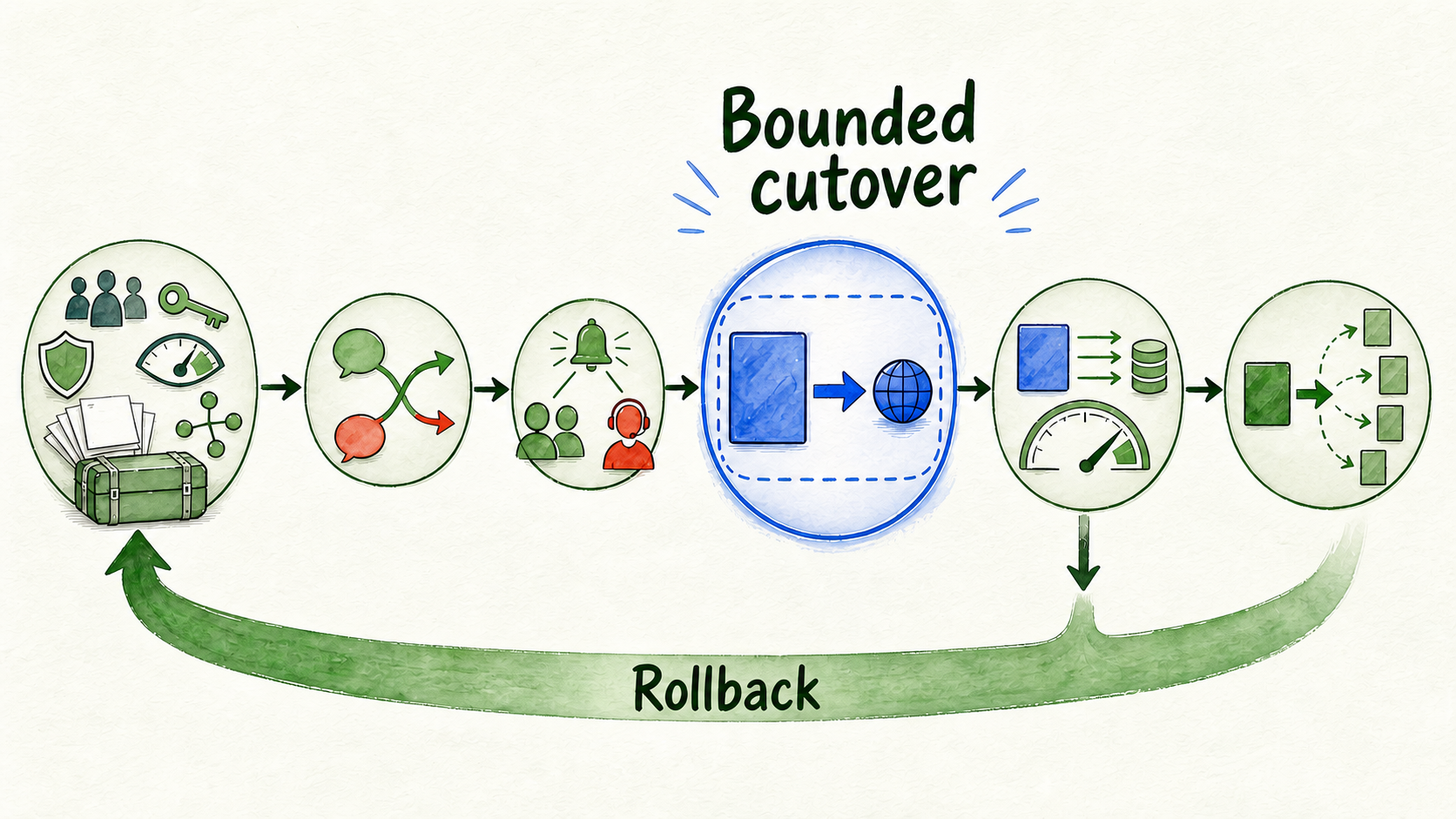
Before cutover, freeze nonessential changes. Confirm the production owner, client contact, monitoring owner, records owner, and person authorized to roll back. Preserve the prior embed, configuration, credentials, access, and required records for the approved rollback window.
Change dependencies in an order that keeps failures visible:
- Confirm target credentials, integration destinations, permissions, and monitoring.
- Decide how active conversations will finish; do not assume they can move.
- Notify affected client owners and support staff of timing, visible changes, and escalation routes.
- Change one bounded domain, embed, or routing surface.
- Confirm that the target receives traffic and downstream systems receive the intended data.
- Monitor the preapproved acceptance and rollback signals.
- Expand only after the bounded surface is accepted.
For a newly branded FAQ and lead-capture widget, retain the old embed, route one controlled page to the target, submit an approved synthetic test lead, inspect its fields and destination, trigger handoff, and compare source-backed answers. If citations required for safe answers disappear or leads reach the wrong client queue, restore the prior embed and routing.
The rollback gate requires named authority, a preserved known-good configuration, observable triggers, executable steps, and a deadline for deciding whether the cutover succeeded. Stop or roll back when a critical acceptance path fails, required evidence disappears, permissions or routing are wrong, customer continuity is at risk, or the known-good state cannot be restored safely.
Fast cutover reduces duplicate running costs. Longer parallel operation creates more opportunity to observe answers, integrations, analytics, and handoffs. Resolve this tradeoff using workflow frequency and consequence. Rare but critical paths require deliberate tests; their low traffic is not a reason to waive evidence.
6. Verify production and close the migration decision
Production verification is a time-bounded acceptance decision, not an open-ended optimization program. Review answer quality, approved-source use, citations, no-answer and unsupported-answer patterns, handoffs, lead routing, integrations, permissions, usage, billing observations, and client acceptance. Confirm that retained records remain accessible and that retention and deletion obligations have named owners.
The following worked outcome is illustrative, not customer proof. It shows how the detailed register can be summarized after tests while preserving links to owners and evidence.
| Register item | Illustrative input or test | Owner | Evidence and verification date | State | Outcome / next action | Rollback step |
|---|---|---|---|---|---|---|
| Approved FAQ sources | Fixed known-answer set against approved public pages | Content owner | Test log and source approvals; example date 2026-08-04 | Pass | Accept recreated source configuration | Restore prior assistant routing |
| Widget branding | Approved desktop and mobile comparison | Brand owner | Client approval record; example date 2026-08-04 | Pass | Accept presentation | Restore prior embed |
| Source citations | Required citations absent in two test cases | Assistant owner | Side-by-side test log; example date 2026-08-04 | Remediate | Keep broader routing unchanged until retest passes | Keep or restore source route |
| Obsolete monthly report | Owner confirms no contractual or operational need | Records owner | Written scope decision; example date 2026-08-04 | Retire | Record consequence and approved deletion or closure action | Not applicable; retirement requires owner approval |
| Historical conversations | Export completeness and post-cancellation access unresolved | Records owner | Source evidence absent; example review date 2026-08-04 | Escalate | Obtain written vendor response and decide retain, export, recreate limited context, or delete | Keep source access and active threads in place |
| Lead webhook | Synthetic test lead reaches the wrong client queue | Integration owner | Destination log and field comparison; example date 2026-08-04 | Rollback | Correct field mapping and rerun the fixed test | Disable target webhook and restore old embed and routing |
In this illustration, the target’s FAQ behavior and presentation pass, but missing citations require remediation and incorrect lead routing triggers rollback. The obsolete report can be retired because its owner has accepted that outcome. Historical conversations remain unresolved: operational context should be recreated only if needed for continuity, while records required for contracts, privacy, audit, or review must be exported or retained under an approved requirement.
Do not cancel the prior service merely because the visible assistant looks correct. Close the migration only when continuity-critical rows have passed, been approved for retention, or been deliberately retired; remediation is complete; escalations no longer threaten continuity; the client has accepted the outcome; and the rollback decision has been resolved.
The final status for each row should be explicit: accept, remediate, retain, retire, escalate, or rollback. The overall migration can likewise proceed, remain a limited pilot, narrow, delay, or return to the incumbent. For complex export, security, data-processing, custom-domain, phone, provider-key, or procurement requirements, obtain account-specific written confirmation before moving or cancelling production service.