TL;DR
- Use white-label AI chatbot when the product mainly supports guided conversation, Q&A, lead capture, qualification, or handoff.
- Use white-label AI agent cautiously when the product can take governed actions, coordinate workflow steps, validate inputs, or apply approval logic beyond answering questions.
- Use branded AI assistant when the offer is grounded in owned content and supports a client-facing workflow, but you do not want to imply broad autonomy.
- Use white-label conversational AI when the offer spans several channels, workflows, operating requirements, or buyer teams.
- The naming decision should follow autonomy, approval boundaries, risk level, client expectations, implementation scope, and support burden.
A buyer searching for a white label AI agent is usually deciding what to sell, what to promise, and what the delivery team will own after the first client says yes. The same client-facing assistant can sound simple, strategic, or risky depending on whether you call it a chatbot, an AI agent, a branded assistant, or a conversational AI product. The safest label is the one that matches what the system can answer, collect, route, trigger, coordinate, and hand off without creating promises your team cannot support.
Key Takeaways
The label should match the highest level of autonomy the product can reliably support. If it only answers from approved content and collects information for a human, chatbot or branded assistant language is usually clearer than agent language.
A white-label AI agent is not a better-sounding name for every chatbot offer. It tells the buyer to expect action, workflow coordination, rules, escalation paths, and a clear answer to what happens when the AI reaches a boundary.
Approval boundaries matter as much as features. Before using agent language, define what can happen automatically, what needs human review, and what should never be automated.
Naming affects the whole offer. Sales teams set expectations with the label, implementation teams inherit the scope, and support teams explain errors, exceptions, handoffs, and client-facing behavior.
Start With What the Product Is Allowed to Do
Do not start with the technology category. Start with the permission model.
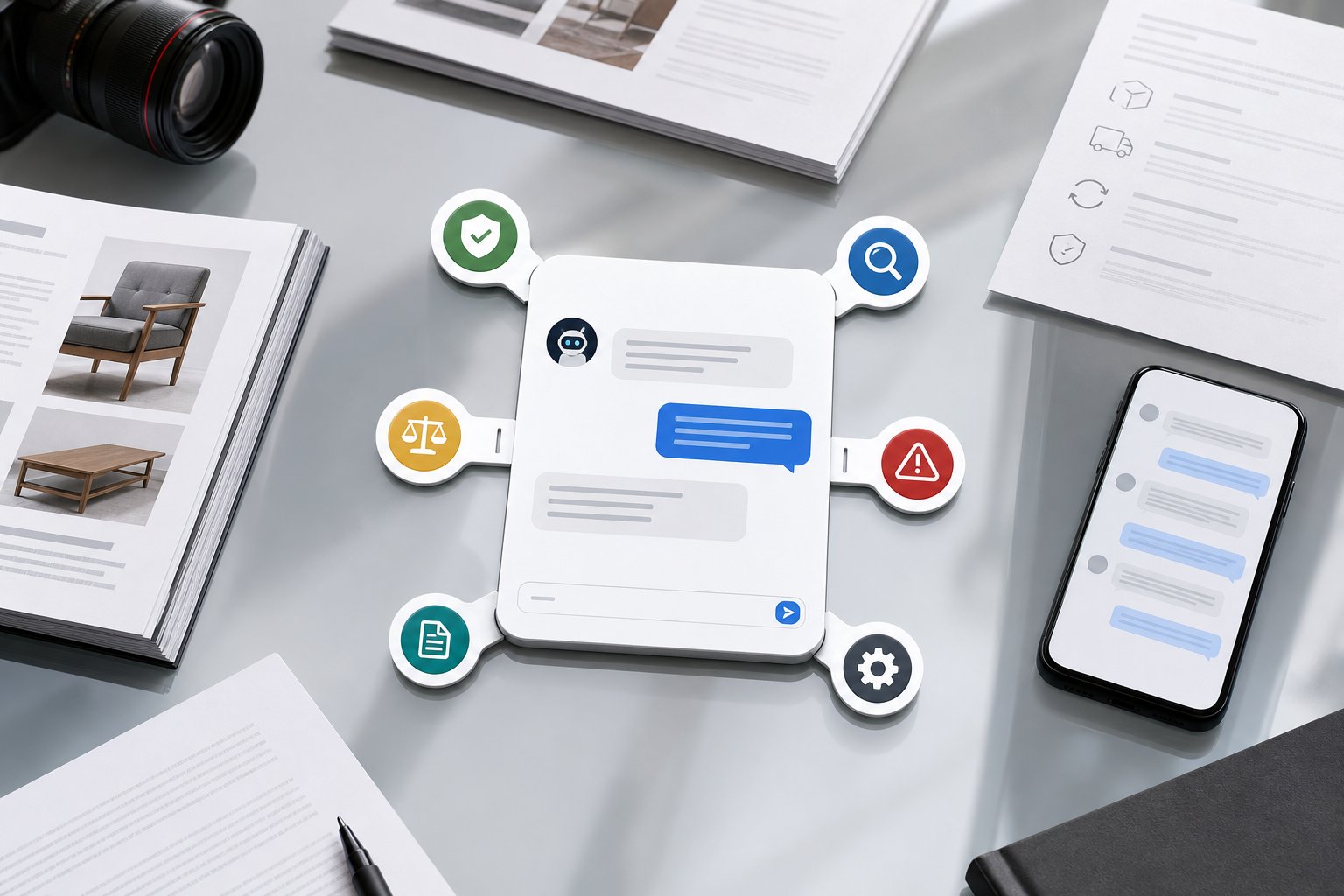
A white-label AI chatbot is the clearest label when the product is primarily a conversation layer. It answers questions, guides visitors, collects details, qualifies a request, and sends the conversation to a person or system for follow-up. The buyer expects a branded chat experience that reduces repetitive conversations and makes handoff easier. They do not expect the system to independently manage a multi-step workflow.

A white-label AI agent implies more autonomy. The buyer will assume the system can do something with the conversation, not just respond inside it. That may include validating information, checking rules, routing a request, triggering a tool, coordinating a next step, or following approval logic. Because of that, agent language should be used carefully. It raises the bar for governance, testing, exception handling, and operational clarity.
A branded AI assistant is often the practical middle label. It works well when the product is grounded in a client’s owned content, appears under the client’s brand, and supports a defined workflow without promising broad independent action. It can answer, collect, and route while still leaving room for human ownership.
A white-label conversational AI product is broader. It fits when the offer is not just a website widget or single chat flow, but a wider system of conversations, channels, workflows, analytics, handoff paths, and operating rules. That label can be useful for larger deals, but it can also become vague if the scope is not defined.
The buyer-language test is simple: if the value is better conversation, call it a chatbot or assistant. If the value is governed workflow action, agent language may fit. If the value is a broader operating layer across conversation channels and teams, conversational AI may fit.
Use Autonomy and Approval Boundaries as the Naming Test
A label becomes easier to choose when you map the product by autonomy level.
At the lowest level, the system answers from approved content. It may explain policies, surface product details, answer common questions, or help visitors find the right page. That is chatbot or assistant territory.

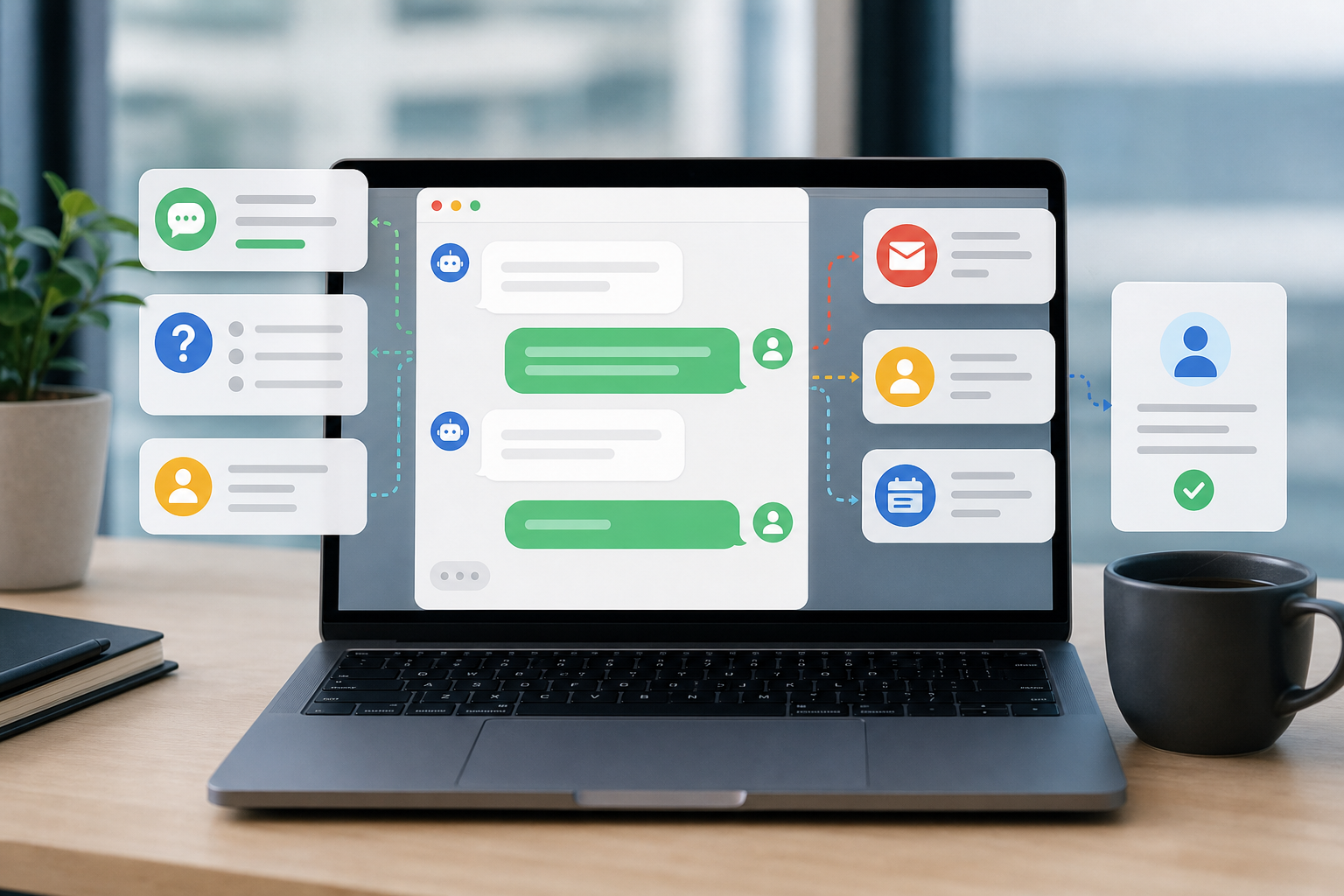
The next level is collecting and routing. The system asks for details, qualifies the request, and sends the conversation to a human, CRM, support desk, calendar workflow, or inbox. This can still be a chatbot when the main job is structured capture and handoff. Branded assistant may be a better label if the offer feels more consultative or client-specific.
The next level is recommendation. The system suggests the next step, explains options, or tells the user which path fits their situation. This can still be assistant language unless the system is allowed to act on the recommendation.
Agent language becomes more defensible when the system can trigger a step with rules. That might mean validating identity or data before an action fires, checking required context, applying policy-based logic, or routing based on defined conditions. The key is that the action is governed.
The highest level in this naming framework is workflow coordination with approval. The system may collect information, check it against rules, prepare a next step, pass it to a tool, and involve a human before final action. This is where white-label AI agent language can make sense, as long as the offer explains what is automatic and where human review remains required.
Before you use agent language, define three boundaries: what the system can do automatically, what requires human review or approval, and what must always be handled by a person. Those answers should shape the sales page, demo script, client onboarding, implementation notes, and support expectations.
Decision Table: Chatbot, Agent, Assistant, or Conversational AI
Use this table as the core positioning filter before you name the offer.
| Label | Best fit | What buyers expect | Delivery promise | Support burden | Caution |
|---|---|---|---|---|---|
| White-label AI chatbot | Guided conversation, Q&A, lead capture, qualification, and handoff | A branded chat experience that answers common questions and moves visitors to the right next step | Configure content, conversation flow, capture fields, routing, and escalation | Moderate: answer accuracy, capture quality, routing, and handoff clarity | Clearest when the product does not take meaningful action beyond conversation and handoff |
| White-label AI agent | Governed actions, workflow coordination, tool-enabled steps, validation, and approval logic | A system that can move work forward, not just answer | Define rules, tool access, data requirements, approval paths, exceptions, and handoff boundaries | Higher: action errors, rule conflicts, failed tool steps, exception handling, and client governance | Use only when action or workflow coordination is real, governed, and supportable |
| Branded AI assistant | Owned-content answers plus workflow support under the client’s brand | A helpful assistant that answers, collects, routes, and supports a defined visitor workflow | Ground the assistant in approved sources, configure behavior, define handoff, and keep scope understandable | Moderate: content maintenance, answer quality, workflow fit, and escalation | Strong middle label when agent sounds too autonomous and chatbot sounds too narrow |
| White-label conversational AI | Broader conversation program across channels, workflows, and operational requirements | A larger system for managing customer or visitor conversations across several contexts | Define channels, roles, knowledge sources, analytics, workflows, handoff, and governance at a program level | Higher and broader: operational ownership, reporting, workflow maintenance, and cross-team expectations | Avoid if the offer is only one website chat experience with limited scope |
The table does not decide the technology stack. It decides the promise. A narrower label can make the offer easier to sell and deliver if it matches the client’s actual risk tolerance.
How the Label Changes Sales, Delivery, and Support
Naming changes what the buyer thinks they are buying.
In sales, chatbot language usually sets a clear expectation: the product helps visitors get answers, share information, and reach the right person faster. That can be easier to understand when the buyer wants a visible client-facing improvement without a complex operational change.

Agent language makes the offer sound more powerful, but it also invites harder questions. What actions can it take? Which systems can it touch? Who approves the rules? What happens if the user gives incomplete information? What happens when a workflow fails? If sales uses agent language, delivery needs answers to those questions.
In implementation, chatbot work is usually centered on content, conversation behavior, forms, routing, and handoff. Agent work adds dependencies: tool access, trigger rules, validation logic, policy constraints, exception paths, and owner review. That does not make the agent label wrong. It means the implementation scope has to match the promise.
In support, the difference becomes sharper. A chatbot support issue may be, “It gave the wrong answer,” or “It routed the lead to the wrong inbox.” An agent support issue may be, “It triggered the wrong action,” “It skipped a required approval,” or “It moved a workflow forward with incomplete context.” Those are different levels of operating risk.
Search demand should not be the only naming input. If “white label AI agent” attracts more interest, it still has to match the product’s real autonomy. A label that wins attention but expands the support promise can weaken the offer after the sale.
One Scenario: Naming a Client-Facing Website Offer
Suppose you are packaging a client-facing website offer for a service business. The assistant appears under the client’s brand, answers from approved website and knowledge-base content, asks visitors for contact details, identifies the type of request, routes the conversation to the right team, and hands off anything sensitive or final to a human.
That offer should not lead with “white-label AI agent” if the system is not taking governed actions beyond the conversation. The clearest labels are white-label AI chatbot or branded AI assistant.
Use white-label AI chatbot if the buyer mostly wants a branded chat layer for Q&A, lead capture, qualification, and handoff. This label is plain and keeps implementation expectations focused.
Use branded AI assistant if the buyer wants the experience to feel more consultative and tied to owned content, but you still want to avoid implying broad autonomy. This works when the assistant is more than a basic scripted bot, but the workflow still ends with a person or controlled handoff.
Use white-label AI agent only if the scope includes governed workflow behavior. For example, the system validates required fields before a request is sent, checks a policy rule before routing, prepares a next step in a connected tool, or coordinates a workflow with explicit approval logic. In that version, the agent label describes a product that can move work forward inside defined boundaries.
The same visible interface can carry different labels based on what happens after the message is sent. The name should describe the operating model, not the chat window.
Where InsertChat Language Fits Without Overpromising
InsertChat’s indexed pages often use language around a branded assistant grounded in owned content, workflow control, integrations, and handoff. That phrasing is useful because it avoids treating “agent” as a blanket upgrade term.
For example, InsertChat’s Branded AI Assistant Builder context frames the work as turning an idea into a production assistant and deciding which requests still need a human owner. That connects the assistant to a real workflow while keeping human ownership visible.
The same pattern appears in website context around what an assistant should answer, collect, or route automatically before a human. That language is specific enough for a client-facing offer without claiming unlimited autonomy. It also leaves room for agentic behavior when there are rules, required context, tool enablement, integrations, and handoff paths.
If you still need to evaluate whether the client-facing experience is truly white-label, keep that as a separate platform ownership question. The dedicated guide, What Makes an AI Chatbot Truly White Label?, is the better place for that evaluation. This article’s job is narrower: choose accurate product language once you understand what the offer is allowed to do.
Use the Narrowest Accurate Label First
The best naming rule is to use the narrowest accurate label that your delivery and support model can defend.
If the system answers questions, collects information, and hands off to a person, call it a chatbot or branded assistant. That is not underselling if it matches what the buyer needs. It can make the offer easier to understand, easier to scope, and easier to support.
If the system can take action through tools, follow rules, validate inputs, coordinate steps, or manage a workflow with approval boundaries, agent language can be accurate. But the label should come with specific boundaries: what the agent can do, what it cannot do, what requires approval, and what happens when the request falls outside scope.
If the buyer is still choosing the first offer or workflow, that decision belongs before the terminology decision. The guide to White-Label AI Chatbot Use Cases for Client-Facing Teams is a better next step for narrowing the initial use case. Once the workflow is chosen, come back to the naming test: conversation, assistant support, governed action, or broader conversational AI program.
A white label AI agent can be the right product language. It just should not be the default language for every branded chatbot. Name the offer after the highest level of autonomy it can reliably support, then make the approval boundary visible before the buyer has to ask.
FAQ
Should I call my offer a white-label AI agent or chatbot?
Call it a white-label AI chatbot if the core value is guided conversation, Q&A, lead capture, qualification, or handoff. Call it a white-label AI agent only when the product can take governed actions or coordinate workflow steps beyond answering questions.
Is a branded AI assistant the same as an AI agent?
Not always. A branded AI assistant may answer from owned content, collect details, support a workflow, and hand off to a person without taking autonomous action. An AI agent label suggests more active workflow behavior, such as validation, routing logic, tool-enabled steps, or approval-based coordination.
When is conversational AI the better label?
Use white-label conversational AI when the offer is broader than one chat experience. It may span several channels, workflows, teams, analytics needs, and operating requirements. Avoid the label if it makes a simple website assistant sound larger than the scope you are prepared to deliver.
Can I use agent language for lead capture?
Sometimes. If the system only asks questions, collects lead details, qualifies the visitor, and routes the conversation, chatbot or branded assistant language is clearer. Agent language becomes more defensible when lead capture includes governed actions such as validation, rule-based routing, tool updates, or approval logic.
What should I avoid promising if I sell a white-label AI agent?
Avoid promising broad autonomy unless the product, workflow rules, and support model actually cover it. Be specific about what the agent can do automatically, what requires human approval, what systems it can touch, what happens when context is missing, and where handoff occurs.
What if my product starts as a chatbot but later adds workflow actions?
Start with chatbot or branded assistant language, then update the positioning when governed actions become part of the real scope. The label should change when the operating model changes, not when the roadmap changes.