TL;DR
- Start with the decision you need to make: shortlist, trial, written proof, alternatives review, or pause.
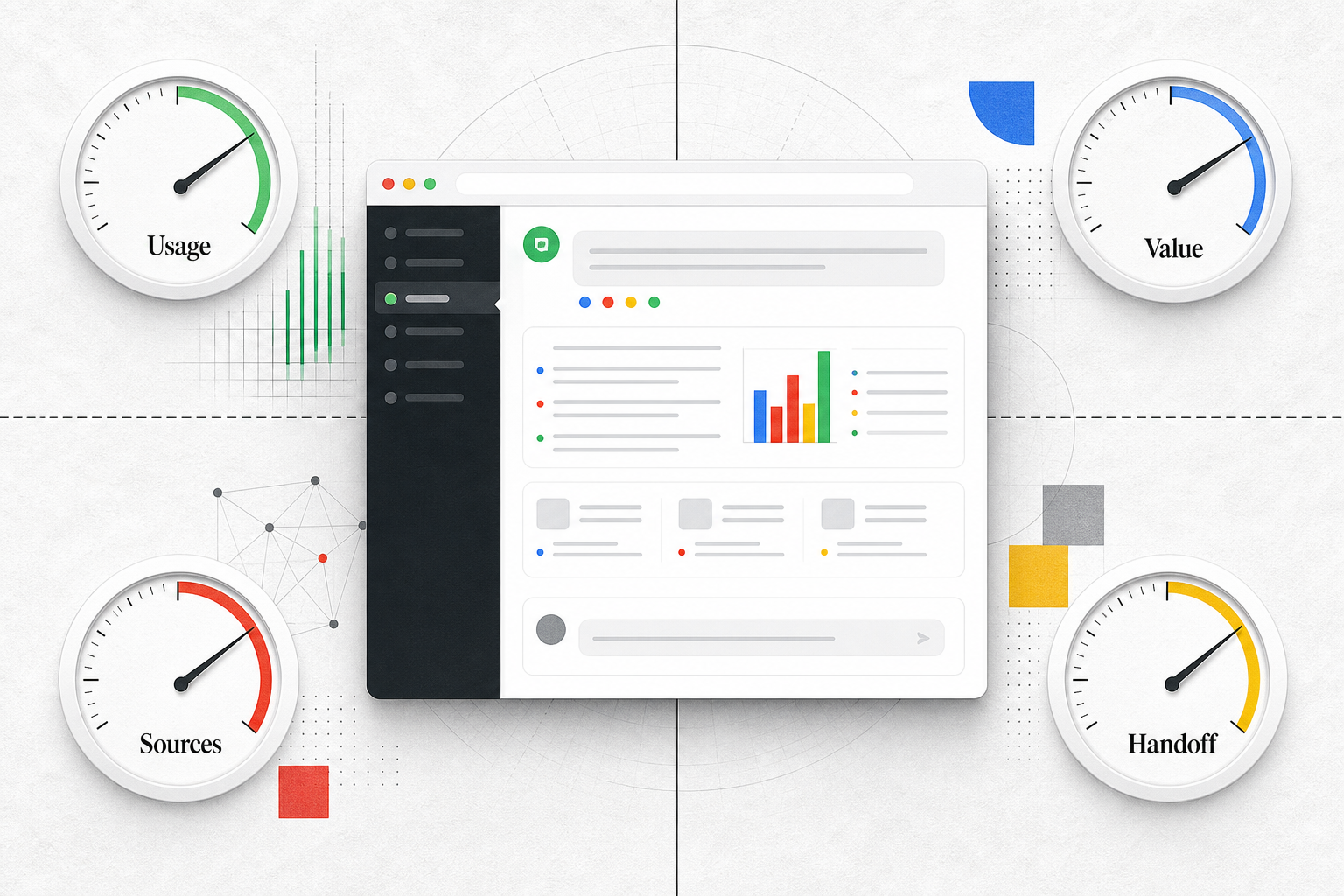
- Use six shortlist gates before comparing vendors: answer sources, branded channels, actions and handoff, app fit, review visibility, and trial path.
- Run a quick sourcing check before the feature list. A platform fits best when your needs match repeatable branded assistant capability.
- Compare feature fit by the business job each feature proves, not by feature count.
- Treat the demo or trial as evidence collection using real sources and a real workflow.
- Check alternatives only when a platform fit signal fails.
- Move forward only when demand, source quality, ownership, and the pricing path are clear.
You are not trying to learn what a white label ai chatbot platform is. You are trying to decide which option can safely carry your brand, answer from your real content, handle the channels your customers use, and give your team enough evidence to move from vendor list to trial or purchase.
Key Takeaways
- A platform shortlist should begin with proof of fit, not a broad scan of every available feature.
- Build-versus-buy is a checkpoint, not a separate project, when your immediate job is vendor evaluation.
- A strong platform fit shows that the assistant can use approved sources, match your brand, work across the right channels, take useful actions, and give your team a review record.
- A trial should test real customer questions, not generic demo prompts.
- Alternatives are useful when a white-label platform is the wrong category for the job.
- The buying decision should wait until you have enough demand, source quality, ownership, and pricing clarity to support the next step.
Start With the Platform Decision You Need to Make
A messy platform search usually means the decision is too broad. Before you compare products, name the decision in front of you.
If you already know the customer-facing job, the channels you need, and the team that will own review, your decision is platform selection. You need to know which vendors deserve deeper comparison and which one should enter a trial.
If you do not yet know the workflow, the source content, or the owner, platform comparison is early. A long vendor list will not fix an unclear use case. In that case, narrow the job first: website FAQ, lead capture, booking, product discovery, support routing, phone response, or another bounded customer interaction.
For buyers at the platform stage, the useful question is not, “Which vendor has the most AI features?” It is, “Which platform can prove the few capabilities that matter for our first branded assistant?”
That keeps the evaluation focused. You are not building a launch plan, an agency package, or a full return model here. You are deciding what belongs on the shortlist and what evidence should move one option forward.
Use Six Shortlist Gates Before You Compare Vendors
Use six gates to decide which platforms deserve serious review. A platform does not need to be perfect at every possible job, but it should pass the gates that match your first use case.
Six Shortlist Gates
- Sources
Can the platform use the business content needed for the first assistant?
- Branded channels
Can the assistant appear under the brand on the required customer-facing surface?
- Actions
Can conversations turn into the needed outcome, such as lead capture, booking, routing, or handoff?
- Integrations
Can it connect with the tools or workflow the team actually uses?
- Review visibility
Can the team inspect transcripts, search conversations, and learn what needs attention?
- Trial path
Can the buyer test real sources and one real workflow before committing?
| Shortlist gate | What it proves | Why it matters |
|---|---|---|
| Answer sources | The assistant can use your website, files, help content, product catalog, videos, or Q&A | Answer quality depends on the material the assistant can read and cite |
| Branded channels | The customer experience can appear under your brand on the surfaces you need | White-label value is weak if the customer experience feels generic or disconnected |
| Actions and handoff | The assistant can capture leads, book meetings, route support, or hand off to people | Many teams need the conversation to create a next step, not just a reply |
| App and workflow fit | The platform can connect to the systems that matter for lookup, routing, update, or follow-up | A separate chat record can create extra work if it cannot connect to the rest of the process |
| Review visibility | Your team can inspect conversations, transcripts, metadata, status, and unresolved questions | You need a way to learn what happened and improve the assistant over time |
| Trial and pricing path | You can test the platform without heavy procurement and understand the next cost step | A low-friction trial helps replace guessing with evidence |
These gates keep the shortlist practical. For example, a support team handling repeated policy questions should care first about approved sources, source citations, handoff, and conversation review. A sales team missing after-hours leads should add lead capture, booking, phone or voice coverage, and app-connected follow-up.
The point is to remove vendors that cannot prove the job. After that, a deeper feature review becomes useful instead of noisy.
Run a Sourcing Check Before the Feature List
Before you spend time comparing features, confirm that buying a platform is still the right sourcing path.
Buying a white-label platform usually fits when you need a branded assistant in market soon, your first workflow matches standard platform capability, and your team would rather configure sources, branding, channels, and handoff than build the system from scratch.
A custom build may deserve a closer look when the required control is unusual, the integration pattern is central to the product, or the assistant must behave in a way that standard platforms cannot prove during a trial. A hybrid path can also make sense when most of the customer-facing assistant can come from a platform, but one part of the workflow needs custom work.
Keep this checkpoint short. You are not trying to finish a full sourcing strategy inside a platform selection article. You are checking whether platform evaluation is still a good use of time. For the deeper sourcing decision, use build vs buy for a white-label AI chatbot.
Compare Feature Fit by the Business Job Each Feature Proves
Feature comparison works best when each feature group answers a business question.
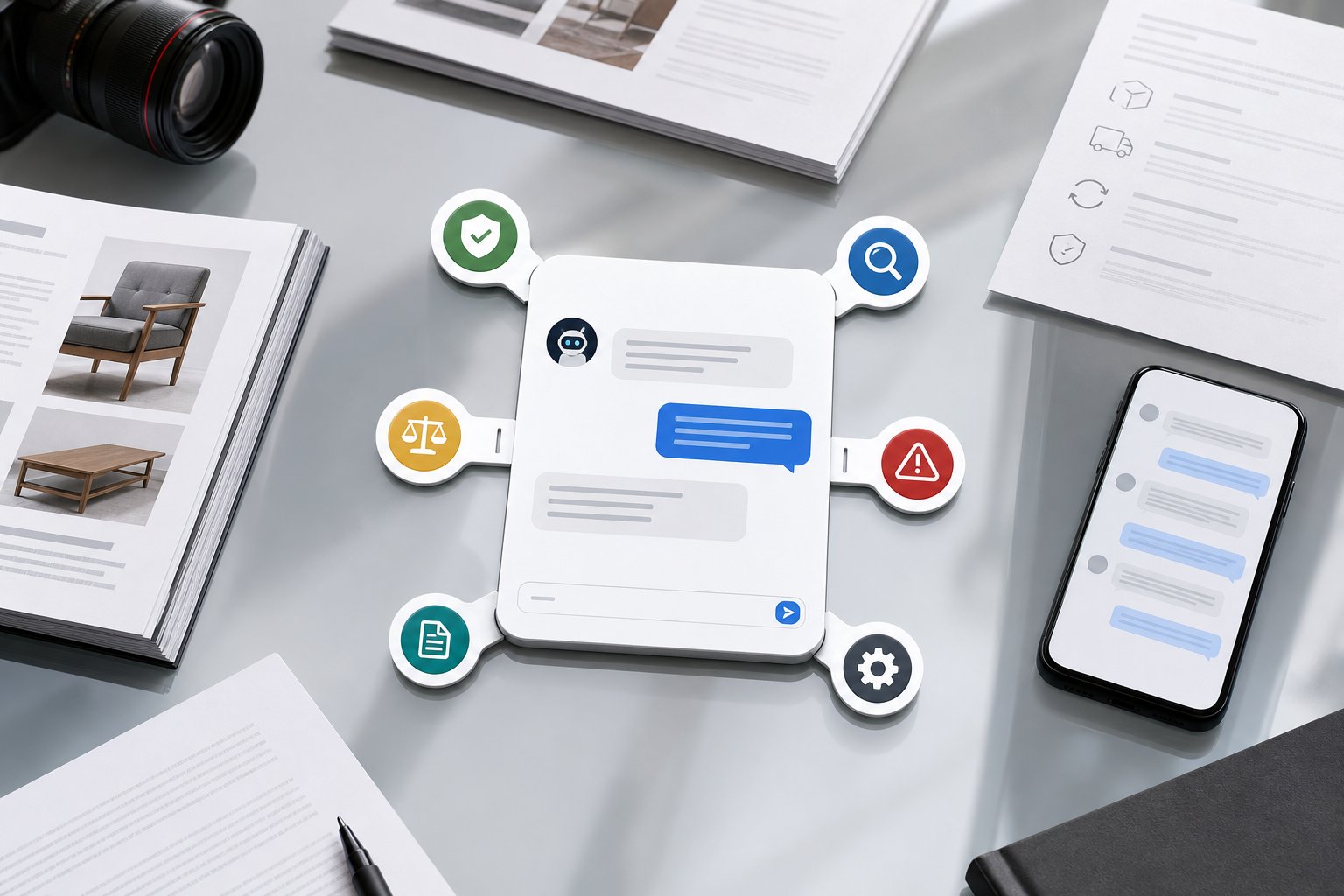
Branding and client experience prove whether the assistant can look and feel like it belongs to your business. Setup and deployment prove whether your team can get from existing website content to a working assistant without developer-heavy work. Knowledge and source controls prove whether answers can stay tied to approved material. Workflow actions prove whether conversations can turn into lead capture, booking, routing, or follow-up. Analytics and review prove whether your team can inspect what happened. Access and security signals prove whether the platform can support the sensitivity of your use case.
InsertChat is one example of how these criteria can show up in a platform evaluation. It supports no-code setup by pasting a website address, branded website chat agents, voice widget support, phone agents with a real phone number, source citations, file uploads, lead capture, meeting booking, support routing, a conversation inbox with transcripts and metadata, and workflow automation options. Those facts do not make it the right fit for every buyer. They are the kinds of capabilities you should verify against your own first job.
Avoid turning this stage into a feature inventory. More capability is useful only when it supports the job you are buying for. If the platform offers charts, forms, booking calendars, phone agents, multilingual answers, and many model choices, ask where those capabilities matter in your workflow. If they do not affect the first use case, keep them in later-stage notes.
For a deeper feature review, use the dedicated guide on platform features to compare.
Use the Demo or Trial to Collect Evidence, Not Impressions
A demo should prove the shortlist assumptions. A trial should show what happens when the platform touches your real sources, your brand, your channels, and your customer questions.
Use the demo or trial to check five evidence areas:
- Setup: Can the platform create a usable assistant from the sources you actually have?
- Customer view: Does the branded experience match the surface where customers will use it?
- Answer behavior: Does it answer from approved sources, cite sources where supported, and avoid unsupported claims?
- Workflow action: Can it capture a lead, book a meeting, route support, or hand off in the way your team expects?
- Review record: Can your team inspect transcripts, search conversations, mark status, and learn what needs attention?
A polished vendor tour is not enough if it avoids real content. A trial with your website pages, policies, product information, help articles, files, or videos gives better evidence. If phone or voice is part of the buyer journey, the trial should include that surface too.
Do not ask every possible question during the first trial. Test the workflow that matters most for the next decision. If you need a practical testing path, use the white-label AI chatbot demo checklist.
Check the Alternatives Only When a Platform Fit Signal Fails
Alternatives are not a reason to restart the whole search. They are useful when one of the fit signals fails.
When to Check Alternatives
| Option | Best fit signal | Pause signal | |
|---|---|---|---|
| White-label platform | White-label platform | Reusable branded assistants across website, phone, sources, leads, booking, routing, and review | Fails source, workflow, ownership, access, security, or pricing proof |
| Custom build | Custom build | Assistant is part of the core product or needs unusual control | Standard platform proves the first branded workflow well enough |
| Embedded support tool | Embedded support tool | Main need is inside an existing help desk or support surface | The assistant must operate beyond that support environment |
| Narrow workflow tool | Narrow workflow tool | Only one bounded task matters | The buyer needs reusable assistants across multiple customer paths |
| Manual concierge validation | Manual concierge validation | Demand is still uncertain | Recurring demand and source readiness are already clear |
Consider another category when a platform cannot prove the control, workflow, or ownership pattern you need. A custom build may fit when the assistant is part of your core product experience or needs behavior standard tools cannot support. An embedded AI support tool may fit when your main need is inside an existing help desk or support surface. A narrow workflow tool may fit when you only need one bounded task, such as scheduling or order lookup. Manual concierge validation may fit when demand is still uncertain and you need proof before software spend.
A white-label platform is strongest when you need reusable branded assistants that answer from business content and operate across customer-facing channels. It is weaker when the job is either too custom, too narrow, or not yet proven.
Use alternatives as an escape hatch, not a detour. If most platform gates pass, continue with feature proof and trial evidence. If one gate fails in a way that blocks the business job, review white-label AI chatbot alternatives before forcing the platform category.
Use a Readiness Gate Before You Pay
A platform can look right and still be early for payment. Before you buy, check readiness.
You are closer to a sound decision when you have recurring demand, useful source material, a named owner, a review habit, and a clear trial or pricing path. Recurring demand might be repeated pricing, policy, product, booking, support, or phone questions. Source material might include website pages, PDFs, product catalogs, help docs, videos, or approved Q&A. Ownership means someone will review conversations, update sources, and decide what should be handed to a person.
The caution is simple: demand without sources creates weak answers. Sources without ownership create stale answers. Feature breadth without review creates blind spots. Pricing comfort without trial evidence creates buyer risk.
This readiness gate is not a full ROI model. It is a last check before you move from comparison to spend. If the value question still needs more depth, use the guide on when a white-label AI chatbot is worth paying for.
Scenario: Narrow Three Platforms to One Next Step
A small ecommerce team is comparing three white-label AI chatbot software options. The team wants a branded assistant that can answer product and return questions, capture after-hours leads, book fit consultations, and help with missed phone inquiries.
Platform A has strong branding and a clean website widget, but it cannot show how answers stay tied to approved product and policy sources. The team removes it from the shortlist because source-based answers are central to the use case.
Platform B has strong source controls and good website chat, but phone support is not available. The team keeps it as a backup because the website use case is strong, but phone coverage is part of the buying trigger.
Platform C can use website pages and uploaded files, show source citations, support branded chat, handle phone inquiries, capture leads, book meetings, and provide conversation transcripts for review. The team does not assume it is the winner. It chooses Platform C for the next trial because it passes the most important gates for the first job.
The sourcing check also holds. The team does not need a custom product experience, and the first workflow fits standard platform capability. Alternatives stay in reserve because the platform category still fits.
The readiness gate shows one caution: the return policy pages are current, but product comparison content is scattered. The team decides to trial one platform with return questions, product questions from real chat logs, one booking path, and one phone inquiry path. The next action is not full rollout. It is one evidence-building trial with real sources.
Choose the Next Evaluation Step From the Evidence You Have
Your next step should match the evidence in front of you.
If too many vendors fail the six gates, rebuild the shortlist around the business job. If one or two vendors pass the gates, move to deeper feature comparison. If one platform looks strong but proof is thin, run a trial using real sources and one real workflow. If a security, privacy, pricing, or access concern affects the decision, ask for written materials before you commit. If the platform category keeps failing, review alternatives. If your sources or owner are not ready, pause the purchase path and fix readiness first.
For teams that want a self-serve proof path, a platform such as InsertChat can be evaluated through the same route: start from real website content, test branded chat or phone where relevant, inspect source citations and transcripts, check lead capture or booking, and use the 7-day free trial with no charge during trial to collect evidence before a larger commitment.
The right platform decision is not the one with the biggest list of AI features. It is the one where the evidence matches your first branded customer job and gives your team a clear next action.
FAQ
How many white-label AI chatbot platforms should I shortlist?
Shortlist three to five at first, then reduce quickly. If a platform cannot use your sources, support your required channels, handle the needed action, or give your team review visibility, remove it before a demo.
When should I consider a custom build instead of a platform?
Consider a custom build when the assistant needs control, workflow behavior, or product integration that standard platforms cannot prove. If the job is a repeatable branded assistant for website, phone, sources, leads, booking, routing, and review, a platform is usually worth testing first.
What should I test first in a trial?
Test one real customer-facing workflow with real sources. For example, use actual website pages, policy content, product information, or help docs, then ask questions a customer would ask before buying, booking, or requesting support.
What feature matters most for source-based answers?
Look for the ability to connect the sources your business already uses, keep answers tied to approved content, cite sources where supported, and update content when source material changes. The exact source mix depends on your business.
When should I pause the buying process?
Pause when the use case is unclear, source material is stale, no one owns review, sensitive workflows need more approval, or the trial cannot test the real customer path. Buying before those pieces are ready turns platform choice into guesswork.