TL;DR
- A white-label AI chatbot is worth paying for when a narrow, recurring use case has enough expected usage and business value to justify both the platform fee and the work around it.
- Judge value through expected usage, revenue potential, support savings, client retention, risk reduction, and setup effort.
- Count costs beyond the subscription: source cleanup, workflow definition, review time, handoff coverage, reporting, maintenance, and opportunity cost.
- Buy now when the value driver is clear, source material is usable, the workflow is bounded, and an owner can run it.
- Run a bounded pilot when the use case looks valuable but usage, lead quality, support savings, or client response is still uncertain.
- Wait when demand is vague, source material is stale, the workflow is too broad, or no one can review conversations and handle escalations.
You are not deciding whether chatbots can answer website questions. You are deciding whether paying for a white-label AI chatbot platform now is the right business move, given uncertain usage, setup work, support load, lead value, client expectations, and risk. The useful answer is a payment-timing decision: buy now, pilot first, wait and fix prerequisites, or evaluate another path.
Key Takeaways
- The question is not only platform price. It is whether likely value is strong enough to justify cost, setup effort, and ownership.
- Strong cases usually have repeat demand, approved source material, a bounded workflow, a clear handoff path, and a measurable business outcome.
- A pilot is useful when value is plausible but confidence is thin. It should answer business questions, not become a long feature tour.
- A weak use case can make a good platform feel expensive. Fix demand, sources, scope, or ownership before buying.
Start With the Payment Decision, Not the Platform List
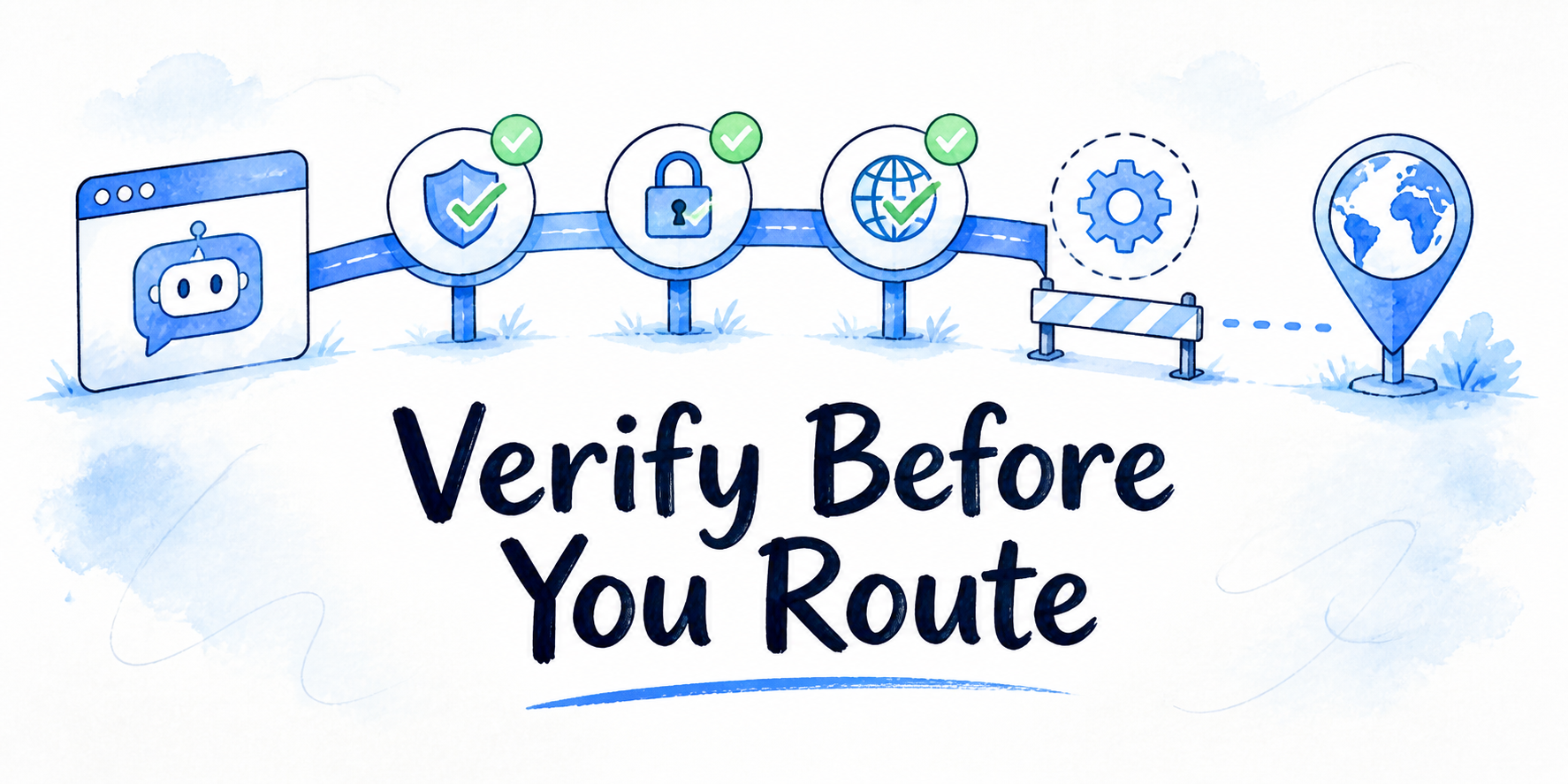
The first question is not which platform has the longest feature list. The first question is: what would have to be true for paying now to make sense?
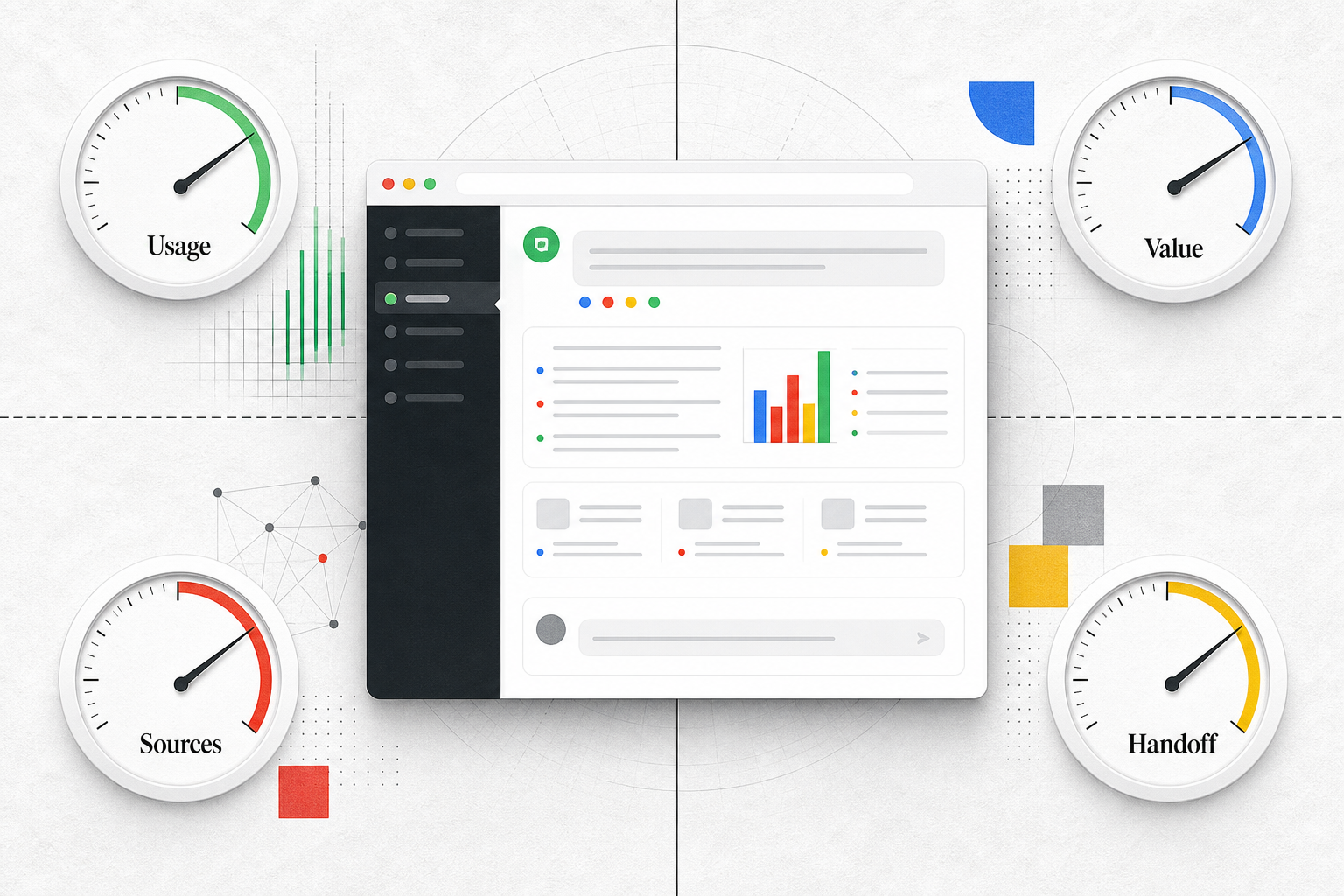
Use this decision rule:
| Factor | What you need to see |
|---|---|
| Usage | Recurring questions, support requests, lead conversations, or client interactions. |
| Value | A link to revenue, support savings, retention, risk reduction, or faster delivery. |
| Confidence | Evidence from traffic, sales calls, support logs, client requests, or a small pilot. |
| Effort | Setup and operating work the team can absorb. |
A white-label AI chatbot can be worth paying for before every number is proven, but it should not be bought on category interest alone. The spend has to connect to a specific job. Repetitive website questions become more valuable when they affect qualified leads, support capacity, customer education, or client retention.
There is a timing tradeoff. Paying too early can create unused software and another system no one owns. Waiting too long can leave qualified leads unanswered, force repeated support work, or delay a client-facing service buyers already want.
Map Value Drivers Before You Estimate Return
Before you ask if a white label ai chatbot is worth it, separate the possible value sources. A chatbot tied to high-intent leads has a different value case than one that only answers low-stakes FAQs.
| Value driver | How it can justify payment | What to check first |
|---|---|---|
| Expected usage | More recurring conversations create more chances for value. | Search logs, support tickets, sales questions, repeated page confusion, or client requests. |
| Revenue potential | Lead capture, qualification, or product education can matter when conversations influence buying intent. | Whether the assistant can collect useful context and route qualified conversations. |
| Support savings | Repeated answers can reduce manual response work. | Whether questions have approved answers and unresolved issues can be tracked. |
| Client retention | Branded assistants can make client sites or customer education more useful. | Whether the assistant supports a service outcome clients already care about. |
| Risk reduction | Grounded answers and handoff rules can reduce guesswork. | Which questions the chatbot should answer, clarify, or hand off. |
| Setup effort | A repeatable assistant pattern can make later deployments easier. | Whether workflow, sources, and review can be reused responsibly. |
The strongest cases usually combine two or three drivers. A lead capture assistant may not need high conversation volume if qualified conversations matter. A support assistant may need more volume because each individual answer is lower value. Do not force every driver into the case. If the chatbot does not affect revenue, do not claim revenue value.
Count the Costs That Sit Outside the Subscription
Platform cost is only one part of the decision. The surrounding work often decides whether the purchase feels valuable or heavy.
| Cost or effort category | Why it matters |
|---|---|
| Platform subscription | The direct recurring cost that value must justify. |
| Setup time | Time spent configuring the assistant, branding, sources, workflows, and handoff paths. |
| Source cleanup | Work required to remove stale, duplicate, conflicting, or off-scope content. |
| Workflow definition | Decisions about what the assistant may do and where it must stop. |
| Review owner time | Time spent checking conversations, fixing gaps, and approving changes. |
| Handoff coverage | Human availability for sales, support, account, or expert follow-up. |
| Reporting and maintenance | Time spent reading usage, unresolved questions, leads, content gaps, and required updates. |
| Opportunity cost | Team time that could go to a simpler fix or higher-value project. |
A low subscription price can still be poor value if source cleanup is large, ownership is unclear, or the assistant is expected to cover too many jobs. Capabilities matter because they change cost or value: grounded answers affect trust, lead capture affects revenue potential, handoff affects follow-up, and workflow automation can reduce repeated manual steps. If you need a deeper feature-level review, use the platform features to compare after the value case is real.
Use a Break-Even Model Without Fake Math
You do not need invented ROI numbers to make a serious decision. You need a structured way to compare cost, value, confidence, and threshold.
Use four parts:
| Part | What to write down |
|---|---|
| Cost categories | Subscription, setup, cleanup, review time, handoff coverage, reporting, maintenance, and opportunity cost. |
| Value drivers | Usage, revenue potential, support savings, client retention, risk reduction, and setup effort. |
| Confidence level | Low, medium, or high confidence based on evidence you already have. |
| Decision threshold | The condition that would make paying now reasonable. |
High confidence means you have direct evidence: repeated tickets, common sales questions, clear lead handoff needs, client requests, or existing content users already rely on. Medium confidence means the use case is plausible but needs validation. Low confidence means the benefit is mostly a guess.
Set the threshold in plain language. Paying now may be reasonable if the assistant can handle a recurring question set that takes meaningful team time, or if lead capture improves follow-up on conversations that already show buying intent. A pilot is better if the team cannot tell whether visitors will use the assistant or whether captured leads will be useful.
Decide: Buy Now, Run a Pilot, or Wait
Use the evidence you have to choose the next step.
| Decision | Choose it when | Avoid it when |
|---|---|---|
| Buy now | The use case is narrow, demand is visible, sources are usable, a handoff owner exists, and the value driver is tied to revenue, support, retention, or risk. | The team still cannot explain what the chatbot is supposed to improve. |
| Run a pilot | Value is plausible, but confidence is thin on usage, lead quality, support reduction, or client response. | The pilot would test every possible feature instead of one business outcome. |
| Wait | Demand is vague, sources are stale, scope is broad, or no one can own review and handoff. | Waiting is only a habit and the value signal is already strong. |
A pilot should answer a small number of value questions: Will the intended users ask the expected questions? Can the assistant answer from approved sources? Are leads or handoffs useful? Does the workflow reduce manual work or improve response quality? If a trial is the right next step, use a separate demo checklist for hands-on testing rather than turning this worth-it decision into a trial script.
Buy Now, Pilot, or Wait
| Decision | Choose it when | Avoid it when | |
|---|---|---|---|
| Buy now | High readiness | Narrow use case, visible demand, usable sources, handoff owner, clear value driver | Team cannot explain what the chatbot should improve |
| Run a pilot | Medium confidence | Plausible value, but usage, lead quality, answer coverage, or effort needs validation | Pilot tries to test every possible feature |
| Wait | Prerequisites missing | Demand is vague, sources are stale, scope is broad, or ownership is absent | Waiting is only habit and the value signal is already strong |
When Not to Buy Yet
Do not buy yet if the main risks are still inside your business, not inside the platform.
Demand is too vague. If the use case is “we need an AI chatbot” rather than a recurring job, the value case is not ready. Look for repeated questions, stalled leads, support pressure, client requests, or workflow delays.
Source material is not ready. A chatbot that needs grounded answers depends on usable source content. If website pages, help docs, policies, or service pages contradict each other, cleanup may need to happen first.
The workflow is too broad. A first assistant that must answer everything, sell everything, support every user, and automate every process will be hard to judge. Narrow the job before paying for scale.
No one owns review. If no person checks conversations, approves source changes, and watches unresolved questions, value can stay hidden.
Handoff is not covered. Lead capture and escalation only matter when someone can respond. Without sales, support, or account coverage, the chatbot may collect context without improving outcomes.
If several of these signals are weak, the next step may be a smaller validation path or another category of solution. For a broader category choice, use the white-label AI chatbot alternatives page rather than forcing a platform purchase before the value case is ready.
Scenario: Apply the Worth-It Test to One Website Assistant
Consider a team with a content-rich website. Visitors ask repeated questions about services, fit, process, and next steps. The team is considering a branded assistant that can answer from approved content, capture lead context, hand off conversations that need a person, and automate one bounded workflow.
Expected usage is medium confidence because the same questions appear in sales calls, contact forms, and website feedback. Revenue potential is medium confidence because some questions come from buyers comparing options, but the team has not yet proven that chatbot-captured leads will be qualified. Support savings are low confidence because this is not mainly a support site. Risk reduction is high confidence because the assistant can keep answers tied to approved pages and hand off questions outside scope.
Then they count effort. Source cleanup is moderate because several pages need updates before the assistant should rely on them. Workflow definition is manageable because the first job is narrow: answer service and fit questions, capture lead details, and hand off sales-ready or out-of-scope conversations. Review owner time and handoff coverage are available.
The decision is a bounded pilot. The value drivers are real enough to test, but the team still needs evidence on visitor usage and lead quality. If the pilot shows that visitors ask the expected questions and handoffs produce useful follow-up, paying for broader use becomes easier to justify. If usage is thin or sources take more work than expected, the team waits and fixes the prerequisites.
Ask These Questions Before Paying
Use these questions to test the business case before you commit money.
Value
- Which business outcome would make the purchase worthwhile: leads, support capacity, client retention, risk reduction, faster delivery, or another specific outcome?
- Which value drivers are high confidence, and which are still guesses?
Usage
- Who will actually use the assistant?
- What repeated questions or workflows show that demand already exists?
- Is expected usage tied to valuable conversations, or only to general curiosity?
Sources
- Are the pages, docs, FAQs, policies, or service descriptions current enough to support grounded answers?
- Are there conflicts in source material that need cleanup before launch?
- Which topics should the assistant avoid or hand off?
Ownership and handoff
- Who owns setup decisions, conversation review, and changes after launch?
- Which conversations should move to sales, support, account management, or another team?
- Can the receiving team respond quickly enough for the handoff to matter?
Confidence
- Is there enough evidence to buy now, or would a pilot reduce the biggest uncertainty?
- If the pilot fails, will you know whether the issue was demand, sources, scope, handoff, or platform fit?
These are value-validation questions. They are not a full vendor demo process, a security review, or a feature checklist.
Where Chat With Fits This Decision
Chat With fits the value case when the job is a branded AI assistant for a content-rich website, especially when the assistant needs grounded answers, lead capture, human handoff, and workflow automation.
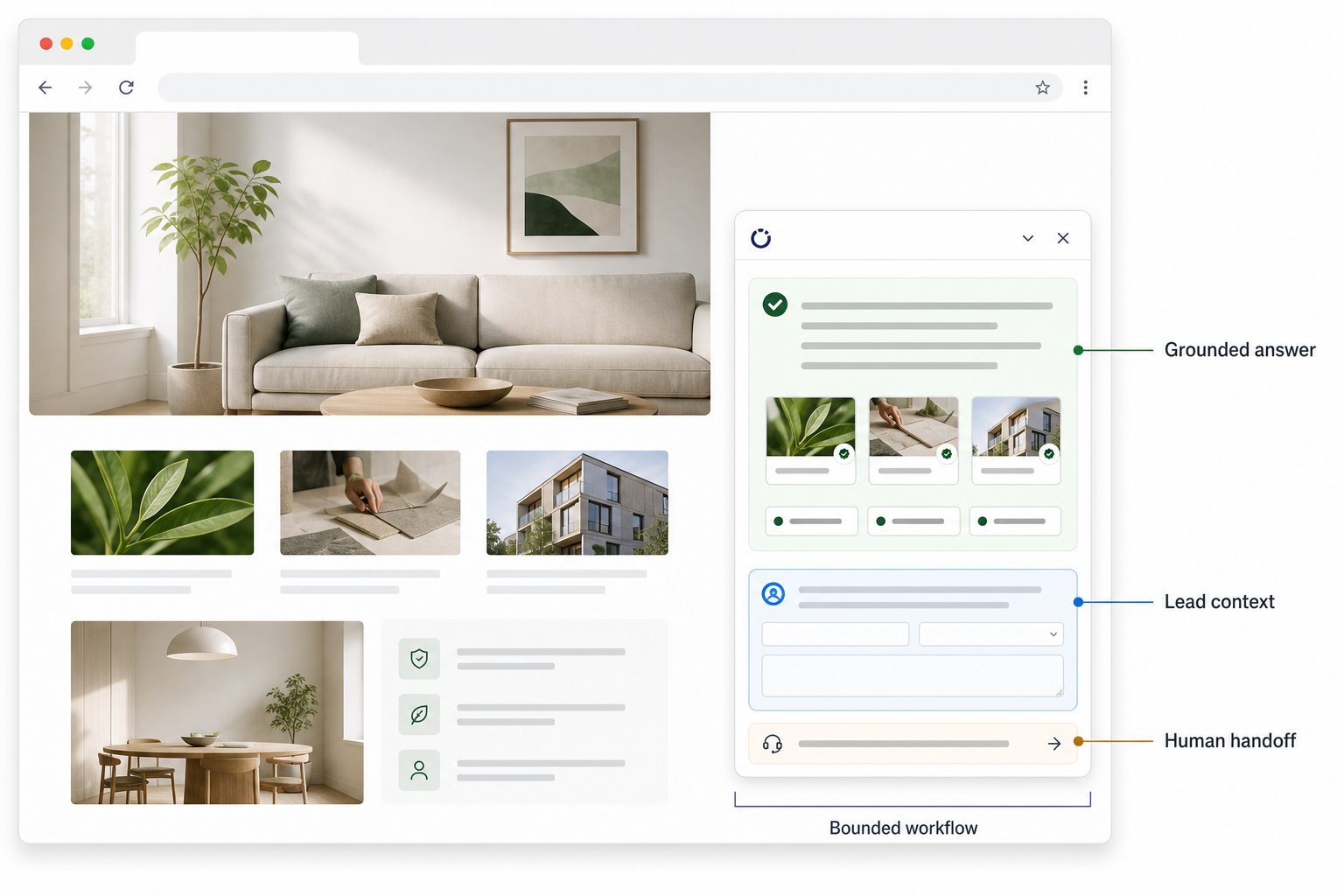
That does not make every use case ready to buy. The same readiness rules still apply. The site needs enough recurring visitor questions or workflow demand. The source content needs to be usable. The assistant needs a bounded job. A person or team needs to own review and handoff. If those pieces are present, the spend is tied to a real website outcome rather than a broad AI experiment.
Keep the product question narrow: does this capability set match the value driver you already identified? If yes, decide whether your confidence is strong enough to pay now or whether a bounded pilot should prove the uncertain parts first.
Choose the Next Action From the Evidence You Have
Buy now if the use case is narrow, demand is visible, sources are ready enough, handoff coverage exists, and the expected value clearly connects to revenue, support savings, retention, risk reduction, or setup effort.
Run a bounded pilot if the use case is credible but you need evidence on usage, lead quality, answer coverage, handoff usefulness, or actual operating effort.
Wait and fix prerequisites if demand is vague, source material is unreliable, the workflow is too broad, or no owner can review and improve the assistant.
The practical answer to “is a white label ai chatbot worth it” is conditional. It is worth paying for when expected value is specific, the work around the platform is understood, and the team has enough confidence to act. If not, the better decision is pilot, wait, or choose another path.
FAQ
Is a white-label AI chatbot worth it for a small agency?
It can be, but only when the agency has a repeatable client-facing use case and enough operating capacity to support it. The value case is stronger when one branded assistant pattern can be reused across similar clients without creating custom work every time.
What numbers should I know before paying?
You do not need perfect ROI math, but you should know the likely usage source, the business outcome, the cost categories, and the decision threshold. Use reader-supplied figures where you have them, such as current support time, lead value, client demand, or setup hours.
Should I buy before I have much website traffic?
Low traffic does not always mean wait, but the value driver must be strong enough to compensate. A small number of high-intent lead conversations may matter more than many low-value FAQ interactions. If traffic is low and business value per conversation is unclear, pilot or wait.
When should I pilot instead of buying?
Pilot when the use case is plausible but one or two important assumptions are unproven. Common pilot questions include whether visitors will use the assistant, whether answers can stay inside approved sources, whether captured leads are useful, and whether handoff improves follow-up.
What makes a chatbot not worth paying for yet?
The clearest warning signs are vague demand, stale source material, broad scope, no review owner, weak handoff coverage, and no defined value driver. In those cases, buying a platform may add cost before the business is ready to benefit from it.