TL;DR
- Do not sell an AI chatbot yet when the client lacks approved content, a named owner, maintenance capacity, clear data boundaries, realistic goals, budget, or approval authority.
- A failed readiness check does not always mean the client is a bad fit. It often means the agency should sell prep work first.
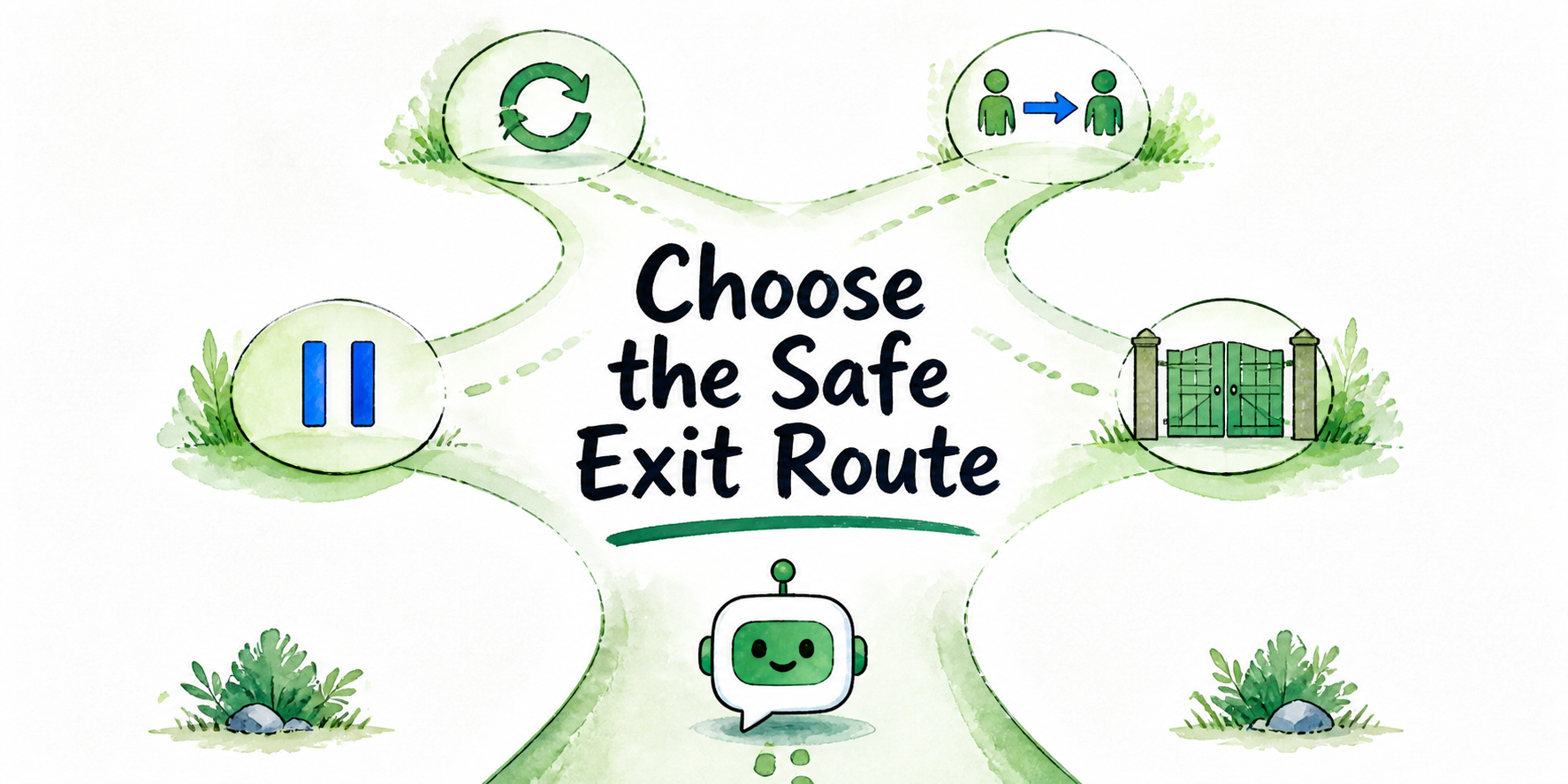
- The right next step is one of four moves: pause the offer, narrow the use case, run preparation work, or decline the project.
- Sensitive-data concerns should be scoped out, routed to the right policy owner, or reviewed by qualified parties before the agency promises anything.
- Disqualification protects trust because it keeps the agency from selling a chatbot the client cannot support, approve, or measure.
A client can want a chatbot for the right reason and still be the wrong project to sell today. When not to sell ai chatbot services comes down to readiness: the client needs reliable source content, a responsible owner, update capacity, clear boundaries, realistic goals, budget for the whole scope, and an approval path before the agency advances the opportunity.
Key Takeaways
- A chatbot readiness check belongs before the proposal, demo, onboarding packet, build, QA pass, launch, or maintenance plan.
- The seven filters are content readiness, ownership, maintenance capacity, sensitive data, realistic goals, budget, and approval process.
- Each failed filter should change the next step. The agency should pause, narrow, sell prep work, require an owner, require approval, or decline.
- Prep work is the right offer when the client has a real visitor problem but cannot yet support a credible chatbot scope.
- Declining is appropriate when the client refuses required boundaries, asks for unsupported guarantees, or will not assign responsibility for updates and approvals.
Start With The Go Or Pause Decision
A chatbot is ready to sell only when the client has a bounded use case, reliable sources, a named owner, and a realistic path to approval. If those are missing, the agency should not treat the opportunity as ready just because the client is excited.
The first decision is not which chatbot platform to use, which demo to run, or how to package the deliverable. The first decision is whether the client has enough structure to make a chatbot useful and supportable. A client who cannot answer basic readiness questions may still become a good fit later, but selling too early can create a project the agency has to rescue from missing content, unclear accountability, or stakeholder doubt.
Use a simple rule: if the chatbot would need to answer from sources the client has not approved, maintain information nobody owns, handle data the agency cannot responsibly scope, or deliver results nobody has defined, pause the sale. That pause is not a rejection of the client relationship. It is a filter that protects both sides from buying the wrong thing too soon.
This matters most with existing clients, because the relationship can make the agency feel pressure to say yes. A trusted agency has more to lose from forcing a weak chatbot project than from saying, "not yet, here is what needs to be ready first."
Use Seven Readiness Filters Before You Offer The Chatbot
Use these filters as a pre-sale screen. They are not a full intake packet. They decide whether the opportunity should move forward, narrow, become prep work, or stop.
Seven Readiness Filters
- Content readiness
Approved, current, non-contradictory source answers exist.
- Ownership
One business owner can define sources, boundaries, and approvals.
- Maintenance capacity
Someone can update answers as offers, policies, hours, or services change.
- Data boundaries
Sensitive workflows are excluded or routed for qualified review.
- Realistic goals
The first use case is bounded and measurable.
- Budget
The client can fund setup, review, updates, and support.
- Approval authority
The real approver is present before proposal work advances.
| Readiness filter | Red flag | Recommended next step |
|---|---|---|
| Content readiness | The website has missing, outdated, thin, contradictory, or unapproved answers. | Pause the chatbot offer and sell content cleanup or source selection first. |
| Ownership | Nobody can name the person responsible for source content, answer boundaries, and approvals. | Ask for one business owner before advancing. |
| Maintenance capacity | The client expects the chatbot to stay accurate while offers, prices, policies, hours, or service details change. | Narrow the use case or require an update owner before selling. |
| Sensitive data | The client wants the assistant to handle personal, financial, medical, legal, employment, or private customer information without a clear policy route. | Remove that workflow from the first scope, pause, or route to the client's policy owner and qualified review. |
| Realistic goals | The client wants broad automation, guaranteed outcomes, or answers beyond approved sources. | Reset the goal to one measurable workflow or decline the requested scope. |
| Budget | The client can fund setup but not preparation, maintenance, or required review. | Narrow the scope or sell prep work before the chatbot. |
| Approval process | The buyer is interested but cannot confirm who signs off, who reviews content, or who owns risk decisions. | Require a decision sponsor and approval route before proposal work. |
Content readiness is usually the first practical blocker. Website-based assistants work best when they can answer from sources the client already publishes, approves, and trusts. If the source pages are vague, stale, or inconsistent, the chatbot will expose that weakness faster than a normal website visit. The next step is to help the client prepare client website content for chatbot training before the project becomes a build.
Ownership is the next gate. A chatbot needs someone on the client side who can say what is true, what is out of scope, what changed, and what should be escalated to a person. If the client says "the team will handle it," ask for a named owner. Without one, your agency becomes the de facto product owner for the client's business answers, which is usually the wrong responsibility.
Maintenance capacity is separate from ownership. A client may name an owner but still lack time to update pages, review recurring questions, and approve changes. In that case, narrow the chatbot to slower-changing content or require a maintenance path before selling the offer.
Sensitive data needs caution. The agency should not make legal, compliance, or data-security determinations during qualification. Treat sensitive workflows as a readiness red flag. Remove them from the first scope, route questions to vendor documentation, the client's policy owners, or qualified review, and keep the chatbot focused on approved public content until the right people have reviewed the risk. For a deeper client conversation, route readers to security questions with clear data, access, retention, vendor documentation, and escalation rules.
Realistic goals keep the project grounded. "We want the chatbot to answer everything" is not a ready scope. "We want visitors to find service-fit answers from approved service pages and submit qualified inquiries" is closer to a sellable use case. The goal should match what the sources and owners can support.
Budget readiness does not mean the client has accepted a price. It means the client understands that a responsible chatbot project may include preparation work, setup, review, and ongoing updates. If the budget only covers a quick install, narrow the scope or sell prep work first.
Approval process is the final gate. A client champion can be enthusiastic and still lack authority. Before you spend time advancing the opportunity, confirm who approves the use case, source boundaries, sensitive-data route, budget, and later launch decision. If there is no approval path, pause.
Turn A Failed Readiness Check Into Prep Work
A failed readiness check is not automatically a lost deal. Many clients are not ready for a chatbot because the same inputs that would make the chatbot strong are unfinished: service pages, policy pages, FAQs, handoff rules, owner assignments, and approval paths.
Offer prep work when three things are true: the client has a real visitor or support problem, the first chatbot use case could become bounded, and the missing readiness item is fixable. The offer should be concrete enough that the client understands what changes after the prep work.
Useful prep work can include:
- Cleaning priority website pages so answers are current, specific, and approved.
- Selecting the first use case and excluding risky or unsupported workflows.
- Naming a content owner and approval owner.
- Mapping which questions should be answered from public content and which should hand off to a person.
- Removing sensitive intake questions from the first chatbot scope.
- Replacing broad goals with one success measure the client can judge.
- Confirming who can approve budget and scope before proposal work begins.
This is different from declining. Declining says the project should not move forward under the requested conditions. Prep work says the business problem is valid, but the client needs readiness work before the agency can responsibly offer the chatbot.
The tradeoff is that prep work can feel slower than saying yes. It may also reduce the immediate deal size if the first chatbot scope becomes smaller. That is acceptable when the alternative is a fragile project. A smaller, better-supported scope is easier to sell, easier to explain, and less likely to create avoidable blame later.
Decline when the client will not accept necessary boundaries. For example, decline if the client insists the chatbot should answer from unapproved sources, handle sensitive information without review, guarantee business outcomes, or stay accurate without an owner. In those cases, the requested project conflicts with responsible delivery.
Scenario: A Client Wants A Bot Before The Site Is Ready
A web design agency has an existing professional services client. The client asks for an AI chatbot because visitors keep submitting vague contact forms and calling with basic service questions. The agency sees a real business problem, but it does not offer the chatbot yet.
The content readiness check fails first. The client's service pages describe broad categories, but they do not answer common visitor questions about eligibility, timing, locations served, intake steps, or what happens after a form submission. Two pages describe the same service differently.
Ownership is unclear. The marketing manager wants the chatbot, but service details come from operations and approval comes from a partner who is not on the call. Maintenance capacity is thin because the client changes service availability seasonally but has no routine for updating the website when those details change.
Sensitive data is also a concern. The client wants the chatbot to ask screening questions before the visitor contacts the office. The agency does not judge whether that is allowed. It removes screening from the first scope and says that any sensitive intake flow needs policy review before it is discussed as chatbot work.
The goal is too broad. The client says the bot should "handle leads automatically." The agency resets the first possible goal to helping visitors find approved service-fit information and choose the right contact path. Budget and approval are also not ready because the client has budget interest but no confirmed approval owner for content cleanup, chatbot scope, or ongoing updates.
The agency does not send a proposal or run a demo. It offers prep work instead: clean the five priority service pages, resolve contradictions, assign one content owner, exclude sensitive screening from the first use case, define one goal, and confirm the approver. After that, the agency can decide whether the chatbot is ready to scope.
That response keeps the relationship intact. The client is not told "no AI." The client is shown what must be true before the agency can sell the chatbot responsibly.
Where InsertChat Fits After The Client Is Ready
After the readiness filters pass, platform fit becomes easier to judge. InsertChat is strongest for content-rich websites where the client has owned, approved sources and wants a branded assistant that can provide grounded answers, capture leads, hand off when needed, and support defined workflows.
For agencies, that fit matters because each client assistant needs clean boundaries. Separate client projects should have their own sources, scope, and review path. When the agency is building under its own service model, reusable delivery and white-label presentation can help the agency keep the offer organized without turning every client into a custom invention.
The same readiness rules still apply. A branded assistant cannot fix missing ownership, weak source content, unclear approval, or unrealistic goals by itself. Treat the tool conversation as the step after the client has proved they can support the use case.
A good fit looks like this: the client has a content-rich website, approved pages that answer common visitor questions, a clear lead or handoff path, and an owner who can maintain sources. A weak fit looks like this: the client wants broad automation, has little approved content, has unresolved sensitive-data questions, and cannot say who will approve or maintain the assistant.
Choose The Next Step: Pause, Narrow, Prep, Or Decline
Use the failed filter to choose the next action. The goal is not to slow every opportunity. The goal is to stop the wrong opportunities from moving forward in the wrong shape.
Pause, Narrow, Prep, Or Decline
| Condition found | Best next step | Why | |
|---|---|---|---|
| Missing approver | Buyer is interested, but approver is missing | Pause | Proposal work may stall or restart later |
| Sensitive data | Sensitive data without a clear route | Pause or narrow | Do not guess; remove or review the workflow |
| Weak content | Useful content is outdated or inconsistent | Prep | Cleanup can qualify the opportunity |
| Broad scope | Client wants too many question types | Narrow | Start with a smaller measurable use case |
| No owner | No owner can maintain answers | Decline or prep | Accuracy needs post-launch accountability |
| Condition found before selling | Best next step | Why |
|---|---|---|
| The buyer is interested, but the approver is missing. | Pause | Proposal work will likely stall or restart once the real decision maker appears. |
| The use case includes sensitive data without a clear route. | Pause or narrow | The agency should not guess. Remove the workflow or route it for qualified review. |
| The website has useful content but it is outdated or inconsistent. | Prep | Content cleanup can turn a weak opportunity into a qualified one. |
| The client wants the chatbot to answer too many question types. | Narrow | A smaller first use case can be easier to support and measure. |
| No owner can maintain answers after information changes. | Require an owner or decline | A chatbot without update responsibility creates avoidable risk. |
| The client has budget only for a quick install. | Narrow or prep | The scope must match the budget for preparation and upkeep. |
| The client rejects boundaries, review, or realistic goals. | Decline | The agency cannot responsibly sell the requested project. |
If the project passes the readiness screen, the next step can move into a normal pre-build path, where the agency collects client goals, content, owners, access, approvals, and baseline inputs. If it does not pass, keep the decision at qualification level. Do not bury readiness problems inside a proposal and hope they resolve later.
The trust-building move is to name the blocker and offer the smallest useful next step. "We should not sell the chatbot yet because the source content conflicts. The right first project is to clean the five pages the assistant would rely on, name the owner, and decide which questions should hand off." That is clearer than pushing forward with a scope neither side can defend.
FAQ
What is the clearest sign a client is not ready for an AI chatbot?
The clearest sign is that nobody can name the approved source content and the person responsible for keeping it accurate. Without those two pieces, the chatbot has no stable base for answers and no owner for future changes.
Should an agency ever decline an AI chatbot project?
Yes. Decline when the client refuses boundaries, wants unsupported guarantees, expects the chatbot to handle sensitive workflows without review, or will not assign ownership for updates and approvals. A poor-fit project can damage trust faster than a polite refusal.
How can an agency sell prep work without sounding negative?
Make the prep work about readiness, not rejection. Say what must be true before the chatbot is worth selling: approved pages, one owner, a narrower use case, a data boundary, a measurable goal, and an approval route. Then offer the specific work that creates those conditions.
Can a client start with a smaller chatbot use case?
Yes. A smaller use case is often the right move when the client has some reliable sources but the broader workflow is not ready. Start with approved public content, clear handoff, or lead capture before adding workflows that need more review or maintenance.
What should an agency do when sensitive data is involved?
Pause the sensitive part of the scope. Remove it from the first use case, route questions to the client's policy owner or qualified reviewer, and use vendor documentation where product facts are needed. Do not make legal, compliance, or data-security promises during qualification.