TL;DR
- Classify an already-selected task by six factors: consequence of error, approved-source readiness, reasoning complexity, latency tolerance, cost sensitivity, and review requirement.
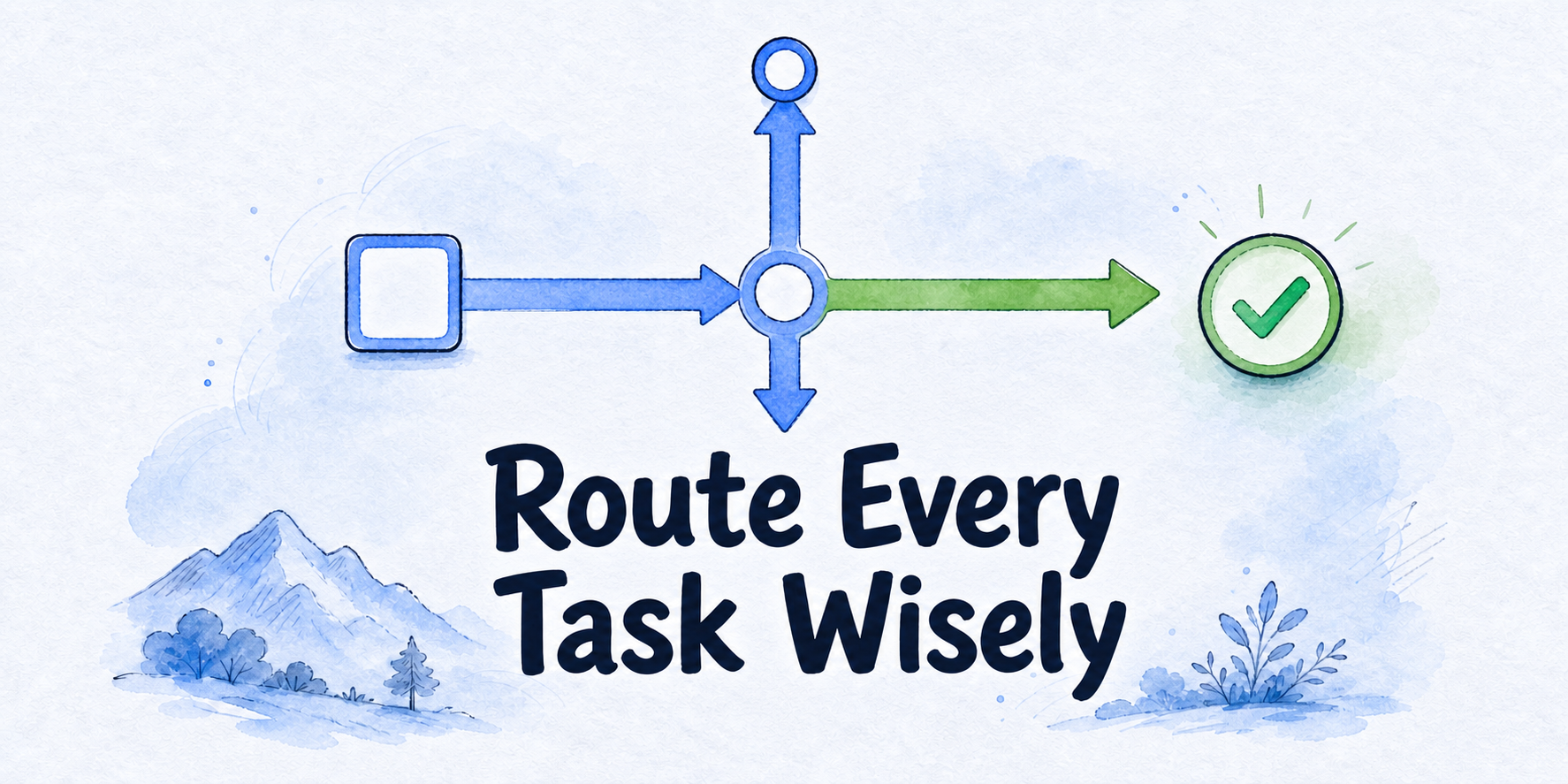
- Assign one current route: default model path, stronger-model path, manual selection, or human-owned task.
- Test representative questions before moving work from manual review to automatic routing.
- Keep knowledge, brand instructions, permissions, conversation context, tools, review ownership, fallbacks, and handoff behavior controlled when the model changes.
- Begin with one bounded task class and non-sensitive or appropriately governed data.
Two teammates receive the same account-brief request. One sends it to a familiar GPT path; the other prefers Claude because of its reputation for writing. Neither records whether the brief matches approved notes, how much correction it needs, how long the response takes, or which failures recur. A routing policy replaces that preference contest with a decision the team can inspect, test, and reverse.
Key Takeaways
- A default model is an operating choice for a defined task class, not the best model for the whole business.
- Automatic classification is useful only when requests can be sorted reliably. Uncertain requests should remain manually selected.
- Missing approved guidance, permission conflicts, or high consequences can make a task human-owned even when a capable model is available.
- Lower-cost paths need monitoring because incorrect or incomplete answers can create expensive follow-up work.
- A route earns automation through observed results, not provider popularity or a new model release.
Choose a model path from task evidence, not provider reputation
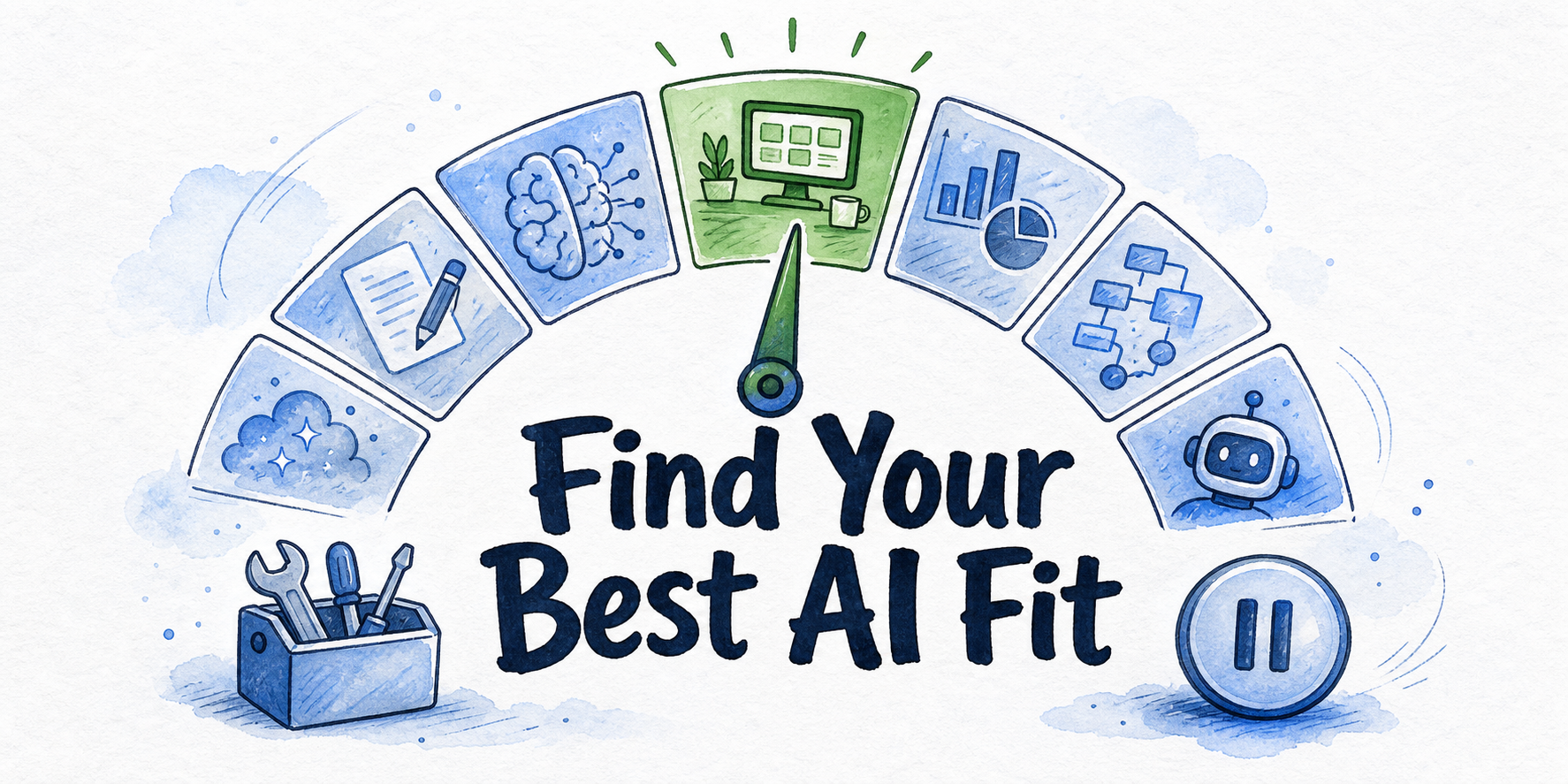
A business should choose among GPT, Claude, Gemini, and alternative model families by testing eligible paths against a defined task class. The decision should reflect the task’s sources, consequences, reasoning demands, response-time needs, cost exposure, and human-review requirement. There is no defensible universal provider winner.
A multi-model AI workspace is a shared environment where eligible OpenAI, Anthropic, Google, and alternative models can serve business tasks under common controls. Model routing is the policy that decides which path handles each bounded task class. The model family is one variable inside that policy, not the policy itself.
InsertChat documents support for these provider families, model changes that retain chat history and retrieved context, and routing between lower-cost and stronger paths. It also supports BYOK for teams that need a direct provider relationship for procurement, billing, or governance. These capabilities establish a choice set, but task testing still determines the route. Review the current multi-model capabilities before configuring a path.
This distinction matters because adjacent requests can have different operating consequences. A routine question answered directly from an approved shipping page may be suitable for a default candidate path. A request to interpret an ambiguous refund policy may require manual selection or human ownership, even if it arrives in the same support queue.
Broader model choice also creates overhead. More paths can improve task fit, but they add procurement questions, team training, route maintenance, and failure analysis. Keep only the options that serve a documented task need.
Classify each task with six routing factors
Use the following six-factor classification as a proposed operating method. It is informed by documented dimensions around quality, speed, cost, approved context, and review, but it is not a product feature or universal scoring standard.
| Factor | What to record | Routing implication |
|---|---|---|
| Consequence of error | What happens if the output is wrong, incomplete, or misunderstood? | Greater consequences increase review or human ownership. |
| Approved-source readiness | Is the answer present in current, authorized material? | Weak or missing coverage blocks source-dependent automation. |
| Reasoning complexity | Does the task retrieve a fact, combine several facts, resolve ambiguity, or make a judgment? | More complex reasoning may justify testing a stronger path. |
| Latency tolerance | How long can the user reasonably wait? | Routine interactions may favor a faster path; consequential work can allow deeper review. |
| Cost sensitivity | How often does the task occur, and what usage cost is acceptable? | High-volume routine work may justify testing a lower-cost default. |
| Review requirement | Must a person inspect, approve, or act on the output? | Mandatory approval remains part of the route regardless of model strength. |
Define each task class narrowly enough that these observations stay consistent. “Marketing work” is too broad. “First-pass product-description drafting from approved specifications” is workable. “Support” is too broad. “Answering delivery-time questions from the published shipping policy” is workable.
Do not force every factor into a numeric score. Labels such as low, medium, and high can help discussion, but the team must define what those terms mean. A high consequence of error may override favorable cost or latency observations. Likewise, no model can repair an absent policy that the business itself has not approved.
Assign one of four routing outcomes
The completed classification should produce one explicit current state. This proposed matrix keeps the result visible and reversible.
| Outcome | Use when | Evidence needed | Fallback state |
|---|---|---|---|
| Default model path | The task is bounded, source-ready, repeatable, and within an accepted review boundary. | Representative answers meet team-defined correctness and workload expectations. | Manual selection or human ownership. |
| Stronger-model path | The task remains bounded but needs deeper reasoning, longer context, or richer input handling. | Testing shows a meaningful improvement that justifies added latency or cost. | Default path with review, or manual selection. |
| Manual selection | Classification is uncertain, inputs vary materially, or automatic routing has not earned trust. | A person chooses an eligible path and records the result. | Human ownership if uncertainty cannot be resolved. |
| Human-owned task | The request lacks approved guidance, exceeds automated authority, conflicts with permissions, or carries unacceptable consequences. | A named role owns the decision or response. | Remain human-owned until the blocking condition changes. |
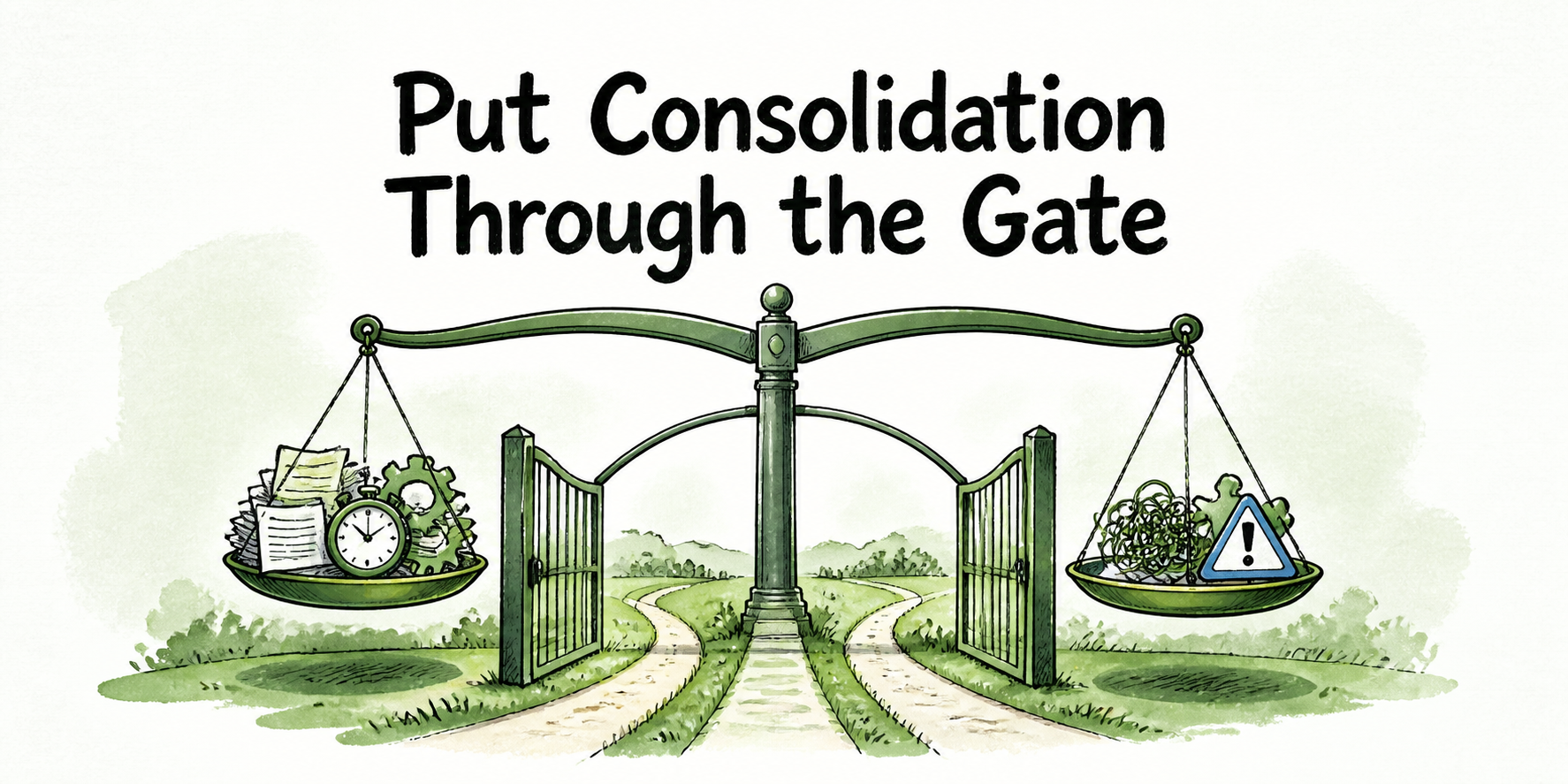
A stronger path is not automatically better. It can cost more, respond more slowly, or still produce output that demands extensive correction. Conversely, a lower-cost routine path is economical only if monitoring catches failures before they create repeated contacts or cleanup work.
Manual selection is also a valid operating state. It gives the team a transparent choice while task boundaries are still being learned. Premature automatic classification can hide why a request reached a particular path.
Keep seven controls fixed when the model changes
A route change should alter the serving model, not the task’s authority or business rules. Keep these controls fixed:
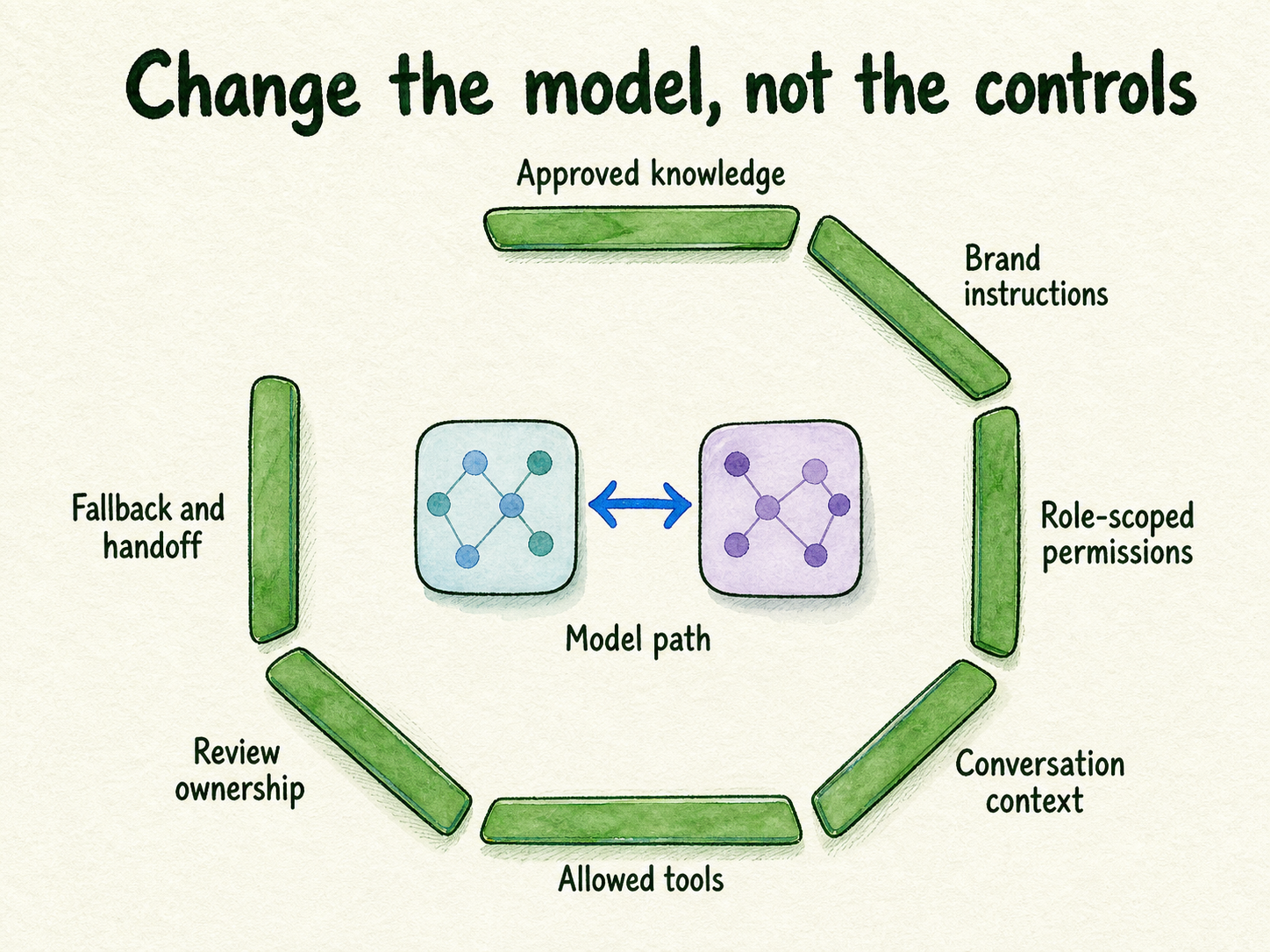
- Approved knowledge: Preserve the authorized pages, documents, notes, policies, and exclusions.
- Brand instructions: Keep tone, terminology, refusals, and claim boundaries consistent.
- Role-scoped permissions: Limit access to the people, assistants, sources, and conversations required for the task. InsertChat documents workspace roles and client-scoped access for this purpose. Review workspace role controls.
- Conversation context: Retain only the history and retrieved material permitted for that workflow.
- Allowed tools: Do not grant a new model access to actions or systems merely because it is more capable.
- Review ownership: Keep the accountable reviewer or approver named in the policy.
- Fallback and handoff behavior: Preserve what happens when the automated path cannot answer or act safely.
Consider an illustrative revenue-operations workflow. An account brief uses approved CRM notes and prior prospect interactions. The team may test another model path for synthesis, but the change must not expose prospect information to unauthorized roles, introduce unapproved web sources, enable new tools, or remove the sales reviewer.
Shared context improves continuity, but unrestricted context creates avoidable exposure. Prompts and relevant source excerpts are sent to the selected provider, so provider terms and deployment controls still require review. InsertChat recommends starting an evaluation with non-sensitive data and documents source scoping and access controls on its Security page. Changing the route does not remove that responsibility.
Apply the policy to four business task classes
The same method can produce different routes for work that appears closely related.
| Illustrative task class | Six-factor reading | Candidate route |
|---|---|---|
| Routine approved-source support | Low consequence within a narrow scope, strong source coverage, simple retrieval, short latency tolerance, high volume, exception review only | Test a default model path. |
| Ambiguous policy guidance | Higher consequence, incomplete or conflicting sources, interpretation required, deeper review acceptable, correction cost significant, mandatory owner review | Manual selection or human-owned task. |
| Account-brief preparation | Moderate consequence, approved internal notes available, synthesis required, response time flexible, repeated use, sales review required | Test a bounded default or stronger-model path with role-scoped access. |
| Marketing drafting | Consequence varies, approved brand material available, creative reasoning needed, moderate latency tolerance, usage cost relevant, review depends on claim type | Split into separate routes for drafting, source-backed answers, and consequential claims. |
For support, repetitive questions should be tested separately from policy exceptions. If the published return policy answers a standard timing question, a default candidate route may be reasonable. If a customer requests an exception or the policy is internally inconsistent, the task crosses into human ownership. Switching providers in search of a confident answer would only conceal the missing authority.
For marketing, ideation and final claim approval are different task classes. A drafting route can produce options from brand instructions. A source-backed answer must stay tied to approved material. A consequential claim about price, performance, legal obligations, or customer outcomes needs accountable review. Combining all three under “marketing drafting” makes the route too broad to govern.
Test only the evidence that can change a route
Route evaluation begins after the task class and its workflow are ready for testing. It is not a general launch checklist.
Build a representative-question test sheet with these fields:
| Field | What the team records |
|---|---|
| Representative question | A realistic request within the defined task class, including known edge cases. |
| Approved answer or source | The fact, passage, or rule used to judge correctness. |
| Candidate route | The model path and review state being tested. |
| Answer correctness | Correct, incomplete, unsupported, conflicting, or incorrect against approved sources. |
| Reviewer effort | Time and type of correction required before use. |
| Observed latency | Response time under the test conditions. |
| Usage record | Usage or provider cost associated with the test. |
| Failure category | The mechanism that failed, not merely “bad answer.” |
| Route recommendation | Retain, promote, roll back, keep manual, or human-own. |
Useful failure categories include missing source, wrong source, unsupported inference, instruction drift, context loss, permission conflict, tool misuse, classification error, unacceptable delay, and excessive reviewer correction. The team must collect these observations and define acceptable boundaries for its task.
InsertChat documents testing real questions against approved sources and recommends beginning with one assistant and one visitor job on its Features page. Conversation records can preserve transcripts, source use, feedback, handoff status, and outcome states, while analytics can expose answer outcomes, weak answers, and no-answer moments. Review conversation records and analytics fields. Reviewer effort, observed latency, usage cost, and failure categories remain team-collected measurements.
No universal sample size or pass rate fits every task. Cover common requests, wording variations, boundary cases, missing-source cases, and requests that should become human-owned. Thin evidence should keep the route manual, especially when errors carry greater consequences.
Use fallbacks and a route-change rule
Define the fallback before enabling automatic routing:
- Missing approved source: Do not ask another model to invent the answer. Mark the task human-owned until authorized guidance exists.
- Unavailable model path: Use a preapproved alternate only if it passed the same task test. Otherwise return to manual selection.
- Permission conflict: Stop the automated path and assign the task to an authorized person.
- Uncertain classification: Keep selection manual and log why the request could not be classified.
- High-consequence request: Preserve human ownership when the task requires accountable judgment, approval, or authority.
Apply one route-change rule: change a route only when observed test evidence supports the move and the fixed controls remain intact.
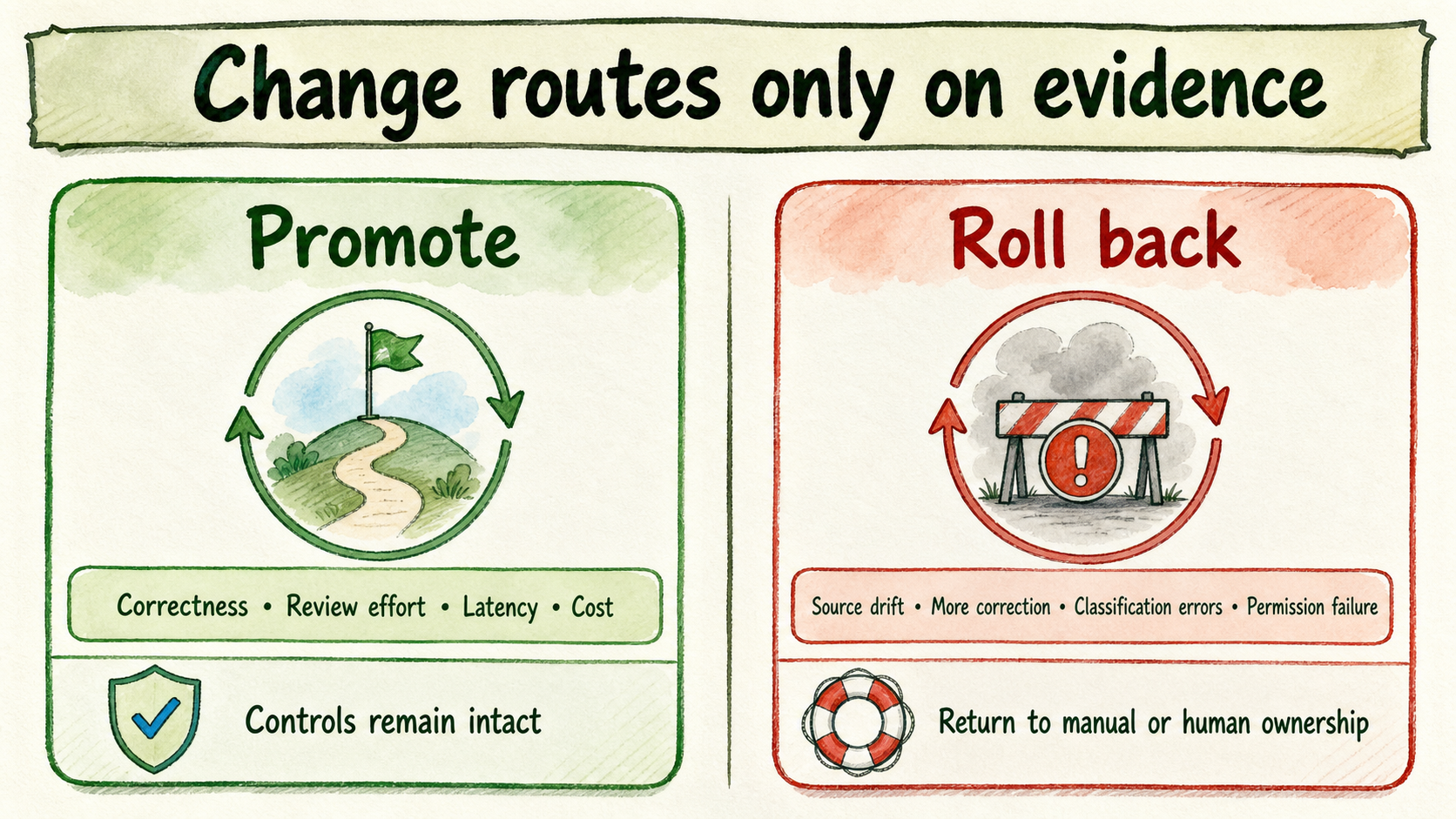
Promotion from manual review to automatic routing requires evidence that the candidate path meets the team’s correctness boundary, does not create excessive reviewer work, has acceptable observed latency and usage cost, and shows no unresolved failure pattern. A newer model, lower advertised price, or provider reputation is not enough.
Rollback should be equally explicit. Return an automatic route to manual selection or human ownership when source correctness deteriorates, reviewer correction increases, classification errors appear, a permission boundary fails, or a consequential failure occurs. Re-test after changing sources, instructions, permissions, tools, or the model path.
Start with one already-selected task class and non-sensitive or appropriately governed data. Run representative questions, complete the evidence log, and choose one state: retain the default, promote the tested path, keep manual selection, roll back, or assign human ownership. Expand routing only after that decision is supported.
Teams evaluating InsertChat can verify eligible paths on the Models page and subscription, credit, trial, and BYOK terms on the Pricing page. Record the date checked because model access, plan eligibility, regional availability, provider charges, credits, and packaging can change.
FAQ
Does one subscription include every model?
Do not assume it does. Supported model access may depend on current availability, plan eligibility, region, and provider arrangement. Check the Models and Pricing pages immediately before purchase or a routing change, and record the date checked.
Does BYOK remove the platform subscription?
No. InsertChat’s pricing information states that the platform subscription still covers the assistant product, including knowledge, deployments, tools, analytics, and governance. Usage under the customer’s provider key is billed separately by that provider. Recheck current packaging before committing.
Should one model handle every business task?
Usually not. One default can serve a bounded group of similar, source-ready, lower-consequence tasks. Other work may justify a stronger-model path, manual selection, or human ownership. Use task evidence instead of forcing every request through one provider family.
When is manual model selection better than automatic routing?
Keep selection manual when task boundaries overlap, approved context varies, permissions differ by request, or classification remains unreliable. Manual selection is also appropriate while the team gathers evidence for a stable rule.
Can a stronger model compensate for missing business guidance?
No. A model can reason over authorized material, but it cannot supply an approved policy, price, exception, or decision that the business has not established. Missing guidance should trigger human ownership or postponement, not a provider switch.
Where should procurement, security, or legal questions go?
Use InsertChat’s contact routes to reach the team responsible for sales, security review, procurement, DPAs, or contract questions. Confirm deployment-specific data handling and provider terms before sensitive work enters a model path.