TL;DR
- A white label saas ai evaluation should end in one of five decisions: resell, pilot, narrow, verify, or reject.
- Treat vendor demos as inputs, not proof. Log each claim, evidence shown, open question, owner, and status.
- Check product fit, branding, data, security, support, billing, onboarding, analytics, and exit criteria before you make client promises.
- A platform can fit one client workflow and still be too risky for broad resale.
- Unknowns are not automatic deal breakers, but they should block proposals, security answers, and sales assets until verified.
Your agency is close to putting its name on a vendor-backed AI offer. That choice affects sales language, client trust, support load, data questions, billing exposure, and delivery quality. A vendor demo can help, but only if you turn it into evidence: what was shown, what was only said, what remains unknown, and what must be verified before resale.
Key Takeaways
A useful evaluation asks whether your agency can responsibly own the client promise.
Vendor claims belong in a demo log until your team has evidence, such as a screen, help doc, contract term, admin setting, support response, or test environment.
Product fit comes before branding. A polished white-label interface will not fix an offer that does not match the workflows your clients need.
Security, data, billing, and support questions should be answered before resale language goes into proposals.
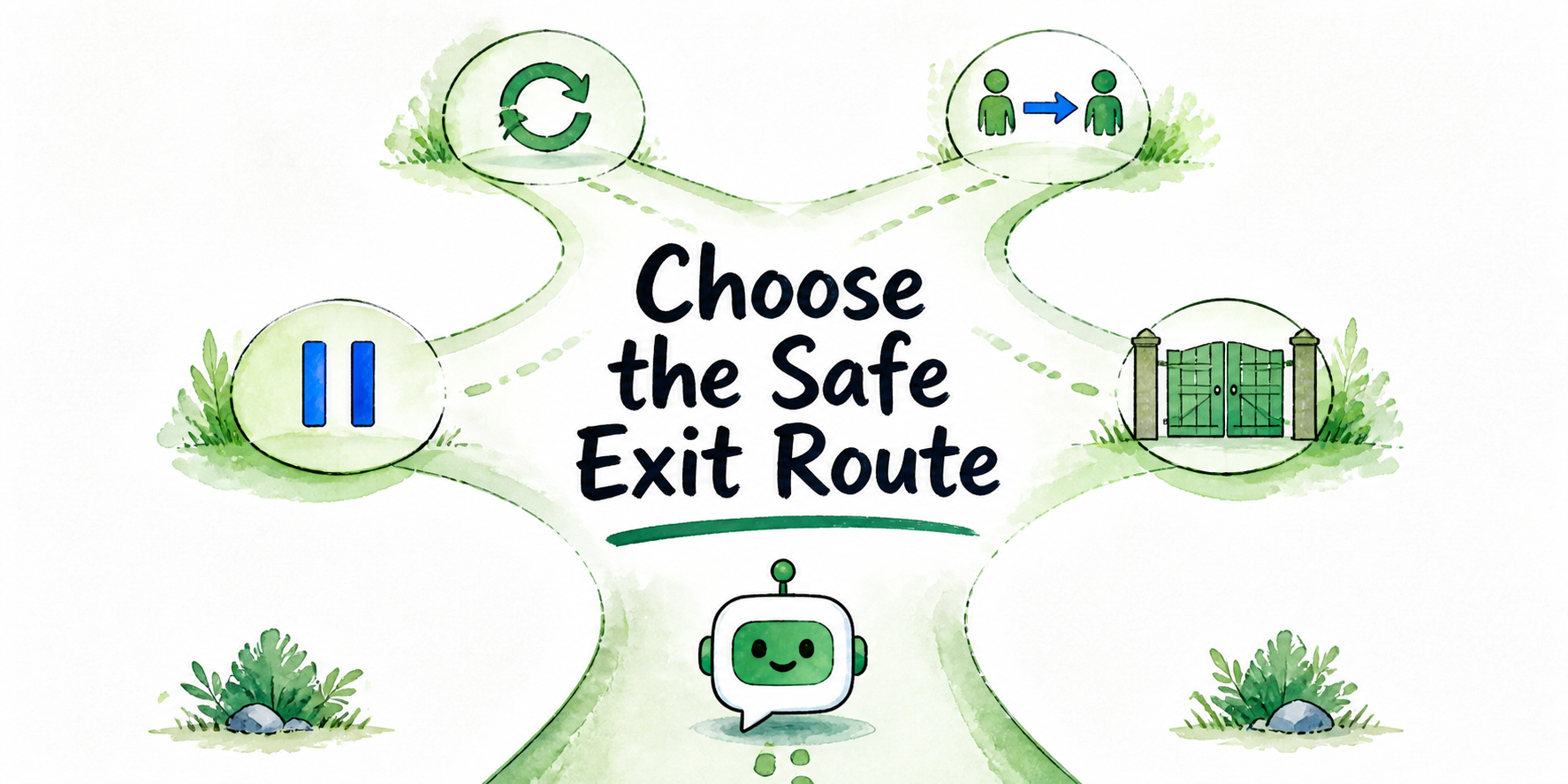
The right outcome may be a bounded pilot, a narrower offer, a verification request, or a rejection.
Start With The Resale Decision The Evaluation Must Answer
Before comparing features, write the decision your agency needs to make. Most evaluations should end in one of these outcomes:
- Resell the platform under the agency brand.
- Run a bounded pilot with one client type or workflow.
- Narrow the offer to a smaller use case.
- Request vendor proof before client-facing promises.
- Reject the platform for resale.
That frame keeps the evaluation practical. You are deciding whether the platform can support your sales promise, onboarding process, support capacity, client reporting, and risk tolerance.
If you are still deciding between agency-branded resale, client-branded assistants, and managed delivery, use White Label AI vs Client-Branded Chatbots: Which Model Fits Your Agency before finishing this checklist. This page assumes you are already close to a white-label SaaS AI path and need to verify the vendor behind it.
A strong evaluation question is specific: can we resell this platform to content-rich service clients for website visitor questions, lead capture, and support handoff without making unsupported claims about data, security, billing, or outcomes?
Use A Demo Log To Separate Verified Facts From Open Questions
A white-label SaaS AI demo can produce useful evidence, but only if someone records it. Without a log, your team may remember the vendor's best phrases and forget what was actually shown.
Demo Log: From Claim To Evidence
- Claim
Feature, support promise, branding control, billing explanation, or security statement made during the demo.
- Evidence shown
Admin screen, test assistant, help doc, contract language, support article, or verbal answer only.
- Risk if wrong
What breaks if the claim is incomplete or inaccurate for a client promise.
- Owner
The person responsible for verifying the claim before it becomes client-facing language.
- Follow-up needed
The question, document, test, or approval still required.
- Status
Verified, unverified, blocked, not needed, or out of scope.
Use a simple demo log:
| Field | What to record |
|---|---|
| Claim | The feature, support promise, branding claim, or billing explanation. |
| Evidence shown | Admin screen, test assistant, help doc, contract language, support article, or verbal answer only. |
| Risk if wrong | What breaks if the claim is incomplete or inaccurate. |
| Owner | The person who must verify it. |
| Follow-up needed | The question, document, test, or approval still required. |
| Status | Verified, unverified, blocked, not needed, or out of scope. |
If a vendor says the assistant can be branded, record which controls were shown. If a vendor says analytics are available, record whether you saw unclear answers, missing answer reports, visitor questions, exports, client views, or only a dashboard preview.
Do not use "vendor said yes" as a status. Use "unverified" until the evidence is clear enough for your team to repeat the claim to a client.
Unknowns are not always rejection signals. A missing answer about one branding detail may be acceptable for a pilot. Unknown retention rules, unsupported billing assumptions, or unclear support escalation are more serious because they affect client trust and agency risk.
Check Product Fit Against The Client Workflows You Already Sell
Product fit should come before white-label polish. The platform has to match work your agency can sell, deliver, and maintain.
Start with the workflows already common in your agency. Practical fit areas include website visitor questions, content discovery, lead capture, support triage, ecommerce questions, handoff to a person, and answers grounded in approved client sources. A useful platform should let you connect the sources clients actually have, such as pages, docs, videos, FAQs, policies, and other approved materials, then turn them into answers and next steps.
InsertChat is described in supplied site context as a white-label AI assistant for websites that can be trained, branded, published, and improved from visitor questions. The same context names workflow areas across marketing, support, ecommerce, content, lead capture, handoff, and website visitor experience. Those categories can guide product-fit checks, but your agency still needs to test them against its first resale offer.
Ask these questions:
- Which client workflow are we selling first?
- Which client sources will the assistant use?
- Can the agency control which sources are included?
- Can the assistant give source-backed answers and next steps from approved materials?
- Can it collect details, qualify intent, or route a conversation when follow-up is needed?
- Does deployment match the client's website or app environment?
- Can the first offer be maintained without custom work for every account?
A broad workflow list does not prove fit. A content-heavy client with clear service pages and FAQs may be a better first fit than a client whose key answers live in staff memory or undocumented exceptions.
Verify Branding Control Before You Promise A White-Label Offer
White-label should mean specific controls, not a vague label. Before you promise a branded AI offer, verify which parts of the client experience your agency can control.
Check these items during the demo or trial:
- Assistant name.
- Logo or avatar.
- Colors.
- Welcome message.
- Suggested prompts.
- Tone and response style.
- Domain or custom domain options.
- Widget, embed, full-page assistant, in-app embed, or API deployment.
- Visible vendor marks in the user experience.
- Admin, client, or reporting screens that may expose vendor branding.
Not every pilot needs every branding control. A branded widget on one client website may be enough to test fit and support demand. A full resale motion may need deeper white-label presentation, domain clarity, and documentation your sales team can trust.
Treat domain and account-ownership details as verification items. Confirm availability, setup steps, client visibility, and terms before making them part of the offer.
Branding also affects support. If clients experience the assistant as your agency's product, they will bring questions to your team first. That can work, but it must be priced, staffed, and documented.
Review Data, Security, And Access Without Giving Legal Advice
Data and security checks are due-diligence questions, not legal conclusions. Your agency should verify facts, collect vendor documentation, and route client legal or IT review when needed.
Start with the data flow:
- What client sources can be connected?
- Who approves those sources?
- Can the agency exclude sensitive pages, files, or topics?
- What conversation data is stored?
- Who can access conversation logs?
- What retention options or defaults apply?
- Can client admins, agency admins, and vendor staff access the same data?
- What documentation does the vendor provide for security, privacy, subprocessors, or data handling?
- What happens when a client asks for deletion, export, or access review?
Do not claim certifications, compliance status, or legal suitability unless the vendor has supplied documentation and the right reviewers have approved the language. If a client asks about regulated data, the responsible answer may be that vendor documentation and client review are required before that use case is included.
For client-facing wording, keep the explanation separate from the evaluation. How Agencies Should Explain AI Data and Security to Clients is the better handoff when your team needs to translate verified facts into client-safe answers.
A practical rule: if your agency cannot explain what data is used, who can access it, how long it is retained, and what documentation supports the answer, do not include that claim in sales material.
Map Support, Billing, And Onboarding Ownership Before The First Client
White-label resale increases ownership. The client may see your brand first, so your agency needs a map for support, billing, and onboarding before the first invoice.
Support questions:
- What issues will the vendor support directly?
- What issues must the agency handle first?
- Is there a support channel, response target, or escalation route?
- Who handles source problems, answer quality, deployment issues, and billing questions?
- Can the agency see enough account detail to diagnose client issues?
Billing questions:
- Is pricing based on assistants, sources, usage, seats, white-label needs, client sites, or another variable?
- What usage can change the agency's cost?
- Can one agency account manage multiple client sites?
- What happens when a client needs more sources, assistants, or seats?
- Are trial terms, current tiers, and billing dates documented?
Avoid exact pricing claims unless you have current vendor documentation. Supplied context says pricing can depend on assistants, sources, usage, seats, and white-label needs. That means your agency should verify the billing basis before building resale margins or bundles.
Onboarding questions:
- What does the agency need from each client before setup starts?
- Who collects approved sources?
- Who approves tone, welcome message, prompts, and exclusions?
- Who handles installation or deployment?
- Who signs off before launch?
- What happens when the client asks for a change after launch?
A low-touch resale offer can become unprofitable if every client requires custom onboarding, unpaid support, or manual billing checks.
Decide Which Analytics Prove The Offer Can Improve After Launch
Analytics matter because the first version of a client assistant will not answer every question perfectly. The evaluation question is whether your agency can see what needs improvement and act on it.
Look for analytics that help answer these questions:
- What are visitors asking?
- Which answers are unclear or missing?
- Which source gaps appear repeatedly?
- Which conversations need handoff?
- Which workflows lead to useful next steps?
- Can the agency use real questions to improve coverage?
- Can the client understand the improvement work without raw technical noise?
Supplied context says analytics can show unclear or missing answers so coverage can improve, and that teams can learn from visitor questions. During evaluation, ask the vendor to show the analytics view.
Analytics that only show volume may not support a strong resale offer. Total conversations show activity, but they do not tell your team what to fix. For a white-label agency offer, the more useful signal is often the repeated unanswered question, weak source, failed handoff, or client content gap.
Do not turn this into a full monthly reporting process during vendor evaluation. You only need enough proof to know whether post-launch improvement is possible.
Set Exit Criteria Before A Pilot Becomes A Resale Offer
Set exit criteria before a pilot becomes a public offer. Use these categories:
| Decision | Use when |
|---|---|
| Resell | Product fit, brand controls, data answers, support ownership, billing basis, onboarding steps, and analytics are verified enough for the first offer. |
| Pilot | Product fit is promising, but branding, workflow, or analytics questions need bounded testing. |
| Narrow | The platform fits one workflow or client type, but not the broader offer first imagined. |
| Verify | Important claims still lack documentation, test access, or admin proof. |
| Reject | Core gaps affect security, billing, support, delivery, or client trust with no clear path to resolve them. |
Some findings should slow or stop resale: unclear data retention, unsupported security claims, no support escalation route, billing variables your team cannot model, weak control over client sources, or analytics that do not show what needs improvement.
Five Possible Evaluation Outcomes
| Decision | Use when | |
|---|---|---|
| Resell | Resell | Verified enough for the first agency offer. |
| Pilot | Pilot | Promising, but needs bounded testing. |
| Narrow | Narrow | Fits one workflow better than the whole plan. |
| Verify | Verify | Material claims still need proof. |
| Reject | Reject | Core resale risks have no clear path. |
Other findings may only narrow the offer. If ecommerce workflows are too complex, you may start with content-rich service pages. If model choice changes cost, verify the quality, speed, and cost tradeoff before making it part of a client package.
Scenario: An Agency Scores One White-Label SaaS AI Demo
A 12-person web agency wants to resell AI assistants to content-rich service businesses. Its first offer is narrow: answer visitor questions from approved website pages and FAQs, collect lead details when a visitor is ready, and hand off complex questions to a person.
During the demo, the vendor shows a branded assistant trained on approved pages and documents. The agency sees controls for assistant name, colors, welcome message, suggested prompts, tone, and source selection. The vendor also shows website deployment and a view of visitor questions.
The agency records these verified facts:
- The assistant can use approved sources for answers.
- The agency can control several visible branding elements.
- The assistant can be deployed on a website surface shown in the demo.
- Visitor questions can be reviewed after launch.
- Some handoff workflows are available.
The agency records these open questions:
- Domain setup and ownership were mentioned but not documented.
- Retention rules for conversation logs were not shown.
- Billing exposure for higher usage was not clear enough to price the offer.
- Support escalation was described verbally, but no support process was provided.
- The analytics view showed visitor questions, but the agency still needs to confirm how unclear or missing answers are flagged.
The agency chooses "pilot" with one existing client, one website, one approved source set, and one handoff path. It blocks three claims from sales collateral until verified: domain language, retention language, and billing assumptions. Operations verifies onboarding steps, the founder verifies billing, and the delivery lead verifies analytics and support escalation.
The agency did not reject a promising platform because the demo had unknowns. It also did not turn unknowns into promises. It chose the smallest responsible next step.
FAQ
What should agencies ask before reselling white-label SaaS AI?
Ask whether the platform fits your first client workflow, which branding controls are available, what data is used, who can access it, how support works, how billing is calculated, what onboarding requires, what analytics show, and what findings should stop or narrow resale.
How should we document unknowns from a vendor demo?
Use a demo log with the claim, evidence shown, risk if wrong, owner, follow-up needed, and status. Mark claims as unverified when they were only stated verbally or shown too quickly to confirm.
When should an agency avoid reselling even if the product looks strong?
Avoid resale when data handling is unclear, support ownership is weak, billing exposure cannot be modeled, branding does not match the promised offer, onboarding requires too much custom work, or analytics do not show what needs improvement.
Can we sell first and verify details later?
Only for low-risk claims that do not affect client trust, data, security, billing, or delivery. For anything material, verify before it appears in a proposal, security FAQ, or sales deck. After evaluation, White Label AI Sales Collateral Agencies Need Before Launch is the right next step for turning verified facts into client-facing assets.
What if the platform fits one workflow but not our full resale plan?
Narrow the offer. A platform can fit website visitor questions and lead handoff without being ready for every support, ecommerce, or internal workflow. Start with the workflow you can explain, onboard, measure, and support with the least unsupported risk.