TL;DR
- Buy when you need a branded assistant in market soon, your needs match standard platform capability, and your team cannot own product maintenance.
- Build when proprietary logic, strict security review, or deep system behavior justifies ongoing engineering ownership.
- Use a hybrid path when the assistant layer can be bought, but integrations, reporting, workflows, or client-specific service processes need custom control.
- Compare paths by launch timeline, differentiation, security control, integration complexity, operating capacity, and maintenance burden before demos or engineering scope.
- Your next action should be one of three choices: shortlist platforms, scope technical discovery, or run a narrow hybrid pilot.
You are not choosing between effort and no effort. You are choosing where the work sits after the first version is live. A white-label platform can reduce product ownership, but it still leaves you with offer scope, source ownership, client expectations, and account operations. A custom build can give you deeper control, but it also makes your team responsible for the roadmap, integrations, QA, security review, support, and upkeep. The useful build vs buy white label AI chatbot question is: what should you own, what can a platform handle, and where would custom work actually change the outcome?
Key Takeaways
Buying fits when the product you need is close to a standard branded assistant: approved sources, client-facing presentation, known deployment surfaces, and common workflow connections. The platform does not remove all operating work, but it can reduce the work your team must own at the product layer.
Building fits when control is the point. If your assistant depends on proprietary logic, strict review requirements, unusual integration behavior, or internal product strategy that a platform cannot reasonably support, a custom system may fit. That choice also means your team owns maintenance after the first release.
Hybrid fits when the assistant layer is not where you need to be different. You can buy the platform layer and build the parts around it: a custom handoff, reporting view, CRM flow, internal review process, or client-specific service workflow.
The wrong path usually shows up as an ownership mismatch. A team buys, then expects platform behavior that only custom engineering can provide. Or a team builds, then realizes it does not have the capacity to maintain model behavior, integrations, security review, and support.
Start With the Ownership Decision, Not the Tool List
A tool list starts with features. A sourcing decision starts with ownership.
Before you compare vendors or write an engineering scope, name the parts your team must control. For most teams, those parts fall into three groups: the client-facing experience, the assistant behavior, and the operating system around the assistant.
The client-facing experience includes brand presentation, where the assistant appears, and how it fits into the offer. The assistant behavior includes sources, workflow limits, escalation boundaries, and connected actions. The operating system includes who updates it, who reviews changes, who handles failures, and who explains the system to clients or internal stakeholders.
Buying means you accept a platform's product boundary and use it to launch faster. Building means you create and own that boundary yourself. Hybrid means you accept a platform boundary for the common layer while building the few parts that make your offer or internal workflow different.
This is why the build or buy AI chatbot decision should come before demos. A demo can show that something works. It cannot decide what your team is willing to maintain for the next year.
Use Six Constraints to Compare Buy, Build, and Hybrid
Use six constraints to keep the decision grounded.
Launch timeline: If you need to ship soon, buying is usually the first path to test. Custom development may still be right, but only if the timeline can absorb discovery, engineering, QA, review, and future upkeep.
Differentiation needs: If your offer is differentiated by packaging, service process, account management, or client-specific setup, you may not need to build the assistant layer. If the assistant's core behavior is the differentiator, custom development becomes more plausible.
Security and compliance control: Some teams need deeper review of data handling, permissions, audit behavior, or deployment constraints. A platform may still fit, but the evidence needs to satisfy the review. If the review requires control the platform cannot provide, build or hybrid may fit better.
Integration complexity: Common CRM, support, ecommerce, calendar, and webhook flows often point toward buying or hybrid. Deep proprietary workflows, multi-step internal logic, or unusual system dependencies may point toward build.
Operating capacity: A team with limited engineering and product capacity should be cautious about building. A custom chatbot system is not finished when the first version answers questions.
Maintenance burden: Model behavior, tooling choices, source changes, integrations, QA, security review, support, and client expectations all change over time. The more you build, the more of that burden you own.
When Buying a White-Label Platform Fits
Buying fits when the core requirement is a branded assistant that can be configured, deployed, and operated without your team becoming a chatbot product company.
This path is strongest when your needed capability is standard enough to sit inside a platform boundary. You need approved sources, branded presentation, website or app deployment, common integrations, and a way to manage assistant behavior without writing the whole system yourself.
For example, InsertChat's website context points to branded assistants, website embeds, approved sources, tool enablement, integrations, a visual builder, and deployment with a one-line JavaScript embed. It also references customization for assistant name, logo, colors, welcome message, suggested prompts, tone, domain, and white-label presentation. Those are buy-path signals because they suggest the common assistant layer may already exist.
The buy path still needs caution. You should not treat a platform as a substitute for a sourcing decision. If your team needs unusual data controls, deeply custom actions, or behavior that sits outside the platform's product boundary, buying may create pressure later. In that case, either narrow the offer or move toward hybrid.
Use buying when speed matters, platform evidence matches the intended assistant, and your differentiation is not buried inside custom chatbot infrastructure.
When Building a Custom System Fits
Building fits when control is valuable enough to justify ownership.
A custom system may be the better path when the assistant must follow proprietary logic, connect to internal systems in unusual ways, support strict review requirements, or behave as part of a larger product experience that cannot be separated from your own roadmap.
The key caveat is that build is not a one-time engineering project. It is an operating commitment. Your team owns roadmap decisions, model and tooling upkeep, integration changes, QA standards, security reviews, support paths, and maintenance. If a connected system changes, your team handles the update. If the assistant's answer quality declines after source changes, your team owns the fix. If a client asks how the system works, your team must be able to explain the relevant controls.
Building can be the right choice for a SaaS company whose assistant must operate inside proprietary product workflows, or for a team with security needs that require control over architecture and review. It is less convincing when the real need is a standard branded website assistant with common handoff paths.
Choose build only when the control gained is clearly tied to the product or service you are trying to deliver.
Use a Hybrid Path When Only Part of the System Needs to Be Custom
Hybrid is the practical middle path, but it should stay narrow.
A useful hybrid path buys the platform layer and builds the parts around it that need custom control. That can mean custom integrations, client-specific workflows, reporting views, internal review steps, or service processes that sit outside the assistant platform.
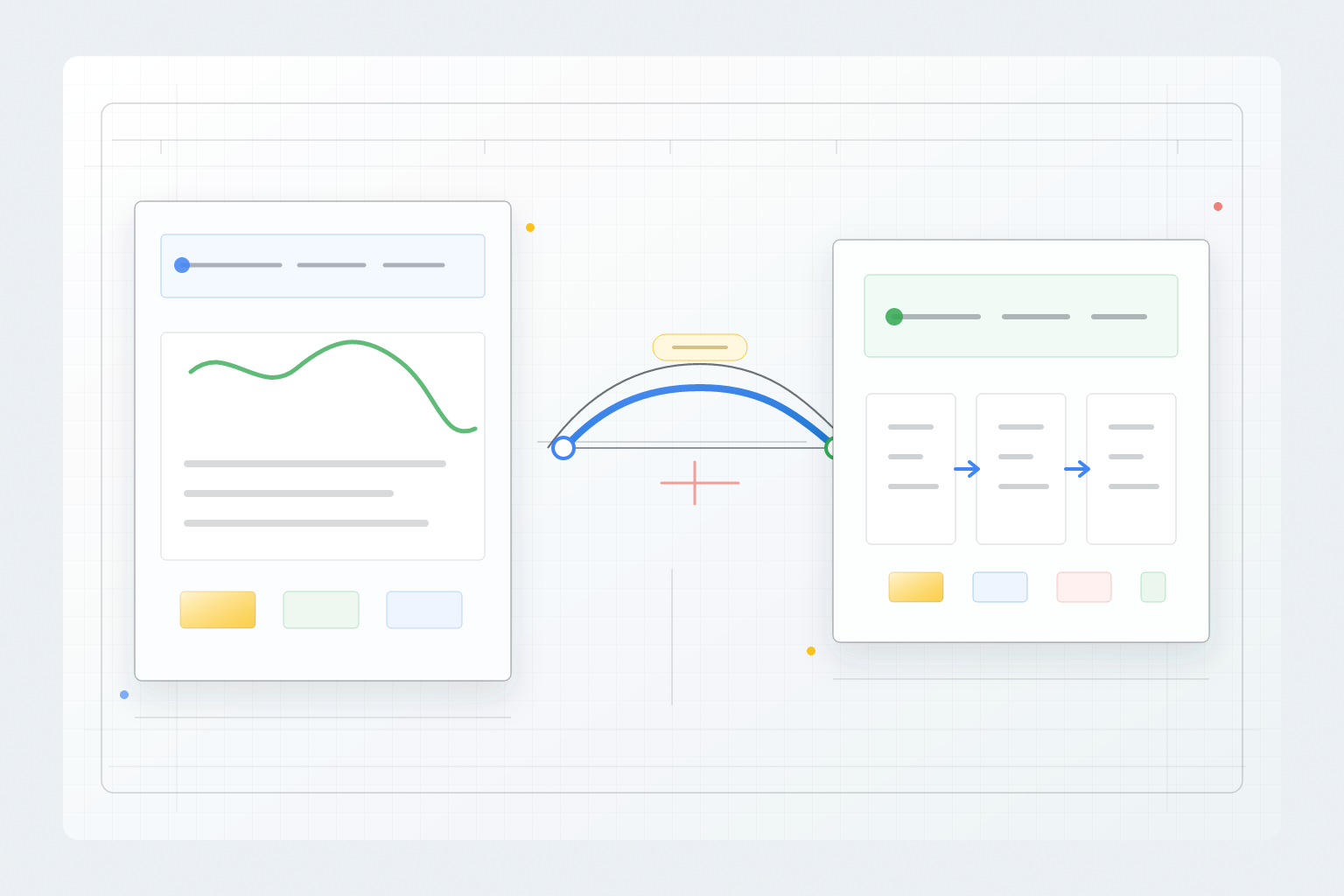
For example, a team might buy the branded assistant layer, then build a custom handoff into a CRM with account-specific routing rules. Another team might use a platform for the website assistant, then build its own client reporting layer because reporting is part of the service it sells. A third team might use a bought assistant for approved-source answers, then create custom internal processes for reviewing high-risk account changes.
The risk is unclear ownership. Hybrid fails when nobody can say where the platform stops and the custom layer begins. Before you choose hybrid, write the boundary in plain language: the platform owns the assistant layer; our team owns the integration, reporting, workflow, or service process.
Hybrid works best when it keeps launch speed while reserving custom effort for the parts that make the offer meaningfully different.
Compare Responsibilities and Maintenance Risk Before You Choose
The first version gets most of the attention, but the operating work determines whether the path holds up.
If you buy, your team still owns the business layer. You decide the assistant's job, approved sources, account expectations, and internal ownership. You also need to evaluate whether the platform can support the deployment surfaces, controls, and integrations your offer requires.
If you build, your team owns the product layer as well. That includes roadmap choices, model and tooling updates, infrastructure decisions, integration maintenance, QA, security review, support, and incident handling. A build path without named owners becomes risky because every future change has to land somewhere.
If you choose hybrid, your team owns the custom boundary. That boundary needs an owner, documentation, and a maintenance plan. Otherwise the platform team, internal engineering team, and client-facing team may each assume someone else is responsible when something breaks or needs to change.
Think of operating responsibility as the cost category you can evaluate without doing ROI math. The question is not whether the chatbot is worth paying for. The question is whether your team can carry the work each sourcing path creates.
Decision Matrix: Buy, Build, or Hybrid
| Constraint | Buy a white-label platform | Build a custom system | Use a hybrid path |
|---|---|---|---|
| Launch timeline | Fits when the team needs a faster start and requirements match platform capability | Fits when the timeline can absorb discovery, engineering, QA, and review | Fits when a platform can launch the assistant layer while custom parts are scoped narrowly |
| Differentiation | Fits when differentiation is in packaging, service, client setup, or offer design | Fits when core assistant behavior is the differentiator | Fits when selected workflows, integrations, or reporting need to be different |
| Security and compliance control | Fits when platform evidence can satisfy review | Fits when review requires deeper control over architecture, data handling, or deployment | Fits when the platform passes core review but custom controls are needed around connected workflows |
| Integration complexity | Fits common integrations and straightforward handoffs | Fits proprietary, deep, or unusual system behavior | Fits common assistant behavior plus custom connection logic |
| Operating capacity | Fits teams without enough engineering capacity to own a full product | Fits teams with product, engineering, QA, security, and support capacity | Fits teams with limited custom capacity focused on a few owned components |
| Maintenance burden | Platform reduces product-layer upkeep, but team still owns offer and account operations | Team owns the full maintenance burden | Maintenance is shared by boundary: platform layer plus custom owned pieces |
| Caution signal | Do not buy if the platform boundary blocks expected behavior | Do not build if the team cannot maintain the system after launch | Do not choose hybrid without a clear owner for each boundary |
Use the matrix as a filter, not a scoring sheet. If one path has two or three hard caution signals, remove it from the next round. If two paths remain plausible, compare the operating responsibilities rather than stretching the feature list.
Buy, Build, or Hybrid Decision Matrix
| Constraint | Buy | Build | Hybrid | |
|---|---|---|---|---|
| Launch timeline | Faster start when requirements match platform capability | Fits only if discovery, engineering, QA, and review fit the timeline | Launch platform layer while custom parts stay narrow | |
| Differentiation | Best when differentiation is packaging, service, or client setup | Best when assistant behavior is the differentiator | Best when selected workflows, integrations, or reporting differ | |
| Security control | Works when platform evidence satisfies review | Works when review requires deeper architecture or data control | Works when core platform passes review but workflow controls are custom | |
| Integrations | Fits common integrations and straightforward handoffs | Fits proprietary or unusual system behavior | Fits common assistant behavior plus custom connection logic | |
| Operating capacity | Fits teams without capacity to own a full product layer | Requires product, engineering, QA, security, and support capacity | Requires limited custom capacity focused on owned components | |
| Maintenance burden | Platform reduces product-layer upkeep; team still owns operations | Team owns the full maintenance burden | Maintenance is shared by clear platform and custom boundaries |
Scenario: A Team Choosing Its First Client-Facing Assistant
A client-facing team wants to launch its first branded assistant for website visitors. The assistant should answer from approved website content, collect useful context, and route follow-up to the right team. The team wants the offer live soon, has limited engineering time, and expects a standard website deployment. It also wants one custom handoff into its CRM so follow-up matches its internal account process.
A full custom build is possible, but the matrix exposes a mismatch. The launch timeline is short, the core assistant behavior is standard, and the team does not have enough operating capacity to own model and tooling upkeep, QA, security review, support, and maintenance for a new product layer.
A pure buy path is closer. The team can use a platform for branded assistant setup, website deployment, approved sources, and common workflow connections. But the CRM handoff has account-specific routing rules that matter to service quality.
The better first path is hybrid. The team buys the assistant layer and scopes one custom integration around the handoff. It does not build a full chatbot system. It also does not force the platform to own a process that is specific to the team's service model.
The sourcing decision becomes clear: buy what is standard, build the part that affects the team's actual differentiation, and name who owns that custom layer after launch.
Choose the Next Sourcing Action
Once the matrix points to a likely path, move to the next sourcing action.
If buy is the likely path, shortlist platforms and compare the evidence that matters for your intended assistant. Keep the evaluation focused on fit, not the longest feature list. A useful next read is the guide to platform features to compare before you buy, which belongs after the sourcing path is plausible.
If build is the likely path, scope technical discovery before writing a full build plan. The discovery should confirm what must be custom, which systems are involved, who owns future maintenance, and what review requirements the system must satisfy.
If hybrid is the likely path, run a narrow pilot around the boundary. Decide what the platform owns, what your team builds, and what would justify expanding the custom layer.
The next step is not the same for every team. Platform evaluation, technical discovery, and hybrid pilot work answer different questions. Pick the one that matches the ownership decision you just made.
FAQ
Should we build or buy a white-label AI chatbot first?
Buy first when your assistant needs are standard, your launch timeline is short, and your team does not want to own the full product layer. Build first when the assistant's core behavior, security needs, or system logic must be controlled by your team and you have capacity to maintain it.
When does a hybrid path make sense?
Hybrid makes sense when the platform layer can handle the branded assistant, but one or two surrounding pieces need custom control. Common examples include custom integrations, reporting, workflow routing, or client-specific service processes. Keep the custom scope narrow so ownership stays clear.
What does a custom build require after launch?
A custom build requires roadmap ownership, model and tooling upkeep, integration maintenance, QA, security review, support, and ongoing fixes. If those owners are not available, the build path can create more risk than control.
Should platform features decide the build-versus-buy choice?
Platform features should support the buy decision, not replace the sourcing decision. First decide whether buying, building, or hybrid ownership fits your constraints. Then use platform evidence to evaluate whether a vendor can support the buy path.
What should we do after choosing a path?
If buying fits, shortlist platforms. If building fits, scope technical discovery. If hybrid fits, define the platform boundary and run a narrow pilot around the custom piece you need to own.