TL;DR
- Organize real shopper questions by discovery, checkout, post-purchase service, and retention before choosing a chatbot task.
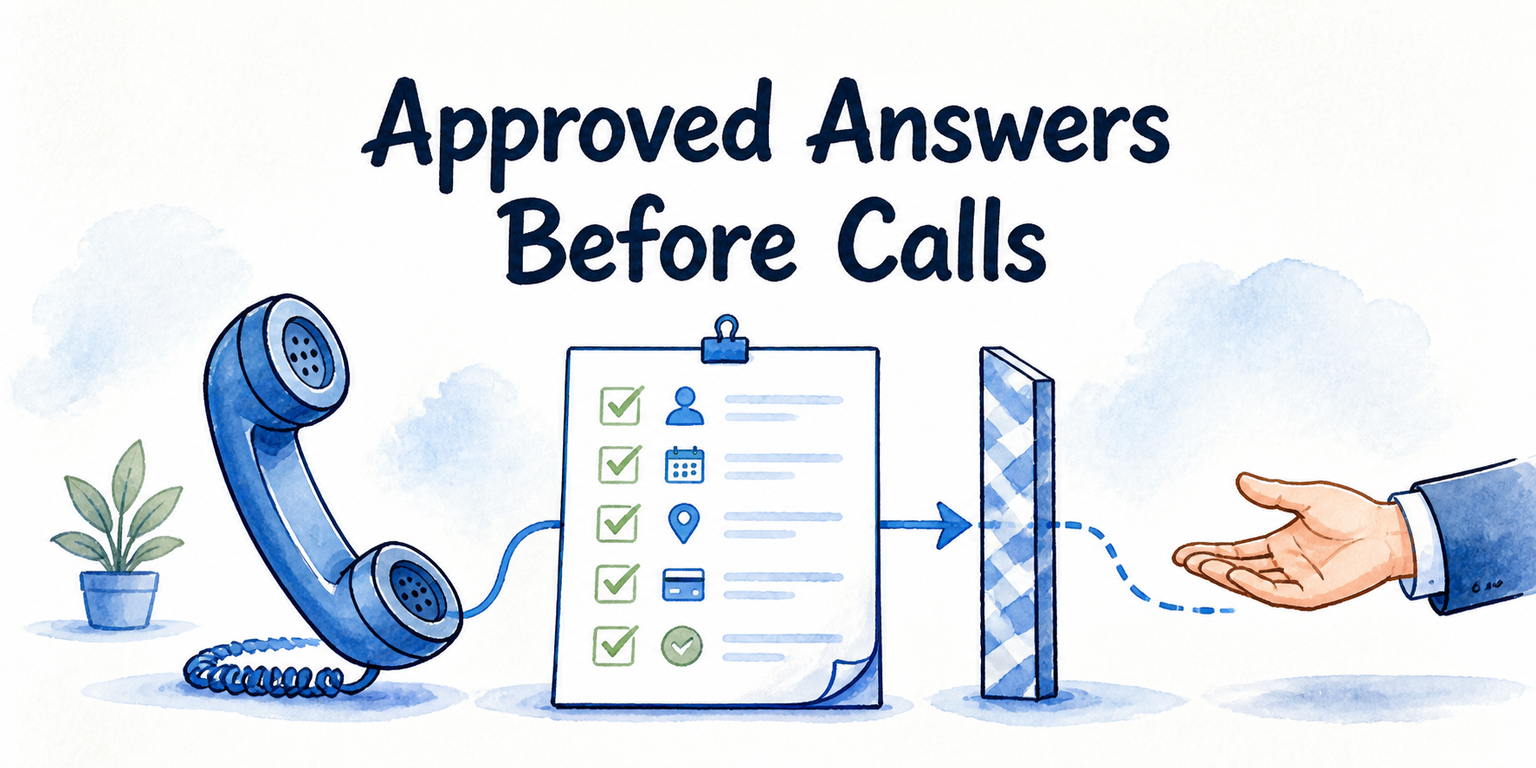
- Separate approved-content answers from live-data lookups, permitted actions, and cases requiring human judgment.
- Record each question family, shopper intent, response type, required source, business owner, and escalation trigger in one worksheet.
- Validate priorities with your own store conversations because no question family is universally the best starting point.
- Begin with one frequent, bounded question family, then carry that scope into a separate deployment-planning process.
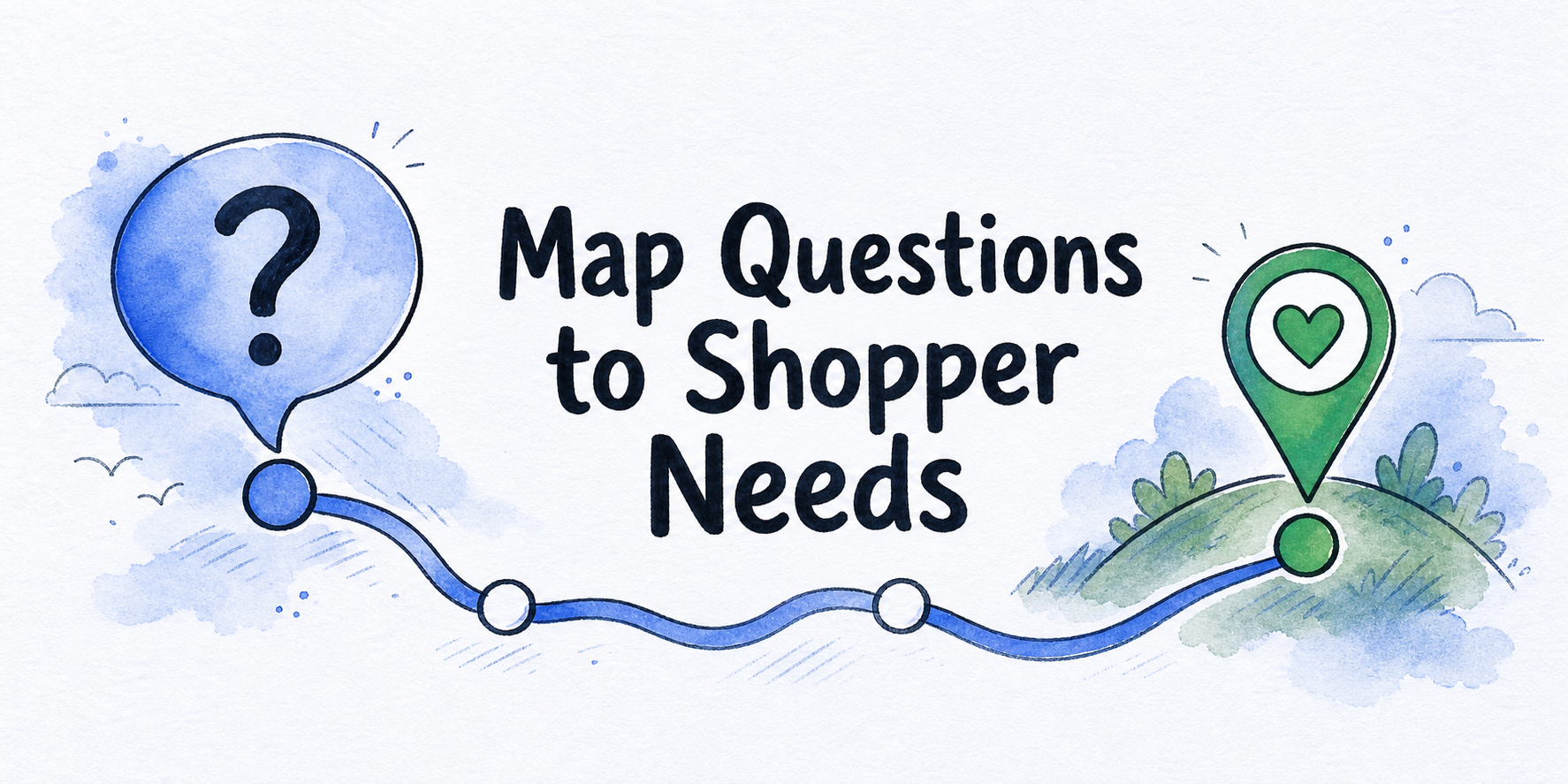
A shopper asking which size to buy, another checking shipping before payment, and a third requesting a return may all reach the same chat box. They still need different facts, permissions, and levels of judgment. Placing these questions within the ecommerce chatbot customer journey reveals those differences and helps you choose a first use case that your store can handle within clear boundaries.
Key Takeaways
- Journey stage explains what the shopper is trying to accomplish. Response class explains what the store must provide.
- A published answer is easier to bound than a lookup or action, even when all three concern the same topic.
- Every mapped question needs a named source, responsible business area, and observable escalation trigger.
- Broad coverage adds sources, permissions, and exception paths. A narrow first scope is usually easier to define clearly.
- Your store’s shopper language and question frequency should determine priority.
Map shopper intent and response requirements together
Start with the moment the question blocks. This keeps topics such as shipping and returns from being placed in one permanent category when the shopper’s immediate need can change.
Discovery includes questions that help someone evaluate a product. A shopper may ask about size, materials, compatibility, colors, or differences between products. The immediate intent is to reduce uncertainty before making a purchase decision.
Checkout includes questions that affect completion of an order. Shipping availability, delivery timing, payment options, discount conditions, and last-minute policy questions fit here when they determine whether the shopper can proceed.
Post-purchase service begins after an order is placed. The shopper may want an order update, return, exchange, or help with a delivered item. The immediate need is resolution of a particular transaction or problem.
Retention concerns an ongoing customer relationship after the immediate service issue has ended. Repeat-order, renewal, or subscription questions may fit here. Use this stage for an actual shopper request, not as a label for every follow-up message.
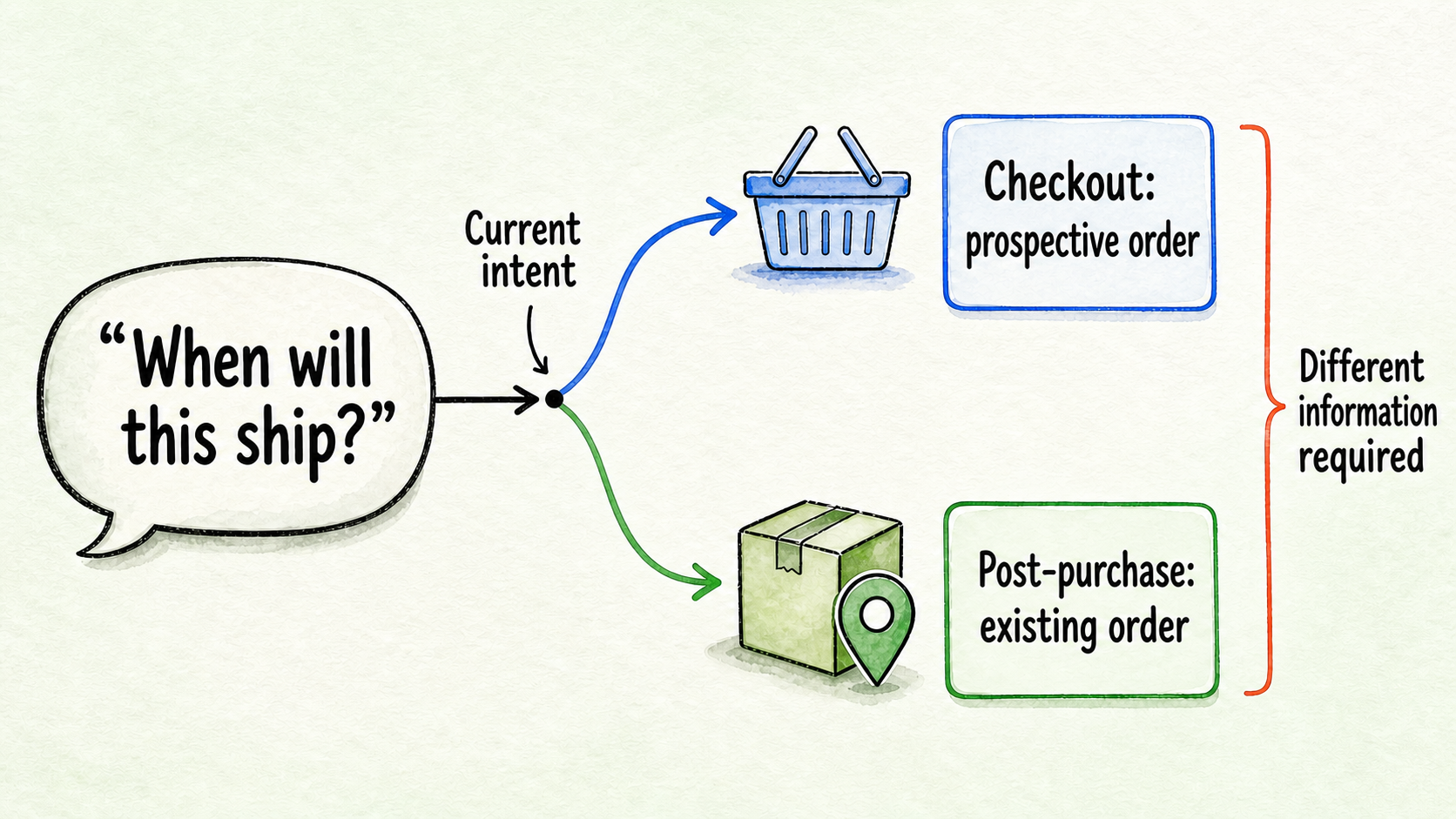
Some questions span stages. “When will this ship?” could concern a prospective order at checkout or an existing order after purchase. Classify the question by the shopper’s current intent and the information needed to respond.
Next, assign the highest-dependency response class required by the proposed use case:
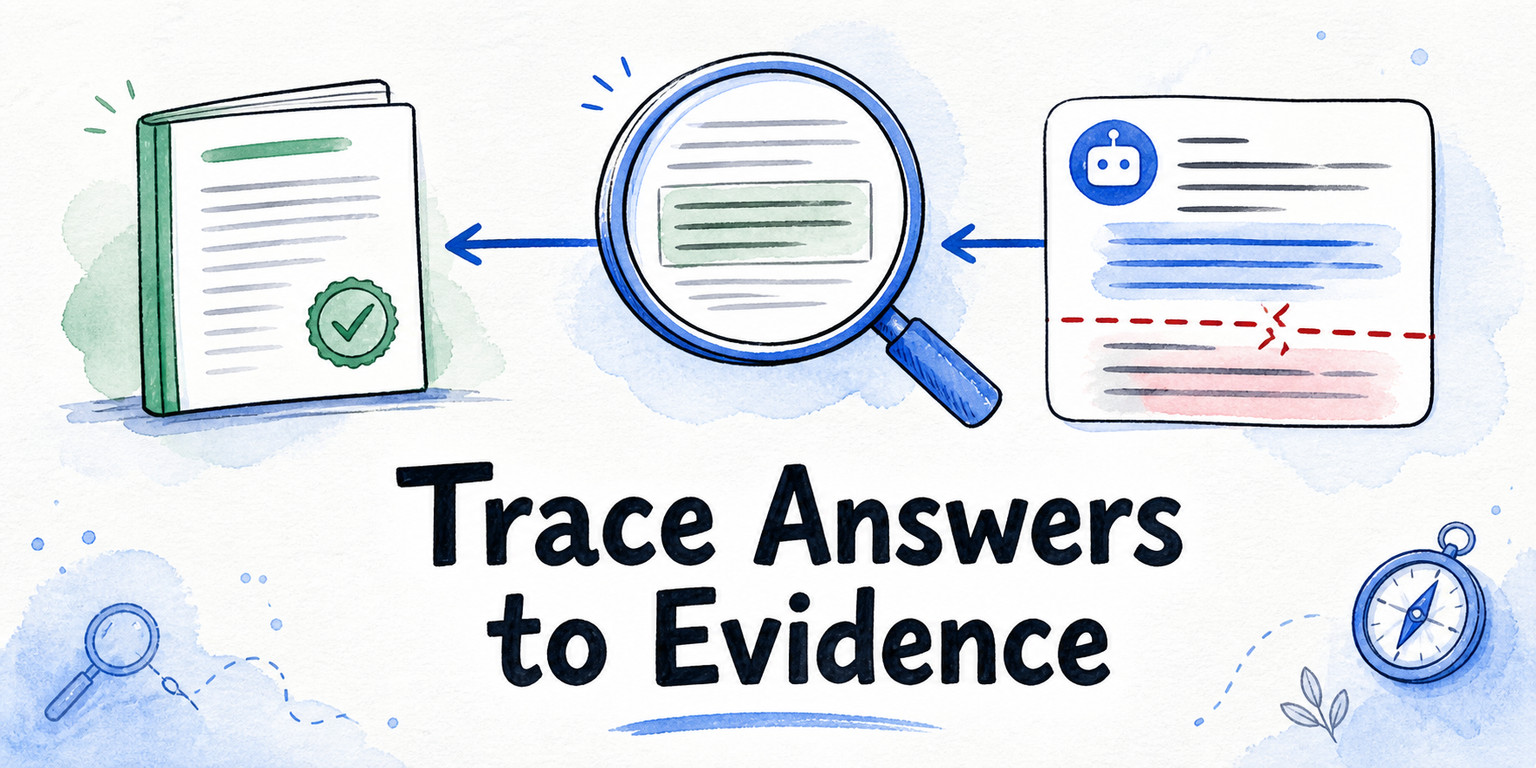
- Approved-content answer: The response comes from a product page, size chart, policy, FAQ, or approved file. No customer-specific record needs to be accessed or changed.
- Live-data lookup: The answer depends on current cart, destination, inventory, account, or order information.
- Permitted action: The shopper wants a defined step completed, such as creating an approved request or routing details into a workflow.
- Human judgment: The request involves uncertainty, an exception, a sensitive complaint, missing data, or authority beyond the permitted path.
One conversation can pass through several classes. A return conversation might begin with a published policy answer, continue with an order lookup, and end with an exception request. Record the most dependent step included in your proposed scope. An assistant that may explain a policy does not automatically have permission to change a record.
Build the ecommerce chatbot customer journey worksheet
Group recurring questions into families rather than recording every wording variation. “Do you deliver to my postcode?”, “Can you ship here?”, and “Is delivery available at this address?” can share one row when they follow the same response path.
Copy this worksheet and add one row for each question family:
| Shopper question or family | Journey stage and intent | Answer or action | Required source or live data | Business owner | Escalation trigger |
|---|---|---|---|---|---|
| What is the shopper asking in recognizable language? | Where are they in the journey, and what must they resolve now? | Approved answer, lookup, permitted action, or human judgment | Product page, policy, file, cart record, order record, or another named source | Which business area owns the information or decision? | What observable condition requires a person? |
Complete the fields narrowly:
- Shopper question or family: Preserve recognizable wording. “Sizing for linen trousers” is more useful than “product help.”
- Journey stage and intent: Record both because the same topic can require different handling before and after purchase.
- Answer or action: Describe what the shopper should receive or the specific permitted step requested. Avoid vague entries such as “assist customer.”
- Required source or live data: Name the dependency, such as a size chart, shipping policy, return policy, cart record, or order system. Identifying the source is enough at this stage. Source review and system design belong in later planning.
- Business owner: Name the responsible area, such as ecommerce, fulfillment, merchandising, or support. This identifies who controls the information or decision without creating a full staffing plan.
- Escalation trigger: Use a condition that can be observed, such as uncertain fit, an unsupported destination, missing order data, a policy exception, a sensitive complaint, or a request outside permitted actions.
This distinction matters because website assistants can answer some questions from approved material, while others depend on current records or connected workflows. InsertChat can work with approved content sources, including website pages, product information, policies, FAQs, and files. InsertChat's Tasks page describes commerce coverage across product discovery, checkout recovery, order status, and returns. Its ecommerce assistant use cases separately support qualification, routing, workflow handoff, and no-code deployment.
Attach those capabilities to specific worksheet rows rather than treating them as an unranked feature list. The worksheet identifies the source and response class needed for a journey moment. It does not settle source authority, design an integration, define handoff staffing, or approve a launch.
See how sizing, checkout shipping, and returns change the choice
Consider a hypothetical clothing store receiving three questions from the same shopper over several weeks. This example illustrates the method. It is not a customer result or a claim that these questions occur most often.
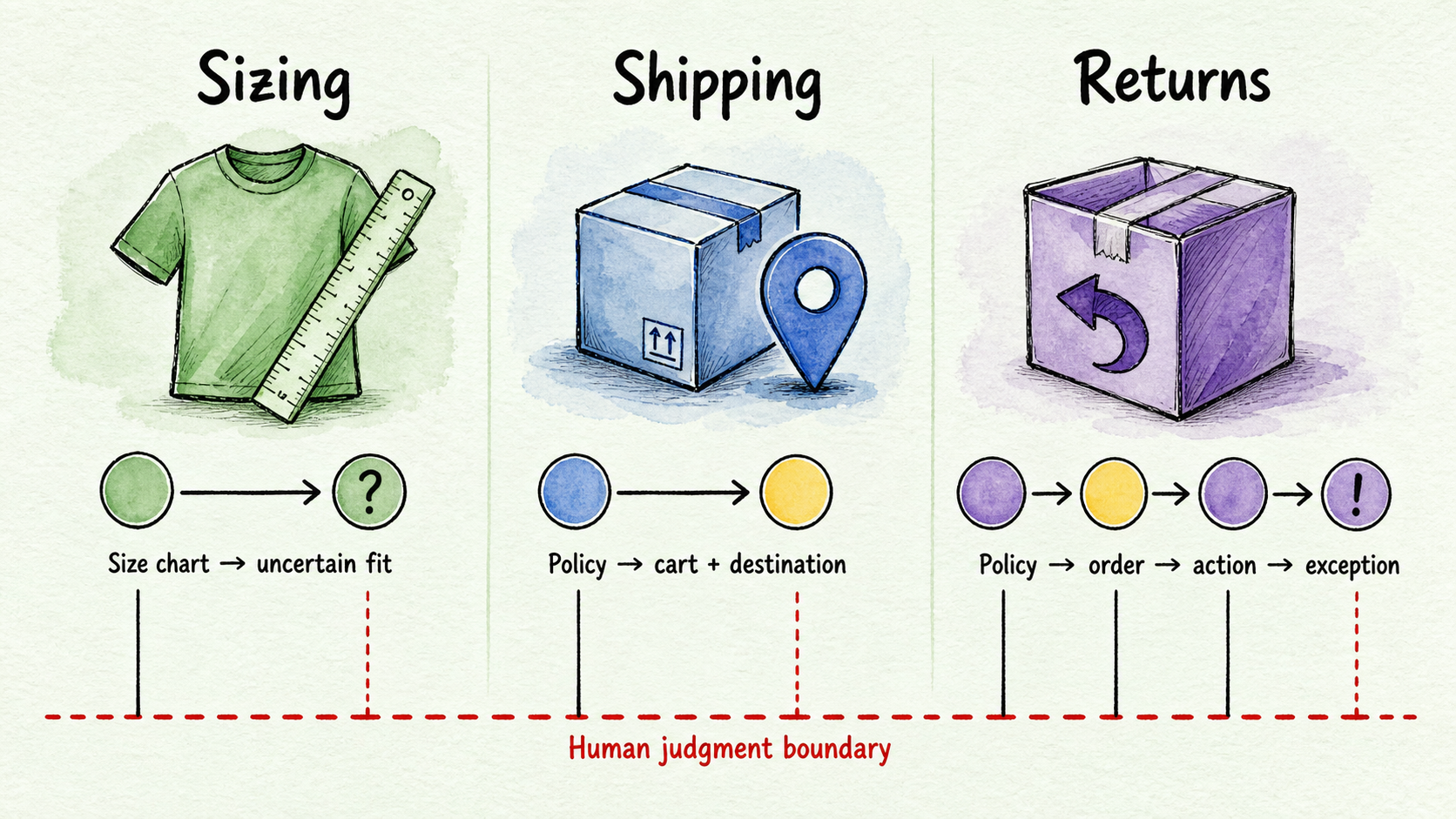
| Shopper question | Stage and intent | Response class | Required source or data | Owner | Escalation trigger |
|---|---|---|---|---|---|
| “I am between sizes. Which one should I choose?” | Discovery: reduce fit uncertainty | Approved answer with a judgment boundary | Product page and size chart | Ecommerce or merchandising | Measurements do not map clearly, advice is uncertain, or the shopper requests a guarantee |
| “How much is shipping to my address?” | Checkout: confirm cost before payment | Approved answer or live-data lookup | Shipping policy, plus cart or destination data when rates vary | Ecommerce or fulfillment | Destination is unsupported, the live rate is unavailable, or the policy does not cover the case |
| “The item arrived, but I want to return it.” | Post-purchase service: resolve a delivered order | Answer, lookup, possible action, and judgment for exceptions | Return policy and order data | Support or returns team | Order is missing, the request falls outside policy, or the complaint is sensitive |
The sizing question appears simple because it relies on a product page and size chart. Yet a direct recommendation can require judgment when measurements do not settle the issue. A bounded first scope could explain the chart and route uncertain fit questions to a person rather than promise a particular result.
The shipping question changes class according to what the shopper means. “What is your standard shipping policy?” can be answered from published terms. “What will shipping cost for this cart and address?” may require current cart and destination data. The topic is the same, but the second version has another dependency.
The return request includes more possible steps. The assistant might explain the policy, find an order, confirm whether the standard path applies, and start an allowed request. A policy exception still calls for human judgment. Returns may be useful, but this version could be too dependent for a first deployment if order access and permitted actions are not yet defined.
Suppose this store’s conversations contain frequent sizing and published-shipping questions, while many return requests involve exceptions. If its size charts are clear, it could begin with sizing questions for one product category. If shoppers ask shipping-policy questions more often and those answers need no cart-specific calculation, shipping could be the better first scope. Another store could reasonably choose a different row.
Choose one question family for the first deployment
The frequency of shopper questions is store-specific. Examples cannot establish whether sizing, shipping, order status, returns, or another family deserves priority for your business.
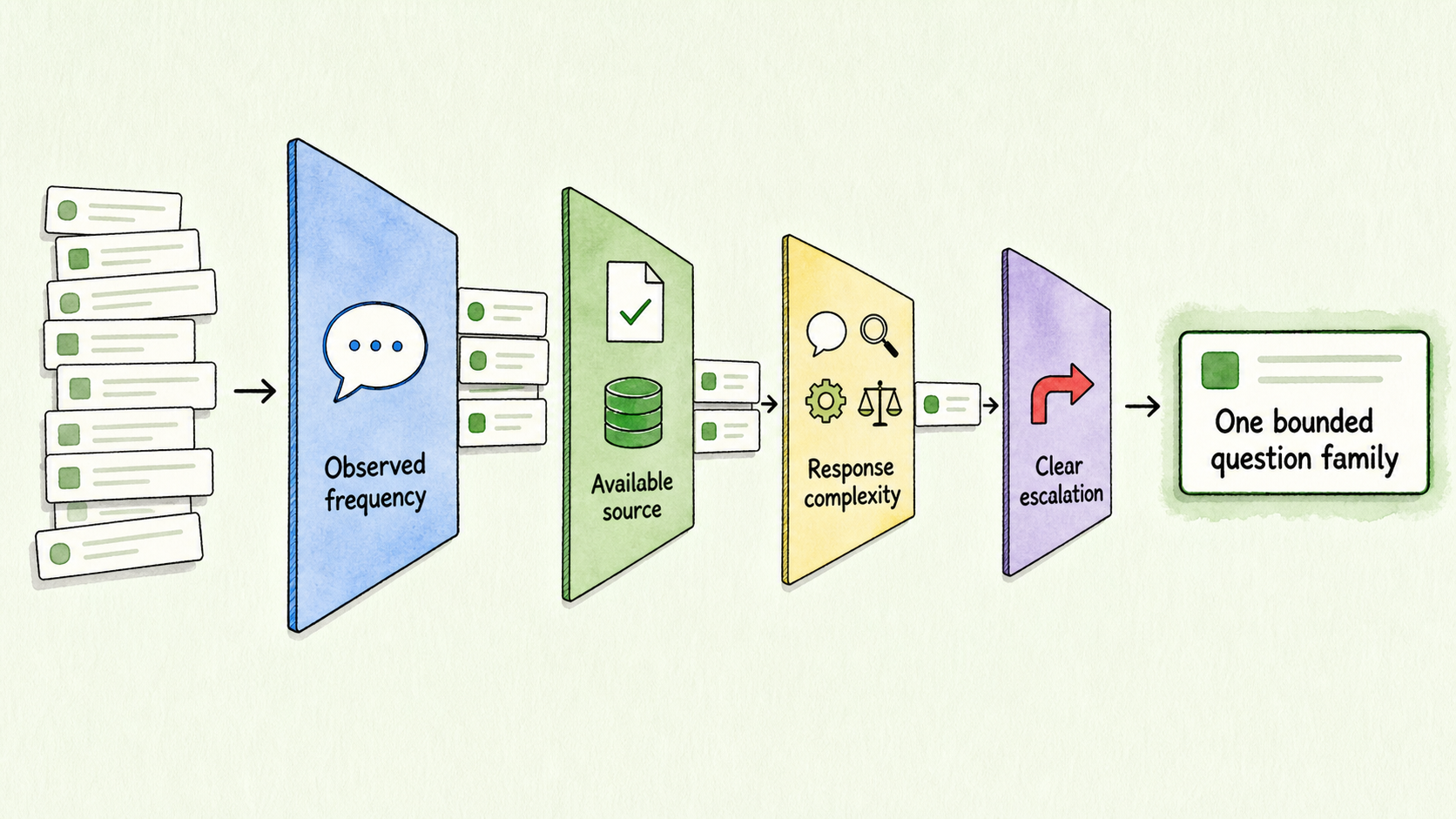
Review recent store conversation transcripts, support messages, and chat records. Group different phrasings that require the same response, complete the worksheet rows, and apply four filters:
- Observed frequency: Does this family recur in your own records, or is it merely memorable?
- Available source: Can you name and access the page, policy, file, or live system needed to handle it?
- Response complexity: Does the scope stop at an approved answer, or does it require a lookup, action, or substantial judgment?
- Clear escalation: Can you state exactly when the assistant must stop or route the conversation?
Frequency alone is not enough. A common request may be a poor first scope when live data is unavailable or most cases involve exceptions. A simple policy answer may also be a weak choice when shoppers rarely ask about it.
This is the tradeoff between broad coverage and a narrow, reliable start. Covering discovery, checkout, service, and retention at once combines several sources, permissions, responsible teams, and escalation conditions. One bounded question family creates a clearer promise for shoppers and a clearer boundary for staff.
Instant handling has limits too. Published, repeatable answers are natural candidates for immediate responses. Uncertain sizing, missing order data, policy exceptions, sensitive complaints, and requests beyond permitted actions need human review. Narrow or defer a family when safe handling would require broad discretion.
Choose the locally frequent row with an available source, the lowest necessary action complexity, and a clear escalation condition. If you lack enough conversation history, collect shopper wording before assigning priority. Then move the selected row into a separate planning process for content preparation, workflow design, testing, and approval.
Once that bounded scope is defined, you can Start for Free with InsertChat and try it against the selected question family. Keep the trial tied to that row instead of expanding immediately across the entire journey.
FAQ
What if one question belongs to two journey stages?
Classify it by the shopper’s immediate intent. Delivery timing before payment belongs to checkout. The location of an existing shipment belongs to post-purchase service. Create separate rows when the required information differs.
Should the first use case always be answer-only?
No. An answer-only family is easier to bound, but it should occur often enough to matter. A lookup can be a reasonable first scope when its data is available, the permitted result is clear, and exceptions have an explicit escalation path.
What if the required live data is unavailable?
Narrow the row to information available from approved sources, route the request to a person, or defer the use case. Never present a general policy answer as if it reflects the shopper’s current cart or order.
When should a person take over?
Use observable triggers: advice remains uncertain, live data is missing, a request falls outside policy, a complaint is sensitive, or the requested action is not permitted. The worksheet identifies the boundary. Detailed handoff design comes later.
When should the scope expand to another journey stage?
Revisit recent store conversations after the first question family has defined sources, actions, and escalation boundaries. Choose the next family from observed shopper needs rather than trying to cover every possible use case.