TL;DR
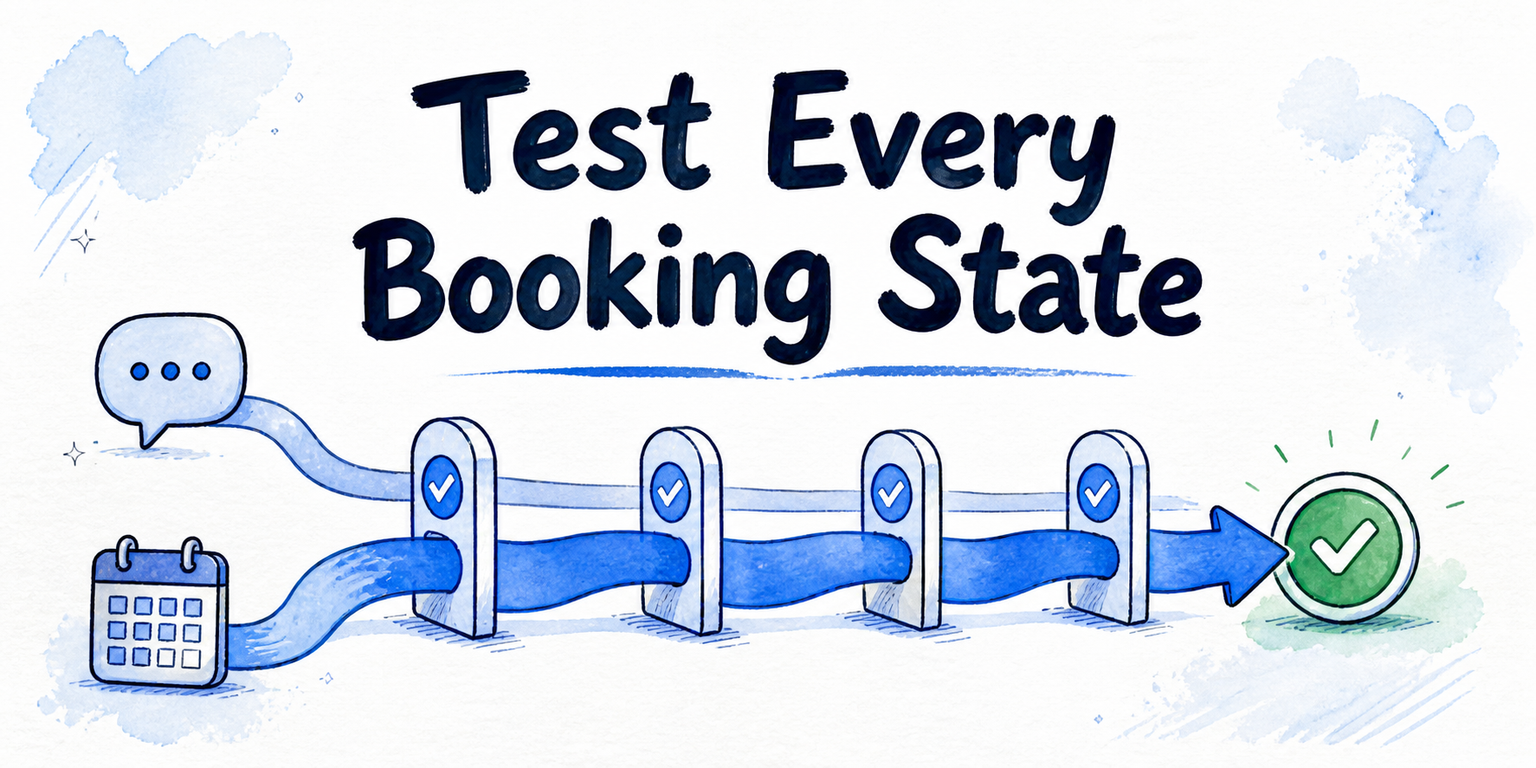
- Test the full chain from customer question to retrieved source, supporting passage, answer, and correction path. A fluent response is not enough.
- Include canonical questions, paraphrases, multi-source synthesis, conflicting and stale sources, missing answers, and out-of-scope requests.
- Label why each failure happened before changing the chatbot. Retrieval errors, citation errors, unsupported synthesis, and missing business guidance require different fixes.
- Let the possible customer or business consequence outweigh the raw number of passing answers.
- After a correction, retest the original question, nearby paraphrases, related questions, and citation support.
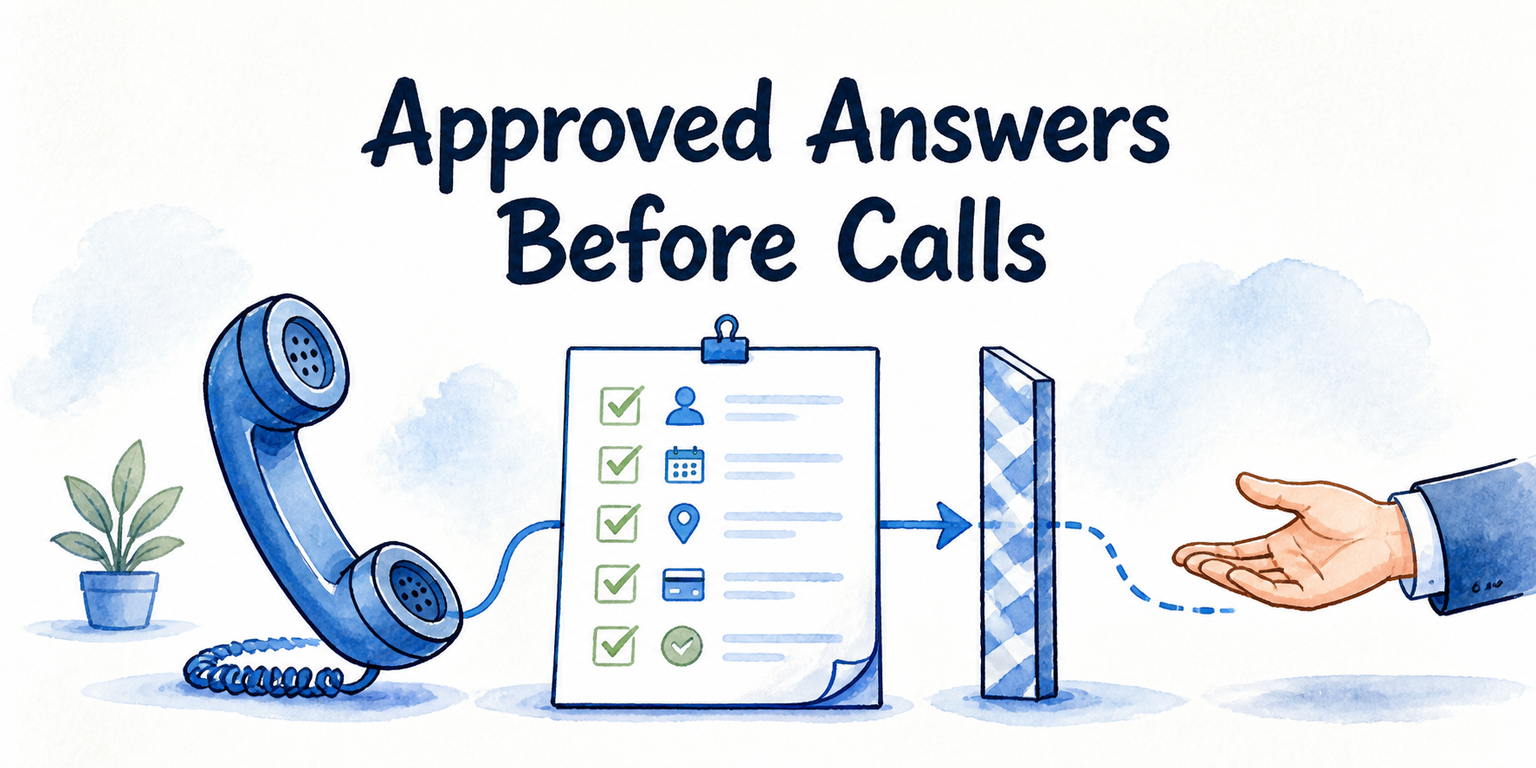
A customer asks whether an item can be returned after opening. The chatbot gives a polished answer and links to the returns page. That may look grounded, but the real decision is whether the system found the right approved source, whether the cited passage supports every material part of the response, and whether it knows what to do when the business has not published a clear rule. A useful RAG chatbot evaluation follows that evidence trail instead of accepting fluency or a RAG label as proof.
Key Takeaways
- Grounding is a chain of observable behavior, not a feature badge.
- Citation presence and citation support are separate checks. A link can be relevant without proving the answer.
- Abstention is the right result when the approved evidence cannot support a safe answer.
- Missing business guidance is not primarily a prompting problem. An authorized owner must supply or approve the rule.
- A correction is incomplete until related questions have been retested for regressions.
Inspect the five-link evidence chain
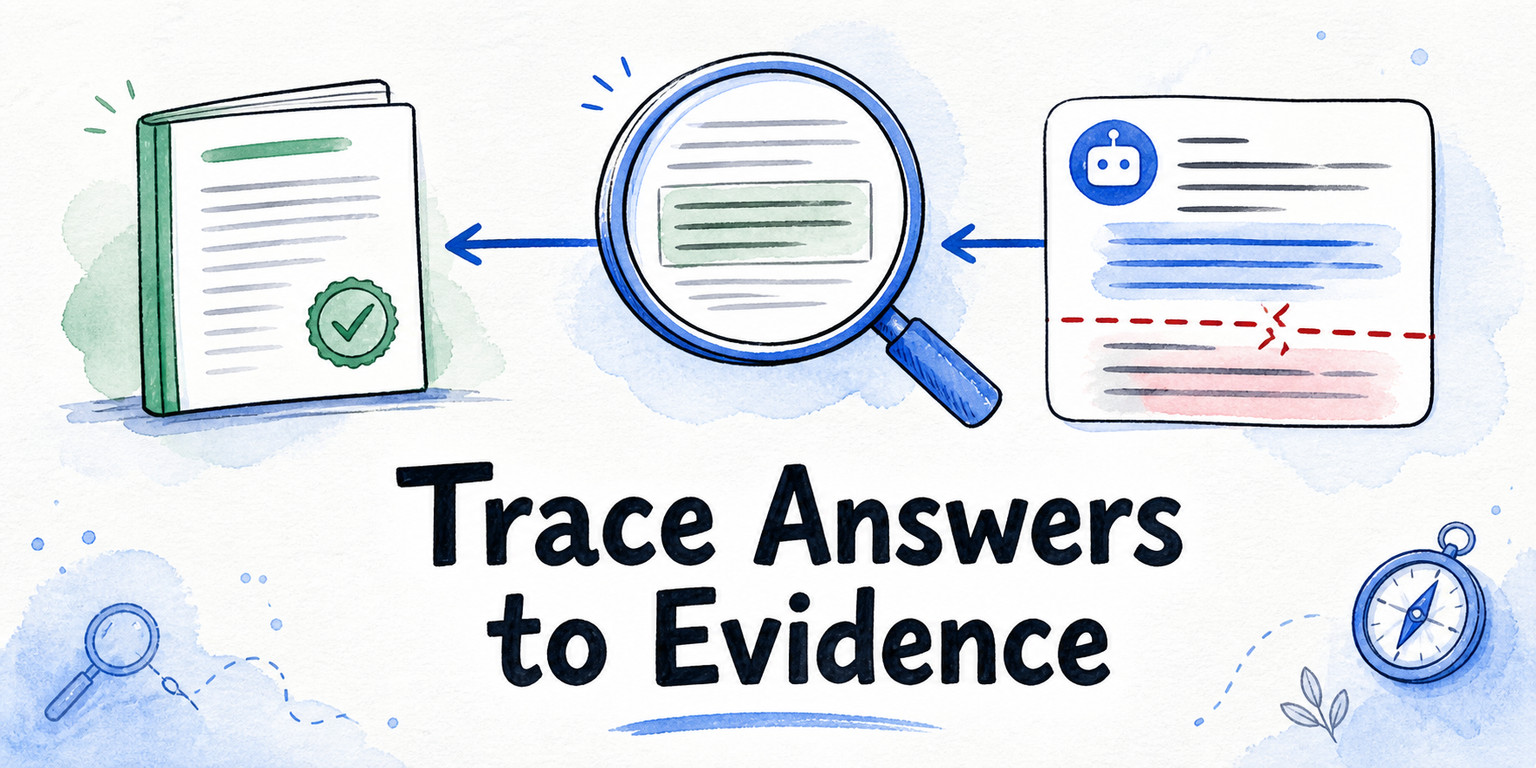
Use one record for every question you test. The record should make it possible for a business owner, content owner, or evaluator to understand what happened without reconstructing the entire conversation.
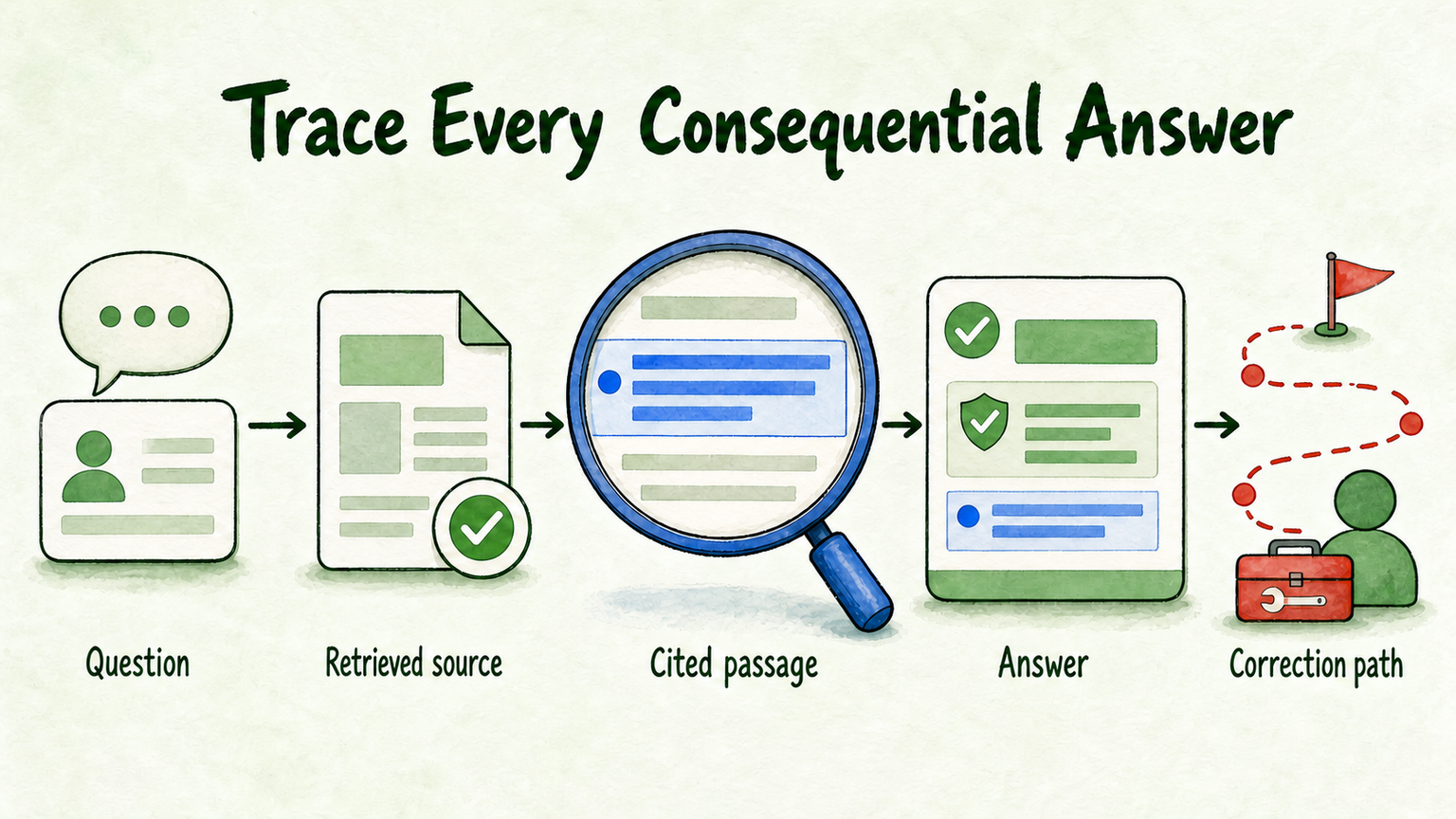
- Question: Record the customer’s wording, relevant context, and expected behavior. The expected result might be a specific answer, a qualified answer, an abstention, or a route to a person.
- Retrieved source: Identify the source the chatbot selected. Check that it is approved, relevant to the question, and appropriate for the customer-facing use case.
- Cited passage: Read the exact passage offered as support. It must justify the material claims in the answer, not merely discuss the same topic.
- Answer: Compare the response with the passage. Look for omitted conditions, blended policies, added promises, excessive certainty, or a conclusion that the evidence does not entail.
- Correction path: Record who owns the problem and what kind of change is needed. Possible routes include correcting a source, establishing precedence, narrowing the assistant’s scope, changing an answer boundary, or adjusting product configuration.
Citation visibility deserves its own check. Suppose the cited returns page says unopened items may be returned within 30 days, but the chatbot says opened items can also be returned. The citation is real and topically relevant, yet it does not support the added condition. That is still an ungrounded answer.
Ask each vendor what evaluators can inspect. Some products may show a source link, while others may expose a passage, excerpt, or retrieval record. Exact chunk visibility is product-specific. If the interface does not reveal the retrieved passage, require another practical way to verify that the cited evidence supports the answer.
This unit of evaluation is more useful than a simple pass or fail because it shows where the chain broke. It also makes correction effort visible before you commit a customer-facing workflow to the system.
Build seven test classes around real customer questions
A test set made only from questions that match page headings will flatter almost any configured system. Use questions customers actually ask, then introduce controlled variations that expose source selection and answer boundaries.
For every prompt, write down the expected source or expected abstention before running it. Otherwise, a plausible response can quietly redefine success after the fact.
Canonical answers: Ask a direct question whose answer appears clearly in one approved source. For example: “How long do I have to return an unopened item?” This establishes whether the basic evidence chain works.
Paraphrases: Ask the same question using different vocabulary, shorthand, a spelling error, or implied context: “Can I send it back next month if the box is still sealed?” The answer should preserve the same material rule and conditions.
Multi-source synthesis: Ask a question that legitimately requires two approved sources. A shipping policy and membership policy might jointly determine delivery eligibility. Check that the chatbot keeps the claims attributable and does not invent a bridge between them.
Conflicting sources: Present a question covered differently by two accessible sources. The chatbot should follow an established authority or freshness rule. It should not average incompatible policies or choose whichever passage is easiest to retrieve.
Stale sources: Ask about a rule that changed. Confirm that the answer relies on the current approved source rather than an older page, document, or cached statement.
Missing answers: Ask a reasonable customer question for which the organization has no approved answer. The desired behavior is usually a bounded admission, a clarifying question, or a route to an owner—not a confident guess.
Out-of-scope requests: Ask for advice or action beyond the assistant’s authorized job. A product-support assistant, for example, should not invent legal guidance or make an exception to a policy simply because the customer asks persuasively.
Run these classes against one bounded customer job first. InsertChat can be evaluated in this way because its positioning centers on assistants grounded in approved content, with citations and human review. The evaluation principle remains vendor-neutral: buyers need observable evidence that the selected sources control the customer-facing answer.
Label the failure before changing the chatbot
“Bad answer” is not a useful diagnosis. A prompt edit may hide one symptom while leaving the actual retrieval or policy problem untouched. Give each failed case one primary label and add notes for contributing causes.
| Failure label | What happened | Likely correction path |
|---|---|---|
| Retrieval miss | The correct approved source was not surfaced. | Investigate source availability, retrieval behavior, wording coverage, or scope. |
| Wrong-source selection | The system retrieved content, but selected a less authoritative or irrelevant source. | Clarify authority, relevance, boundaries, or precedence. |
| Unsupported synthesis | The sources were relevant, but the answer added a conclusion or condition they did not support. | Constrain synthesis, revise answer rules, or require a qualified response. |
| Stale-source use | The answer relied on superseded information. | Remove or supersede stale material and verify freshness handling. |
| Citation mismatch | The citation did not support one or more material claims in the answer. | Correct citation selection or limit the answer to the cited evidence. |
| Missing business guidance | No approved source contained the decision needed to answer. | Route the issue to an authorized business owner or narrow the assistant’s scope. |
Consider a chatbot that retrieves the current policy but still adds an unsupported exception. The primary label is unsupported synthesis, not retrieval miss. Conversely, if the correct policy never appears in the evidence trail, rewriting the answer prompt may not address the retrieval failure.
Missing business guidance is especially important to separate. Analytics may reveal that customers repeatedly ask about an undocumented exception, and prompting may tell the assistant to be cautious. Neither can decide what the business’s policy should be. An authorized owner must create or approve that guidance before the chatbot can answer from it.
Source preparation and grounding evaluation are connected but distinct jobs. Preparation produces an approved set; evaluation checks whether the chatbot uses it correctly. Unresolved business decisions require an owner decision, narrower coverage, or exclusion rather than more cosmetic cleanup (AI Chatbot Knowledge Base Preparation).
Work a contradiction and abstention test
Consider this hypothetical policy test. Use your real approved pages, documents, ownership records, and customer questions when running it.
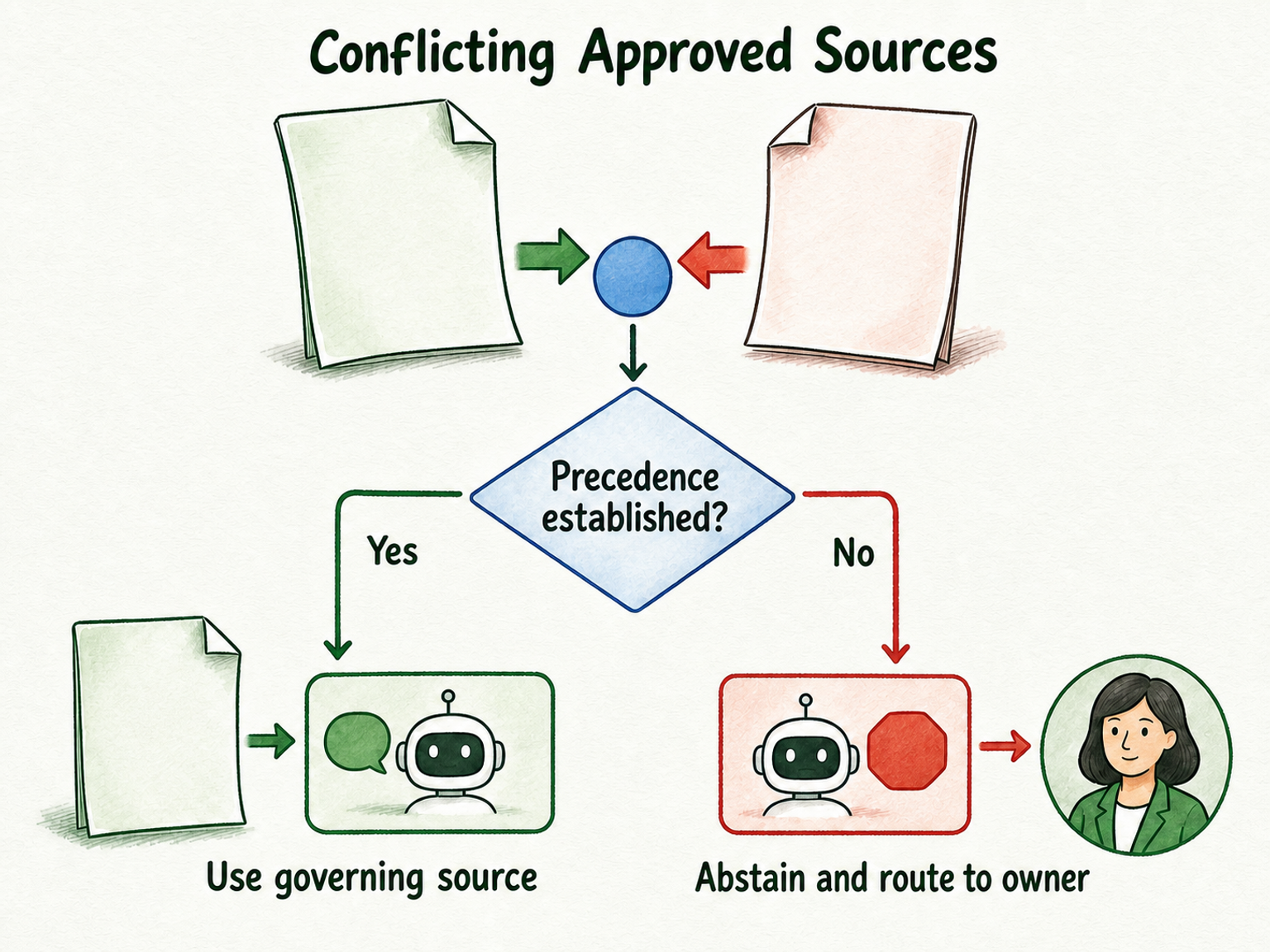
A current policy page says customers on an annual plan may cancel renewal at any time before the next billing date. An older onboarding document says annual subscriptions cannot be canceled. A customer asks, “Am I allowed to stop next year’s renewal?”
First, determine whether the business has established authority and freshness. If the current policy page is owner-approved, clearly supersedes the onboarding document, and governs customer-facing answers, the expected behavior is straightforward: retrieve that page, state the applicable rule without importing the older restriction, and cite the supporting passage.
The assistant fails if it blends the sources into “Annual subscriptions normally cannot be canceled, but you may be able to stop renewal.” That sentence sounds cautious, yet it preserves incompatible claims and obscures the approved rule. Depending on the evidence trace, label it wrong-source selection, stale-source use, or unsupported synthesis.
Now remove the precedence decision. Imagine both documents remain approved, no owner has identified which governs, and neither contains a supersession notice. The correct behavior is abstention: the assistant should say it cannot confirm the policy from the available guidance and route the question to the responsible team. It should not choose a preferred document based on wording, format, or retrieval rank.
The correction path is an owner decision, not a cleverer prompt. Once the owner confirms the governing rule, the source set and answer boundary can be updated and retested. Guidance for trained chatbots likewise distinguishes contradictions, freshness problems, content gaps, and do-not-answer rules rather than treating them as one generic accuracy issue (How to Train a Client Chatbot on Website Content).
This test reveals two qualities at once: whether the chatbot respects approved authority when precedence exists, and whether it refuses to manufacture certainty when precedence does not exist.
Let severity outrank the raw pass count
There is no universal pass rate that proves a RAG chatbot is ready for your use case. Ten routine answers cannot cancel out one unsupported statement about a material price, eligibility rule, safety instruction, contractual condition, or customer remedy.
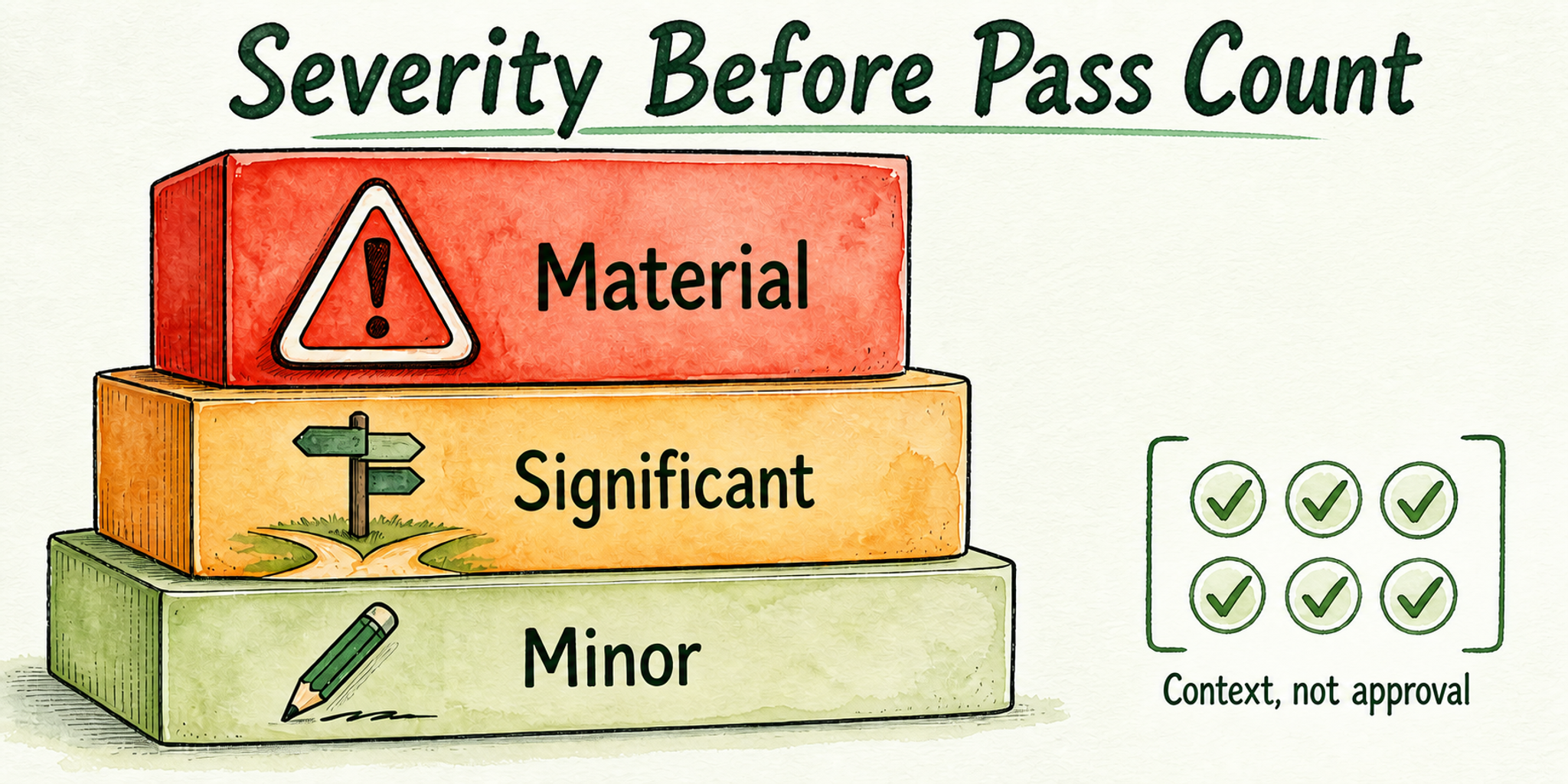
Define severity in terms of consequences your organization recognizes. A practical scheme can use descriptions such as:
- Material: The answer could cause a meaningful customer, legal, financial, safety, privacy, or operational consequence. Correction and retesting are required before relying on that answer path.
- Significant: The answer is likely to misdirect a customer, create avoidable work, or undermine a core customer journey. Assign an owner and resolve it within the bounded evaluation.
- Minor: The central answer remains supported, but wording, completeness, or citation presentation needs improvement. Log and retest it without treating it as equivalent to a policy invention.
Also record whether the failure affects a core question or a rare edge path. Frequency does not erase severity, but it helps buyers understand exposure and prioritize work.
Keep aggregate pass and failure counts as context. Do not let them automatically approve the system. Your decision record should show the primary failure label, severity, affected scope, owner, intended correction, and retest status. A structured test log with expected behavior, actual answer, severity, owner, fix route, and retest result makes the decision auditable (AI Chatbot Testing Checklist Before Launch).
Retest the correction path, not just the original answer
A fix that makes one saved prompt pass can still break a paraphrase or redirect another question to the wrong source. Retesting therefore needs to follow the corrected evidence chain, not merely confirm that the wording changed.
After any correction:
- Rerun the original question with the same relevant context.
- Rerun its paraphrases, including natural shorthand and implied conditions.
- Test an adjacent question that relies on the same source or rule.
- Repeat the contradiction, stale-source, or missing-answer case that exposed the defect.
- Inspect citation-to-passage alignment again rather than assuming the new citation proves the answer.
- Record whether the fix required a source change, an authority decision, a narrower boundary, or a product-level adjustment.
This process also exposes correction cost. A bounded source update followed by clean retests is different from a recurring failure that requires manual exceptions across many questions. Do not assume either path will be fast; record the actual work, ownership, and regression behavior you observe.
Finish with one of four decisions. Proceed when the evidence chain is inspectable and material failures in the bounded workflow are corrected. Revise when the causes and fixes are clear but retesting remains open. Narrow when approved guidance supports only part of the intended job. Stop when consequential source behavior cannot be verified or corrected to your requirements.
If you want to apply this method to a source-grounded assistant, start with one non-sensitive workflow, a small approved source set, and real customer questions. Use InsertChat’s Start for Free path to run the source-trace test, then expand only when the answers, citations, abstentions, and correction paths withstand review.