TL;DR
- Use ai chatbot human handoff rules to define the point where the bot stops answering and routes the conversation to a person.
- Create trigger categories before writing escalation copy: outside approved sources, high-risk requests, account-specific judgment, user frustration, repeated failed answers, compliance-sensitive requests, and direct requests for a person.
- Write handoff messages that state why the bot is stopping, what happens next, and what information the visitor should provide.
- Collect enough context for the receiving person to continue, but avoid asking for information that is not needed for the handoff.
- Assign a queue owner before launch and review handoff frequency to catch over-escalation, late escalation, and routing gaps.
A client-facing chatbot can answer routine questions well and still create risk if it keeps going after the conversation needs human judgment. The practical decision is not whether the bot is useful. It is when the assistant should stop, what it should say, what context it should collect, and who owns the next step.
Key Takeaways
- The strongest handoff rules are written as stop conditions, not broad statements about what the chatbot is allowed to discuss.
- Trigger categories make escalation easier to configure and review because each handoff has a reason.
- Escalation copy should protect trust: be specific, avoid blame, and avoid response-time promises the team cannot meet.
- Pre-handoff questions should reduce repeat work for the human owner, not turn the chat into a long intake form.
- Handoff frequency is useful because it shows whether the bot is escalating too often, too late, or to the wrong owner.
Start With the Stop Rule
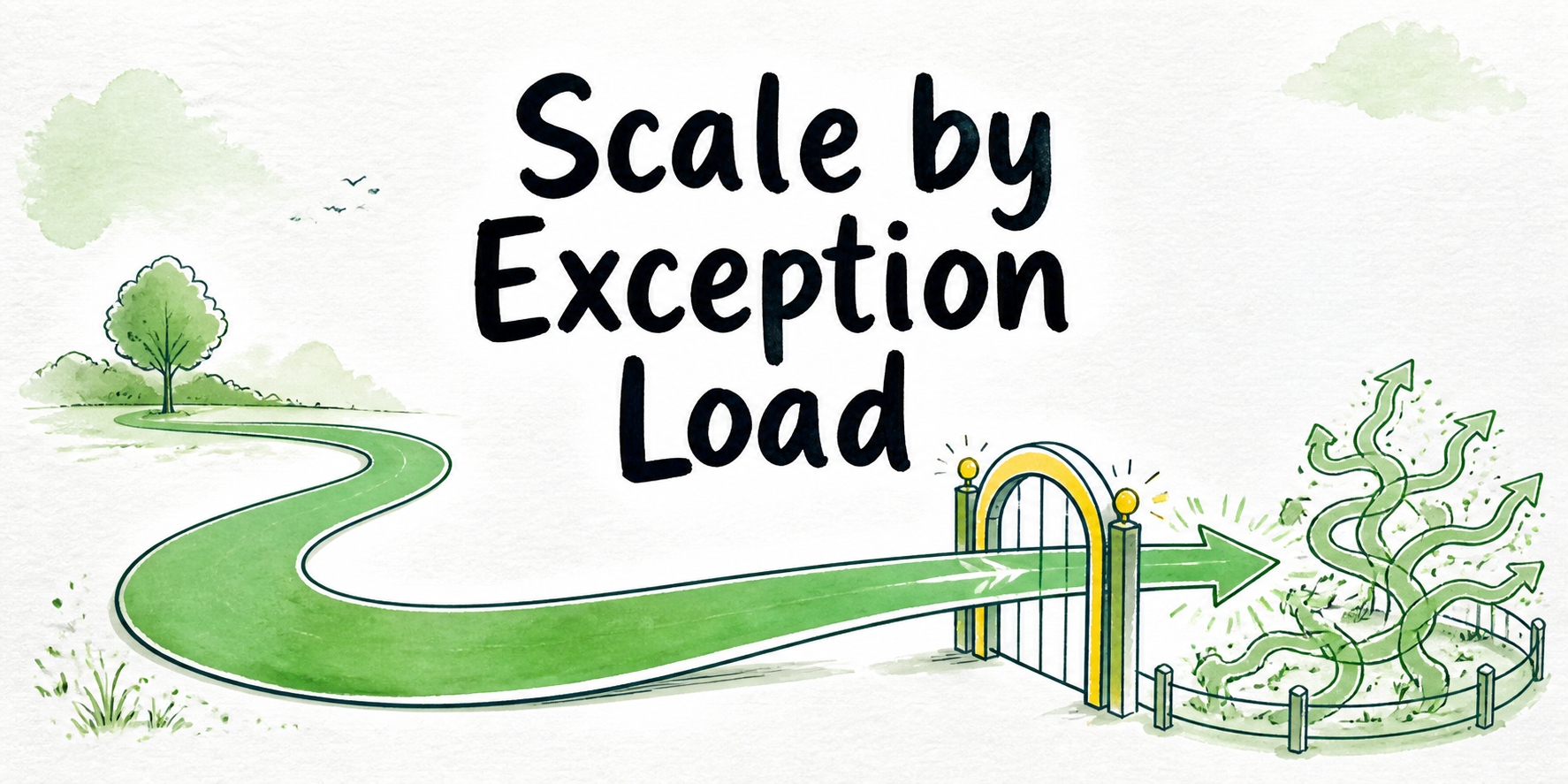
Handoff rules sit downstream from workflow scope, approved sources, and guardrails. Those inputs tell the chatbot what it can answer. The handoff rule tells it when to stop trying.
The Five-Part Stop Rule
- Trigger
The event that tells the bot to stop answering.
- Message
The visitor-facing explanation and next step.
- Context
Only the fields a person needs to continue.
- Owner
The queue, team, inbox, or person that receives it.
- Review
A light habit for spotting late, wrong, or unnecessary handoffs.
A good stop rule has five parts:
- The trigger that caused the stop.
- The message the visitor sees.
- The context the bot should collect before transfer.
- The queue, person, or team that receives the handoff.
- The review habit used to improve the rule later.
Keep the rule narrow. If the source material is missing, stale, or not approved, the handoff rule should not ask the bot to improvise. If the visitor asks for a judgment call, a personal account decision, or an exception, the rule should route the request. If the visitor directly asks for a person, the chatbot should respect that request instead of trying one more automated answer.
This is where the tradeoff starts. Too many handoffs reduce the value of automation and create more manual work. Too few handoffs can make the bot answer beyond its source support or authority. The goal is not to remove judgment from the process. The goal is to decide where human judgment begins.
Use Trigger Categories to Decide When the Bot Must Hand Off
Trigger categories turn vague escalation preferences into rules a team can configure, review, and explain. Use categories that describe why the bot should stop, not just where the conversation happened.
| Trigger category | Hand off when | Example visitor request |
|---|---|---|
| Outside approved source scope | The bot cannot support the answer from approved content | "Can you tell me your refund policy for enterprise contracts?" when only standard plan terms are approved |
| High-risk request | A wrong answer could create financial, legal, health, safety, or contractual risk | "Tell me whether this clause means I can cancel without penalty." |
| Account-specific judgment | The answer depends on private account status, billing history, eligibility, or manual review | "Can you waive this fee on my invoice?" |
| Compliance-sensitive request | The visitor asks about regulated documents, identity checks, or approval steps | "Can I submit this document instead of the required one?" |
| User frustration | The visitor repeats, corrects, or expresses dissatisfaction after the bot responds | "You already said that. I need a real answer." |
| Repeated failed answer | The bot has already failed to answer after a set number of attempts | Two unclear answers or two fallback responses in one conversation |
| Explicit request for a person | The visitor asks for human help | "Can I talk to someone?" |
Do not treat every unclear question as an immediate handoff. Some conversations only need one clarifying question. For example, "Do you support teams?" may need the bot to ask whether the visitor means team pricing, team permissions, or team onboarding. But if the visitor asks for an exception, a binding interpretation, or a person, the bot should stop.
For teams using assistants grounded in owned content and handoff paths, such as workflow pages for billing explanations on your website with handoff, the same principle applies: routine explanations can stay automated, but account-specific or exception-based requests need a person.
Write Escalation Messages That Explain the Stop and Next Step
The escalation message is not just a polite fallback. It is the visitor-facing part of the handoff rule. It should make the stop feel intentional.
Use three message components:
- A short reason the bot is stopping.
- A specific next step.
- A minimal request for context.
Example for an account-specific billing request:
I can explain the general billing policy, but this request depends on your account details. I will route this to the billing team. Please share the email on the account and a short note about the charge you want reviewed.
Example for a direct request for a person:
I can connect you with someone who can help. Please share the best contact method and a brief summary of what you need, and I will pass the conversation along.
Example for repeated frustration:
I am not resolving this clearly enough. I will route the conversation to a person with the context so far. Please add any detail you want them to see first.
Avoid vague copy such as "I cannot help with that" when the bot can give a better reason. Also avoid promising a response time unless the receiving team has committed to one. If the team only reviews the handoff queue during business hours, the message should not imply immediate live support.
Escalation copy should be direct and calm. It should not blame the visitor, expose internal policy language, or make the bot sound uncertain about obvious routing rules. The visitor needs to know that the request is moving to the right place.
Collect Only the Context a Person Needs
Pre-handoff information should reduce repeat questions for the human owner. It should not become a long form that delays help.
For most client-facing website assistants, collect only what supports the next step:
- Visitor intent: what the person is trying to do.
- Contact method: email, phone, or another channel when follow-up is needed.
- Relevant context: page, product, plan, invoice, order, location, or request type when applicable.
- Urgency: deadline, blocked task, event date, or business impact.
- Conversation summary: what the bot already answered or attempted.
The right amount depends on the workflow. A lead capture handoff may need company name, role, use case, and preferred contact method. A support handoff may need the issue, product area, and whether the visitor already tried a documented step. A billing handoff may need the account email and invoice reference, but not a long explanation of every prior purchase unless the receiving team needs it.
Use caution with sensitive information. The chatbot should follow the team's existing policies for what visitors should or should not share in chat. If the handoff can be completed without collecting sensitive details, do not ask for them.
A useful test is simple: if the receiving person opened the handoff, could they decide the next action without asking the visitor to repeat the entire conversation? If not, collect one or two more fields. If yes, stop asking.
Assign Routing and Ownership Before Launch
A handoff rule fails if it sends the right conversation to an unowned queue. Routing and ownership should be defined before the chatbot is live.
For one chatbot deployment, document four ownership points:
| Ownership point | Decision to make |
|---|---|
| Receiving owner | Which person, team, inbox, CRM queue, or support queue receives the handoff? |
| Included context | What transcript, fields, page URL, or summary travels with the handoff? |
| Response path | Does the owner reply by email, support ticket, phone, shared inbox, or sales workflow? |
| Review owner | Who checks missed, late, or unnecessary handoffs? |
Do not overbuild this into a multi-client governance model unless the deployment requires it. For a single website assistant, one named queue owner is often more useful than a complex approval chain.
The routing owner should also know which trigger caused the handoff. A billing team receiving "account-specific judgment" can act differently from a billing team receiving "user frustration" or "outside approved source scope." The reason helps them decide whether to answer the visitor, update the source content, or adjust the rule.
This is where broader launch planning can matter. If the assistant is still moving through source approval, testing, and ownership setup, a staged launch process such as Launch a Branded AI Chatbot With Phase Gates can help keep the handoff owner from being named too late.
Scenario: Answer, Clarify, or Hand Off
Consider a client-facing website assistant for a SaaS billing page. The assistant is allowed to explain published billing terms, plan differences, invoice timing, and where to find receipts. It is not allowed to approve refunds, interpret custom contract clauses, or make account-specific exceptions.
Answer, Clarify, or Hand Off
| Visitor request | Bot action | Reason | |
|---|---|---|---|
| Answer | When will my monthly invoice be generated? | Answer | Approved billing timing can be explained. |
| Clarify | Do you support annual billing for teams? | Clarify | The bot needs plan or account context first. |
| Hand off | Can you refund this invoice today? I want a person. | Hand off | Account-specific judgment and explicit human request. |
A visitor asks: "When will my monthly invoice be generated?"
The bot should answer if the approved source includes the invoice timing rule. This is a routine sourced question. No handoff is needed.
A visitor asks: "Do you support annual billing for teams?"
The bot may need one clarifying question if the sources distinguish team size, plan type, or sales-assisted billing. A useful reply might be: "Are you asking about switching an existing account to annual billing, or pricing for a new team?" If the visitor answers with a routine plan question, the bot can continue. If the visitor asks for a custom quote or exception, it should route.
A visitor asks: "I was charged after canceling. Can you refund this invoice today? I want a person."
The bot should hand off. The request includes account-specific judgment, billing risk, and an explicit request for a person. The handoff message could say:
I can explain the general billing policy, but a refund review depends on your account and invoice details. I will route this to the billing team. Please share the email on the account, the invoice number if you have it, and the best way to reach you.
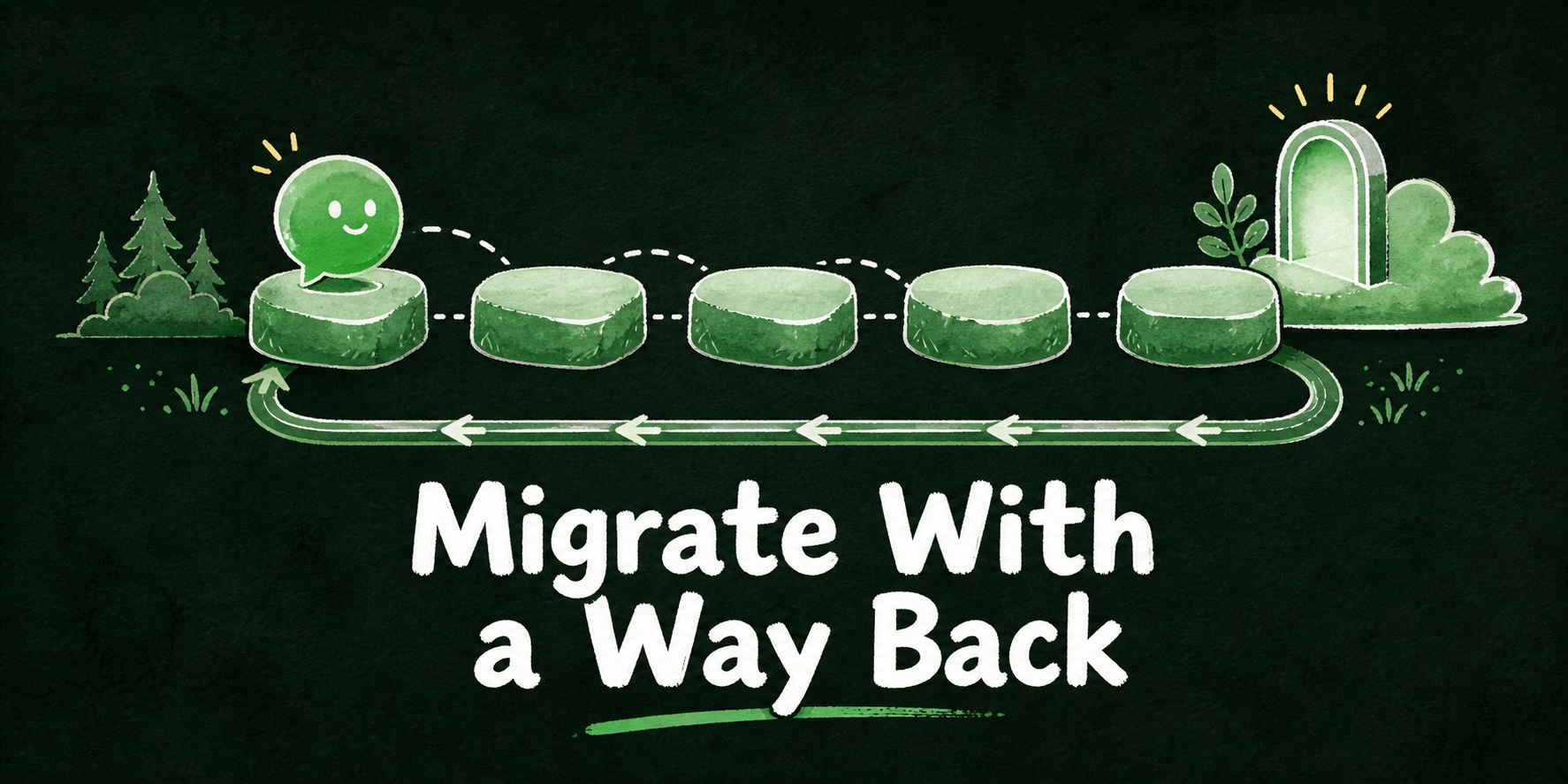
The handoff should include the conversation transcript, the page where the chat started, the trigger category, the visitor's account email if provided, and the refund request summary. The billing queue owns the next step. The review owner can later check whether the bot escalated at the right moment or should have stopped earlier.
Review Handoff Frequency as an Operating Signal
Handoff frequency is not a full reporting system. It is a signal that tells you whether the rules are working.
Review handoffs for three patterns:
- Too frequent: the bot may be too conservative, missing source content, or escalating routine questions.
- Too late: the bot may be attempting answers after frustration, risk, or account-specific judgment is already visible.
- Wrong owner: the trigger is correct, but the receiving queue cannot resolve the request.
Look at examples, not only counts. Ten handoffs caused by direct requests for a person mean something different from ten handoffs caused by missing source content. A small number of handoffs can still reveal a serious problem if they involve high-risk requests or repeated failed answers.
Thin volume needs caution. If only a few visitors use the assistant in a week, do not rewrite the entire rule set from one odd conversation. Instead, mark the pattern and wait for more evidence unless the handoff exposed a clear risk.
For broader post-launch improvement work, handoff review can feed into conversation review and content fixes. That broader workflow belongs in a separate optimization process, such as Post-Launch Optimization for AI Chatbots: What to Improve First. For this handoff rule set, stay focused on whether the bot stopped at the right time.
FAQ
What are ai chatbot human handoff rules?
They are the operating rules that tell a chatbot when to stop answering and route the conversation to a person. A useful rule names the trigger, the visitor-facing message, the context to collect, the receiving owner, and the review habit.
When should an AI chatbot hand off to a human?
Hand off when the request is outside approved sources, high risk, account-specific, compliance-sensitive, repeatedly unresolved, emotionally frustrated, or directly asks for a person. Ask a clarifying question first only when the request is incomplete but still within the bot's approved workflow.
What should the bot say during a handoff?
The bot should explain why it is stopping, say what happens next, and ask for the smallest useful amount of context. For example, it can say that an account-specific request needs review from the billing team and ask for the account email, invoice number if available, and best contact method.
What information should be collected before handoff?
Collect the visitor's intent, contact method, relevant page or account context, urgency, and a short conversation summary. Keep the intake short. The goal is to help the person continue the conversation, not to collect every possible detail before routing.
Who should own chatbot escalations?
The owner should be the person or queue that can act on the request. Billing questions should go to billing, sales qualification should go to sales, and unresolved support issues should go to the support owner. Also name a review owner who checks whether handoffs are missed, late, or unnecessary.
How often should teams review handoffs?
Review handoffs regularly after launch, with closer attention in the first few weeks or after rule changes. The review should answer three questions: are handoffs happening too often, too late, or to the wrong owner? Avoid building a full reporting system unless the team has a separate reporting need.