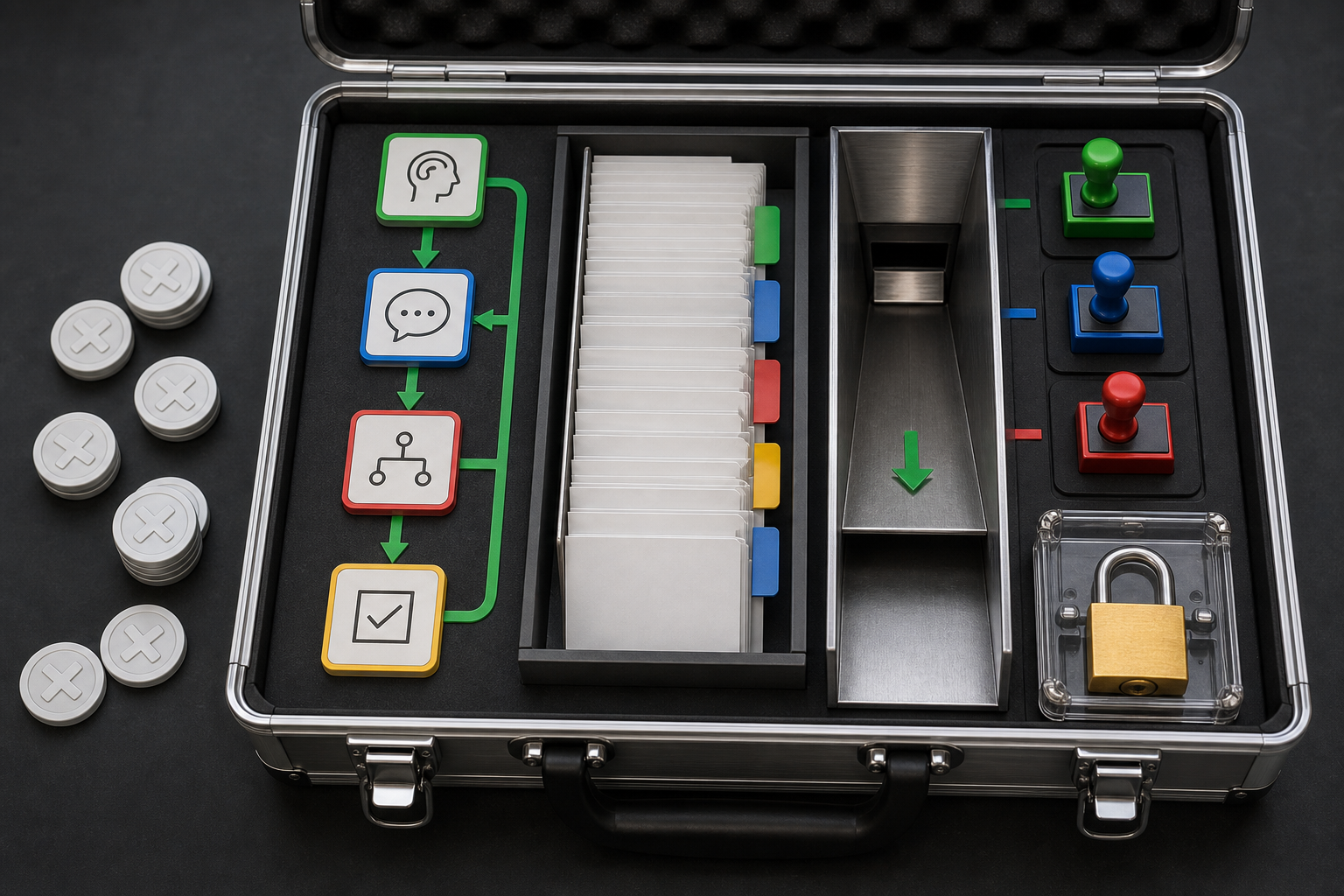
TL;DR
- Scope an AI chatbot project around one approved workflow, one source set, one entry point, one handoff path, and one launch standard.
- Put exclusions in writing before build starts: unsupported topics, extra channels, new integrations, unapproved content, and new workflows.
- Make the client own source approval, policy rules, escalation contacts, test reviewers, and final launch signoff.
- Launch acceptance should test actual behavior: source-grounded answers, fallback handling, lead capture, handoff success, and unresolved questions found before go-live.
- Change control should trigger when the client changes the workflow, source library, channel, integration, language, handoff logic, or launch criteria after scope approval.
If discovery is done and the likely chatbot use case is already chosen, the next risk is a vague project promise. A useful chatbot project scope turns client requirements into delivery boundaries: what the assistant will answer, where it will appear, what content it can use, what the client must supply, what must pass before launch, and what requires a new estimate.
Key Takeaways
A chatbot scope is a signoff document, not a feature wish list. It should name the workflow, channel, approved sources, handoff destination, client owners, exclusions, acceptance tests, and change-control rules.
Discovery answers should feed the scope, but they should not become the scope. If the client still has not chosen a use case, approved knowledge sources, or named a workflow owner, return to upstream qualification. The AI chatbot discovery questions article is the better place for intake questions.
Exclusions protect agency margin and client trust because the client can see which ideas are deferred, blocked by missing inputs, or reserved for a later phase.
Launch should be approved against observable tests: known questions, out-of-scope questions, lead capture completion, missing fields, handoff failure, and unresolved answers.
Change control is not only for large technical changes. New content libraries, extra channels, added integrations, new languages, revised compliance rules, and changed handoff logic can all alter the estimate.
Turn Discovery Answers Into Scope Inputs
The best time to scope an AI chatbot project is after discovery has produced enough answers to make delivery choices. At this point, the agency should not still be asking broad intake questions. The job is to convert known inputs into scope language the client can approve.
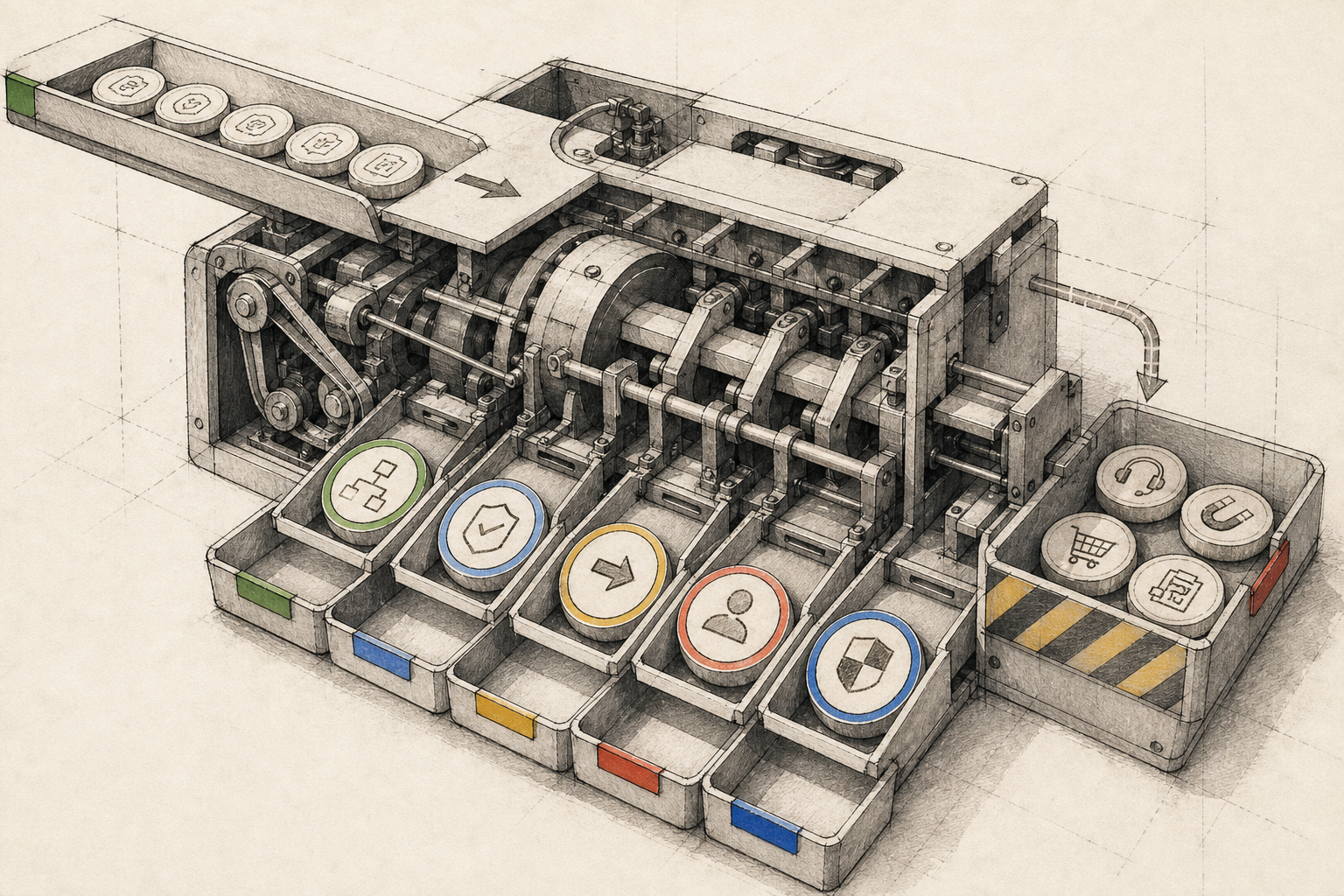
A practical scope starts with five inputs:
| Discovery output | Scope field it becomes |
|---|---|
| Target audience and chosen use case | Included workflow and visitor intent |
| Approved source content | Knowledge sources the chatbot may use |
| Desired next step | Lead capture, support handoff, booking path, or another defined action |
| Business owner | Client reviewer and final approver |
| Known risks | Exclusions, fallback rules, and launch tests |
For example, if discovery confirms that the client wants a website chatbot to qualify inbound service inquiries, the scope should not say, "Build an AI chatbot for the website." A better scope says the assistant will answer questions from approved service pages, collect required lead fields, and route qualified inquiries to the agreed inbox or CRM path.
If the use case is not chosen yet, pause the scope. If the client is still comparing support, lead capture, ecommerce, or internal workflow ideas, send them back to use-case selection rather than forcing a project plan too early. The article on AI chatbot use cases agencies can sell first is a better fit for that upstream decision.
Define The Workflow That Is Actually Included
The included workflow is the center of the chatbot project scope. It should describe what the chatbot does in this phase, where the interaction starts, what information it can use, and what happens when the visitor needs a next step.
A clear inclusion statement usually covers:
- Entry point: website embed, portal page, booking page, SMS, email, in-app chat, or another defined channel.
- Visitor intent: the specific questions or tasks the assistant is expected to handle.
- Approved sources: the pages, files, policies, or FAQs the assistant may use.
- Collected fields: name, email, company, service interest, order number, booking need, or other required data.
- Handoff path: CRM, support inbox, calendar, webhook, human owner, or agreed fallback route.
- Rules: required context, policy limits, approval logic, and cases where the assistant should stop and route.
Keep the first phase narrow enough that everyone can test it. A website visitor assistant for lead capture is easier to scope than a general assistant that answers customer, sales, and support questions across every channel.
A tight inclusion statement might read like this:
"The chatbot will appear on the client’s service pages and answer visitor questions using approved service, pricing, FAQ, and contact pages. It will collect name, email, company, service interest, and preferred contact method before sending qualified inquiries to the agreed handoff destination. It will route unanswered or out-of-scope questions to the client’s sales inbox."
If you use InsertChat or a similar website assistant platform, keep the same project discipline. The available workflow areas may include marketing, support, ecommerce, content, lead capture, handoff, and website visitor experience, but the scope should still define the specific workflow, approved sources, and handoff path for this project.
Write Exclusions Before They Become Free Work
Exclusions are part of the scope. If inclusions say what the agency will build, exclusions say what the agency has not priced, tested, or accepted responsibility for.

Useful exclusions are specific. Avoid vague phrases such as "advanced functionality not included." Name the excluded work directly.
Common exclusions include:
- Topics not covered by approved source content.
- Answers based on draft, private, outdated, or unapproved documents.
- Additional channels such as WhatsApp, SMS, email, or in-app chat if the project only covers website chat.
- Custom integrations that were not named in the signed scope.
- New workflows such as support ticket triage, booking, ecommerce order help, or internal task assignment.
- Regulated advice, legal advice, medical advice, financial advice, or other high-risk answers unless reviewed and scoped with appropriate client controls.
- Multilingual support if translation, review, and testing were not included.
- Human live chat staffing, after-hours coverage, or service-level response promises.
- Monthly reporting, optimization, or maintenance if the project is only a build and launch phase.
Good exclusions should tell the client whether the item is deferred, blocked by missing inputs, or available as a new estimate.
For example: "Spanish-language responses are excluded from this phase because translated and approved source content has not been supplied. This can be estimated as a later phase after the client provides approved Spanish source pages and a bilingual reviewer."
Do not overload the scope with exclusions that make the project feel unusable. If an exclusion removes the client’s core need, the scope is too narrow or the project is not ready.
Assign Client Content Responsibilities
Client content responsibility is where many chatbot projects start to drift. The agency can configure the assistant, structure the workflow, and test behavior, but the client must own the truth of the content and the rules.
The scope should name the client responsibilities before implementation starts. At minimum, assign ownership for:
- Approved knowledge sources: final pages, files, FAQs, policies, product information, service descriptions, and forms.
- Source cleanup: removing outdated claims, duplicate answers, broken links, and content conflicts.
- Policy rules: what the assistant may say, what it must avoid, and when it should route to a human.
- Brand voice notes: practical tone guidance, approved phrases, and terms to avoid.
- Handoff owner: the person or team receiving leads, support requests, booking requests, or unresolved questions.
- Required fields: the information the assistant must collect before routing.
- Test reviewers: subject matter experts who will review sample conversations before launch.
- Final signoff: the client stakeholder who can approve go-live.
The client should not approve scope with incomplete content and then expect the agency to fill gaps from guesses. If a source page has conflicting prices, unclear service coverage, missing policy detail, or outdated contact steps, the scope should mark that as a client dependency.
A simple responsibility clause can help:
"Client is responsible for supplying and approving all source content before build begins. Agency will configure the assistant against the approved source set. If testing finds missing or conflicting answers, client must provide corrected source content before launch approval."
When the client cannot provide approved content, narrow the first phase. A small assistant that answers from five approved pages is better than a broader assistant that relies on unclear or disputed information.
Set Launch Acceptance Tests Before Build Starts
Launch criteria should be written before build starts because they define what "done" means. Acceptance tests should match the included workflow.

For a lead capture assistant, test whether it answers from approved sources, collects required fields, and routes the lead correctly. For a support handoff assistant, test whether it handles known questions, refuses or routes unsupported requests, and sends the right context to the agreed handoff path.
Use observable pass or fail checks:
| Test area | Acceptance check |
|---|---|
| Approved-source answers | The chatbot answers known questions using the approved source set. |
| Out-of-scope requests | The chatbot does not invent answers for topics outside the scope. |
| Required fields | The chatbot asks for required fields before handoff. |
| Handoff path | The inquiry reaches the agreed destination with useful context. |
| Fallback behavior | The chatbot routes unresolved questions instead of guessing. |
| Client review | Named reviewers approve test conversations before launch. |
Keep reporting limited to launch evidence here. It is reasonable to review unresolved questions found during acceptance testing or count failed handoffs during pre-launch checks. Do not turn this scope document into a monthly dashboard, attribution model, or optimization report.
Delay or narrow launch if approved content is missing, the handoff destination is not ready, reviewers are unnamed, test conversations expose conflicting source answers, or the client changes required fields during testing. The realistic promise is that scoped behavior has been tested against approved sources, known paths, and agreed fallback rules.
Use Change-Control Triggers To Protect The Estimate
Change control separates normal refinement from a changed project. A good rule is simple: if the request changes the source set, workflow, channel, integration, language, policy rule, handoff logic, or launch standard, it needs review before it becomes delivery work.
Common change-control triggers include:
- Adding a new content library, product catalog, help center, policy set, or private document base.
- Expanding from one workflow to another, such as lead capture plus support triage.
- Adding a new channel such as SMS, WhatsApp, email, or in-app chat.
- Adding or changing a CRM, support, ecommerce, calendar, webhook, or other integration.
- Adding multilingual support.
- Changing required lead fields or qualification logic.
- Changing the handoff owner, destination, or routing rules.
- Adding compliance, approval, or verification requirements after signoff.
- Rewriting launch acceptance criteria during testing.
Not every edit is a change request. Small corrections to approved source content may stay in scope if they do not change the workflow, source category, or test standard. Fixing a typo in an approved FAQ is different from adding a new service category with new eligibility rules.
Use wording that leaves room for judgment:
"Minor corrections within the approved source set are included during pre-launch review. Requests that add new source categories, workflows, channels, integrations, languages, routing logic, or acceptance criteria require a change review and may need a new estimate or later phase."
If the client wants post-launch maintenance, updates, monitoring, or recurring improvement, keep that separate from the project scope. The article on how to turn AI chatbots into a retainer service is the better place to think through ongoing packaging.
Worked Example: Lead Capture Chatbot Scope
Assume an agency has finished discovery for a B2B service client. The selected use case is a website chatbot that answers service questions and captures qualified leads from the client’s service pages. The client has approved the initial source pages and wants the chatbot live before a campaign launch.
A realistic scope could look like this.
| Scope area | Project boundary |
|---|---|
| Included workflow | Website lead capture assistant for service page visitors. |
| Entry point | Chatbot embedded on selected service and contact pages. |
| Approved sources | Service pages, FAQ page, pricing summary, contact page, and qualification notes approved by the client. |
| Collected fields | Name, email, company, service interest, budget range if supplied, and preferred contact method. |
| Handoff path | Qualified inquiries route to the agreed sales inbox or CRM path named in the scope. |
| Exclusions | Support ticket triage, account-specific answers, multilingual support, SMS, WhatsApp, ecommerce help, and new service categories not in the approved source set. |
| Client responsibilities | Approve source pages, correct content gaps, name sales owner, approve required fields, review test conversations, and sign off before launch. |
| Acceptance tests | Known service questions answered from approved sources, unsupported questions routed, required fields collected, test lead delivered to the handoff path, and reviewer approval recorded. |
| Change triggers | New source pages, new service lines, changed qualification fields, added CRM logic, new channels, or revised launch criteria. |
During testing, the chatbot answers standard service questions correctly, but three questions expose missing content: contract minimums, refund terms, and whether the service is available outside the client’s current region. The client must either provide approved source content, accept a fallback response for those questions, or remove those answers from launch scope.
Now suppose the client asks, two days before launch, to add WhatsApp follow-up and Spanish-language responses. That changes channel scope, language scope, testing requirements, and likely client review responsibilities. Treat it as a change-control item, estimate it separately, or reserve it for a later phase.
FAQ
How detailed should a chatbot project scope be?
Detailed enough that delivery, review, and launch approval are not based on assumptions. At minimum, include the workflow, entry point, approved sources, included actions, handoff path, exclusions, client responsibilities, acceptance tests, and change-control triggers.
What if the client’s content is not ready?
Do not build against unclear content. Narrow the scope to approved sources, delay implementation, or split content preparation into a separate phase. If the client wants the chatbot to answer questions that no approved source answers, that is a content dependency.
Should integrations be included in the first scope?
Include integrations only when the destination, data fields, owner, and acceptance test are clear. A named CRM handoff or support inbox can be scoped. A vague request to "connect it to our systems" should wait until the client can define the tool, fields, routing rules, and approval path.
Who should approve launch?
The scope should name a client approver before build starts. The approver should have authority over source content, workflow behavior, handoff readiness, and launch timing.
What counts as a change request?
A change request is any request that changes the approved source set, workflow, channel, integration, language, handoff logic, policy rule, required fields, or acceptance criteria. Small corrections inside the approved scope may be normal refinement, but new project boundaries need review.
How is this different from discovery?
Discovery decides whether the chatbot opportunity is viable and what problem it should solve. Scoping turns that decision into a written delivery boundary. If you are still qualifying audience fit, content readiness, or use-case choice, finish discovery before writing the project scope.