TL;DR
- Treat AI chatbot discovery questions as a viability screen before you promise scope, timeline, or outcomes.
- Start with the audience and use case: who will use the assistant, what they need, what repeats, and what should happen next.
- Check whether the client has approved knowledge sources, such as website pages, documents, videos, FAQs, policies, listings, or workflow pages.
- Ask about escalation, compliance, brand voice, access, and reporting before implementation planning begins.
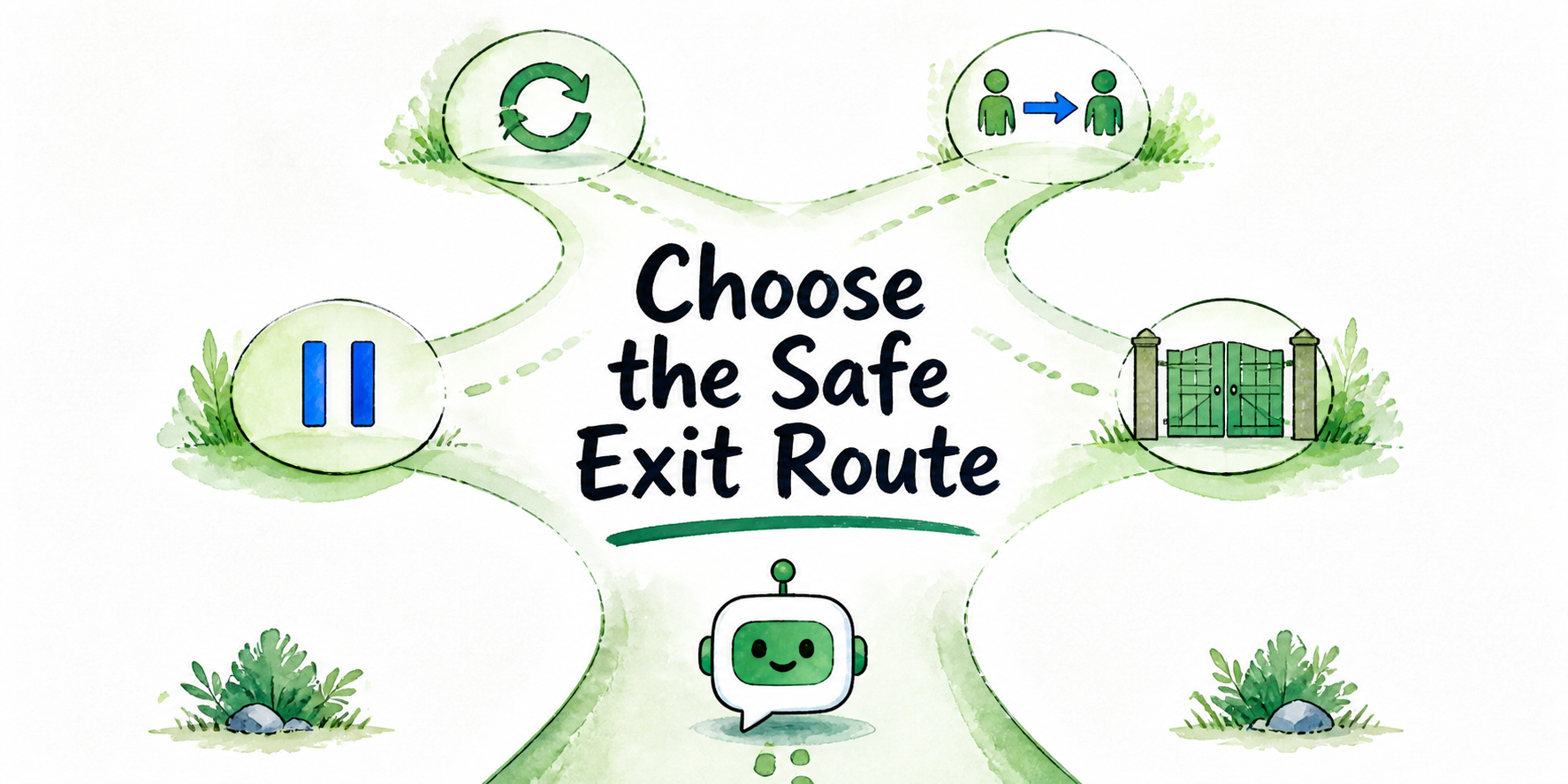
- End the call with one recommendation: proceed, narrow the pilot, request content cleanup, or defer the chatbot.
Agencies usually do not lose margin because they forgot to ask whether a client wants a chatbot. They lose it when they accept a broad request before they know the audience, source material, handoff path, approval owner, and success criteria. A useful discovery call turns chatbot interest into a responsible next step: what can be scoped now, what needs cleanup first, and what should not be automated yet.
Key Takeaways
- A chatbot discovery call should decide whether the opportunity is viable before the agency writes a project scope.
- A focused workflow is easier to qualify than a general chatbot request. Look for a known audience, repeat questions, owned content, and a next step.
- Content readiness is a gating factor. If source material is outdated, contradictory, or unapproved, narrow or delay the assistant.
- Escalation questions reveal whether the chatbot can safely answer, collect, route, or stop.
- Reporting questions should identify expected outcomes and data owners, not become the full monthly reporting plan.
Start With The Decision The Discovery Call Must Make
The discovery call should not try to solve the whole chatbot project. Its job is to decide what the agency can responsibly recommend next.
That next step usually falls into one of four buckets:
| Discovery result | Recommended next step |
|---|---|
| Clear audience, clear workflow, approved sources, known handoff owner | Proceed to scoping |
| Valid opportunity, but the request is too broad | Narrow the pilot |
| Useful use case, but sources are incomplete or inconsistent | Request content cleanup |
| High-risk answers, no owner, or no approved source material | Defer the chatbot |
This framing keeps the call practical. The agency is testing readiness: Can the assistant answer from owned content? Does the client know which visitor questions matter? Is there a person or system ready to receive handoffs? Does the client know what success should look like?
If the answer is yes across those areas, the agency can move toward scope. If the answer is mixed, the better recommendation may be a smaller pilot or a content cleanup step before implementation.
For agencies still validating the first chatbot opportunity itself, the use-case decision should happen before this deeper intake. A separate guide to Client Use Cases for AI Chatbots Agencies Can Sell First can help when the client pain is not yet specific enough for discovery.
Ask Audience And Use-Case Questions First
Start with the user, not the bot. A client may say they want an AI assistant, lead capture, support deflection, or a branded website experience. Those labels are not enough to scope the work.
Use audience and use-case questions to find the actual job:
- Who will use the assistant: prospects, customers, applicants, internal staff, partners, or another group?
- Where will they encounter it: website widget, full-page assistant, landing page, portal, in-app surface, or another entry point?
- What are users trying to do when they ask for help?
- Which questions repeat often enough to justify an assistant?
- Which questions are information retrieval, and which require judgment from a person?
- What should happen after a good answer: read a page, submit a lead, book a call, open a support request, compare options, or stop?
- Which conversations should the assistant avoid or hand off immediately?
The payoff is a sharper implementation path later. A chatbot that helps visitors find service information and submit a qualified lead is easier to qualify than a vague request to answer everything on the site. A support Q&A assistant with a known handoff owner is easier to qualify than a bot expected to resolve every edge case.
The caveat: a narrow use case is not always better if it ignores the client’s real pain. If the client’s issue is scattered product documentation, narrowing to lead capture may create a clean build but miss the business problem. Use the questions to find the smallest useful workflow, not the smallest possible feature.
Check Whether The Client Has Usable Knowledge Sources
A chatbot project becomes risky when the agency discovers too late that the client’s answers live in old PDFs, draft policy documents, private inboxes, outdated web pages, and undocumented staff knowledge.

Content readiness questions should come early:
- Which approved sources should the assistant use: website pages, documents, videos, FAQs, policies, service pages, listings, help center articles, or workflow pages?
- Which sources are current enough to answer from today?
- Which sources are outdated, duplicated, or contradicted by newer information?
- Who owns approval for the source set?
- Who resolves conflicts when two sources disagree?
- Which topics should be excluded until content is cleaned up?
- How often do prices, policies, availability, locations, staff details, or service descriptions change?
- What content gaps does the client already know about?
For platforms built around owned content, this source audit is not a formality. InsertChat’s indexed positioning focuses on answering visitor questions from owned website content, with knowledge sources such as website pages, documents, videos, FAQs, and policies. That language gives agencies a useful boundary: the assistant should be grounded in material the client can approve and maintain.
The agency should also ask how source usage and content gaps will be reviewed later. If the client expects the assistant to improve over time, someone needs to look at unanswered questions, missing coverage, and source problems. That does not mean the discovery call should package a monthly service. It only means the agency should capture whether ongoing review will be part of the later recommendation.
A practical rule: if the client cannot identify approved sources for the first workflow, do not scope a broad assistant. Recommend content cleanup, a narrower pilot, or a short source audit before implementation.
Map Workflow, Lead Capture, And Support Handoff
Once the audience and source material look plausible, move to workflow. This is where many vague chatbot requests become real operational questions.

Ask what the assistant should answer, collect, route, or escalate:
- What information should the assistant collect before a handoff?
- Which fields are required for lead capture, support intake, booking, or follow-up?
- Where should collected information go: CRM, support inbox, ecommerce system, calendar, webhook, shared inbox, or a named person?
- Who owns follow-up after the handoff?
- What context does the human team need to receive with the conversation?
- Which requests should never be automated past the first answer?
- What should the assistant do when it cannot answer from approved content?
These questions keep the agency from scoping a chatbot as an isolated website feature when the value depends on the process behind it. InsertChat’s website language includes lead capture, support handoff, and connections to CRM, support, ecommerce, calendar, webhook, and handoff workflows when visitor conversations need follow-up. In discovery, those terms should become ownership questions: who receives the lead, who handles the case, and which system is the source of record?
The caution is to stop before implementation detail. Discovery should reveal whether a workflow exists and who owns it. It should not become API setup, acceptance testing, or change-control planning. Those belong later, after the agency knows the opportunity is viable.
Set Compliance, Brand Voice, And Access Boundaries
The assistant’s boundaries matter before the proposal. If the client expects regulated advice, sensitive decisions, or brand-sensitive answers without an approval process, the agency should know that before scope is promised.
Ask compliance and risk questions in plain language:
- Which topics are the assistant allowed to answer directly?
- Which topics require a human handoff?
- Which topics should be refused, avoided, or answered only with approved language?
- Are there regulated, legal, medical, financial, insurance, hiring, or policy-sensitive areas involved?
- What disclaimers, escalation language, or approval rules does the client already use?
- Who signs off on policy-sensitive responses?
- Are there privacy, access, or data handling requirements the client’s team must review before launch?
Then ask brand voice and access questions:
- Should the assistant sound formal, concise, warm, technical, plainspoken, or sales-oriented?
- Are there words, claims, or promises the brand avoids?
- Should the assistant use the client’s logo, colors, assistant name, welcome message, suggested prompts, or custom domain?
- Who can access sources, conversations, settings, and reports?
- Who has owner or admin control after launch?
The tradeoff is important. Higher-risk topics are not automatically disqualified, but they need tighter boundaries. A chatbot can be useful for finding approved policy pages, collecting intake details, or routing a support request. It may not be appropriate to generate judgment-heavy advice without human review and approved source language.
Avoid unsupported claims here. Do not promise specific certifications, compliance outcomes, or legal coverage unless the client and platform documentation support those claims directly. Discovery should surface the risk so the agency can recommend a narrower workflow, an approval step, or deferral.
Ask Reporting Questions Without Building The Monthly Report
Reporting questions belong in discovery because they reveal what the client expects the chatbot to prove. They should not turn the call into a full analytics framework.
Ask enough to identify outcomes and ownership:
- What would make the first chatbot workflow useful to the client?
- Is the expected outcome fewer repeated support questions, more qualified leads, better content discovery, faster handoff, or clearer visitor insight?
- What does the client already track in CRM, support, analytics, booking, or ecommerce systems?
- Who will review conversation logs, top questions, content gaps, source usage, lead signals, or usage reports?
- Which unanswered questions should trigger content updates?
- How will the client decide whether to expand beyond the first workflow?
These questions give the agency the measurement expectations needed for later planning without building the monthly report inside the call.
If discovery shows the client expects ongoing monitoring, updates, and reporting, that is a downstream service conversation. The detailed packaging belongs in a separate retainer model, such as How Agencies Can Turn AI Chatbots Into a Retainer Service. In this article’s context, the important thing is to capture the expectation before scope is written.
The caveat: do not let reporting expectations become unsupported ROI claims. If the client asks whether the chatbot will reduce tickets by a specific amount or increase leads by a specific percentage, mark that as an assumption to validate later, not a promise to include in discovery notes.
Use Go/No-Go Signals To Choose The Next Step
After the call, the agency should be able to make a clear recommendation. Use the answers to sort the opportunity into one of four next steps.

| Signal from discovery | What it usually means | Recommended next step |
|---|---|---|
| Clear audience, repeated question pattern, approved sources, known handoff owner, low-risk answers | Ready for a scoped first workflow | Proceed to scoping |
| Clear business pain, but the request covers too many audiences, topics, or workflows | Real opportunity, too broad for version one | Narrow the pilot |
| Strong use case, but source material is outdated, scattered, contradictory, or unapproved | Answers may be unreliable until content is fixed | Request content cleanup |
| No clear user, no source owner, no handoff path, sensitive answers without approval, or no success criteria | Not ready for responsible delivery | Defer the chatbot |
This is not a full project scope. It is a decision filter.
A good discovery summary can be short: “The client has a viable lead capture and service Q&A workflow, but policy answers are not source-ready. Recommend scoping a narrow assistant around approved service pages and lead handoff, while asking the client to clean up policy documents before expansion.”
That kind of recommendation protects both sides. The client gets a path forward. The agency avoids promising an assistant that depends on missing content, unclear owners, or unapproved answers.
Worked Example: A Client Call That Changes The Recommendation
An agency is speaking with a content-rich service business that wants a branded assistant on its website. The client’s initial request is broad: answer visitor questions, capture leads, reduce support requests, and help people find the right service page.
The main audience is prospective customers comparing services before contacting sales. The most repeated questions are about service fit, timelines, locations, intake requirements, and whether a visitor should book a consultation. The next step is lead capture or a support handoff, depending on the question.
The service pages and FAQs are current, but policy details live in several older documents. The client is not sure which policy document is authoritative. Staff usually know the right answer, but that knowledge is not written down.
The workflow answers are stronger. Sales wants qualified leads in the CRM. Support wants complex questions routed to a shared inbox. The client can name owners for both paths and define what information should be collected before handoff. The assistant can explain services from approved pages, but it should not answer policy-sensitive questions until the documents are cleaned up.
The recommendation changes. The agency does not propose a broad chatbot for all website and policy questions. It recommends a narrower pilot: a branded assistant trained on approved service pages and FAQs, with lead capture and support handoff for questions outside the approved source set. The client must clean up policy documents before those topics are added.
The opportunity is viable, but only if the first workflow is bounded by source readiness and handoff ownership.
FAQ
How many AI chatbot discovery questions should an agency ask? Ask enough to cover audience, use case, knowledge sources, workflow, escalation, compliance, brand voice, access, and reporting expectations. The goal is a confident next step, not a long questionnaire.
Who should join the chatbot discovery call? Include the person who owns the business goal, the person who owns content approval, and the team that will receive leads or support handoffs. If brand, compliance, or access rules matter, include those owners early.
What content does a client need before scoping a chatbot? At minimum, the client needs approved sources for the first workflow. Those may include website pages, documents, videos, FAQs, policies, service pages, listings, or workflow pages.
When should an agency defer a chatbot project? Defer when the client cannot name the audience, cannot provide approved sources, has no handoff owner, expects sensitive advice without approval, or cannot say what useful performance would look like.
Does discovery replace project scoping? No. Discovery decides whether the opportunity is ready and what the next step should be. Project scoping comes after that and should define boundaries, inputs, responsibilities, and launch needs in more detail.
How should reporting fit into discovery? Ask what the client expects to learn and who owns the data. Conversation logs, top questions, content gaps, source usage, lead signals, and usage reports can shape later planning, but discovery should not become the full monthly reporting model.
Should the agency mention retainers during discovery? Only as a possible downstream need. If the client expects ongoing monitoring, content updates, and reporting, capture that requirement. Save pricing, packaging, and service design for a separate retainer conversation.
What is the safest first chatbot workflow? The safest first workflow is focused, source-backed, and tied to a clear next step. Avoid broad, judgment-heavy workflows until sources and approval rules are clear.