TL;DR
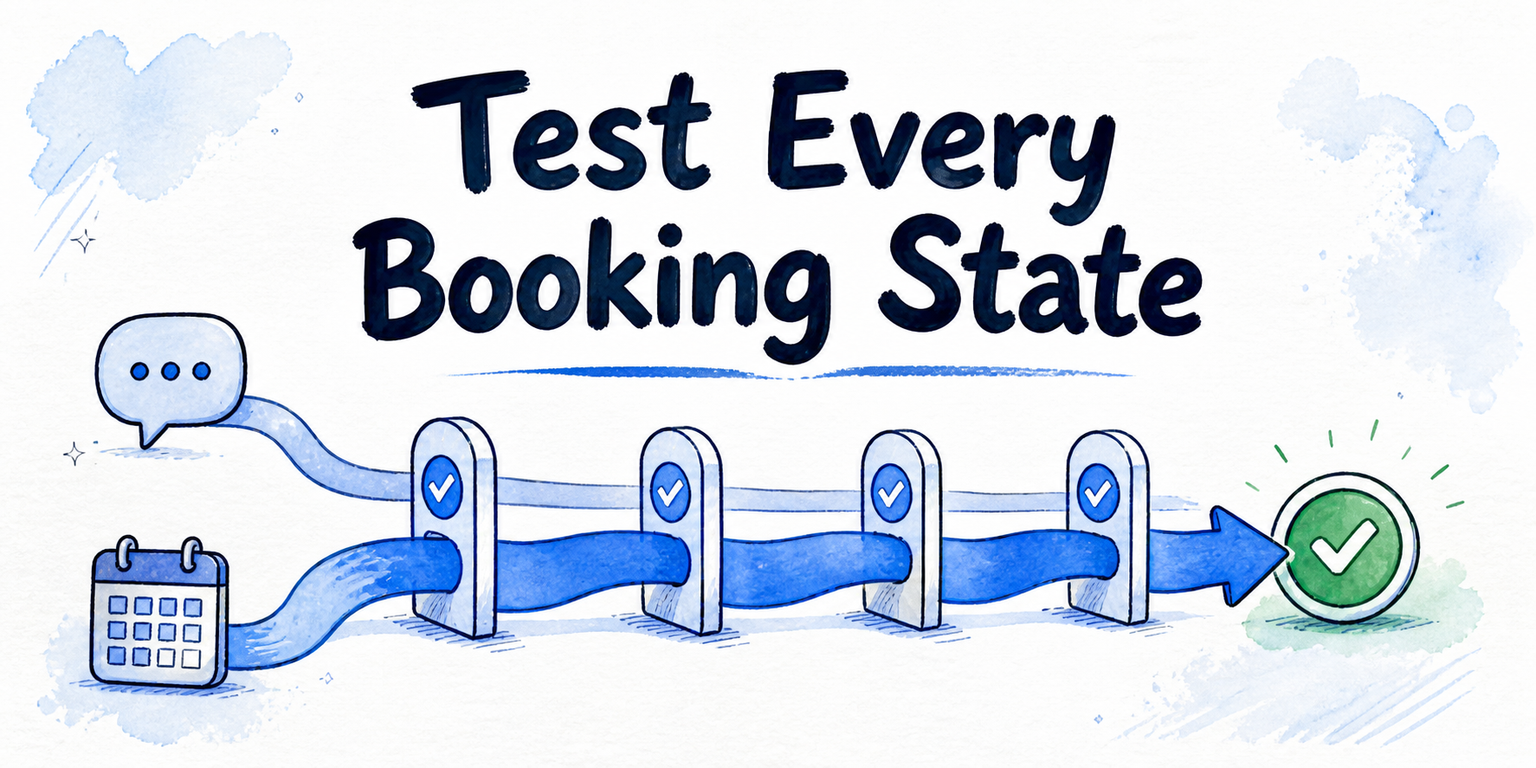
- Evaluate the full path from the first answer to a completed booking or human callback.
- Test realistic calls before sending unanswered business calls to the system.
- Require accurate answers, usable lead details, clear escalation, correct routing, and reviewable transcripts.
- Compare the full operating cost with your expected call volume and workflow requirements.
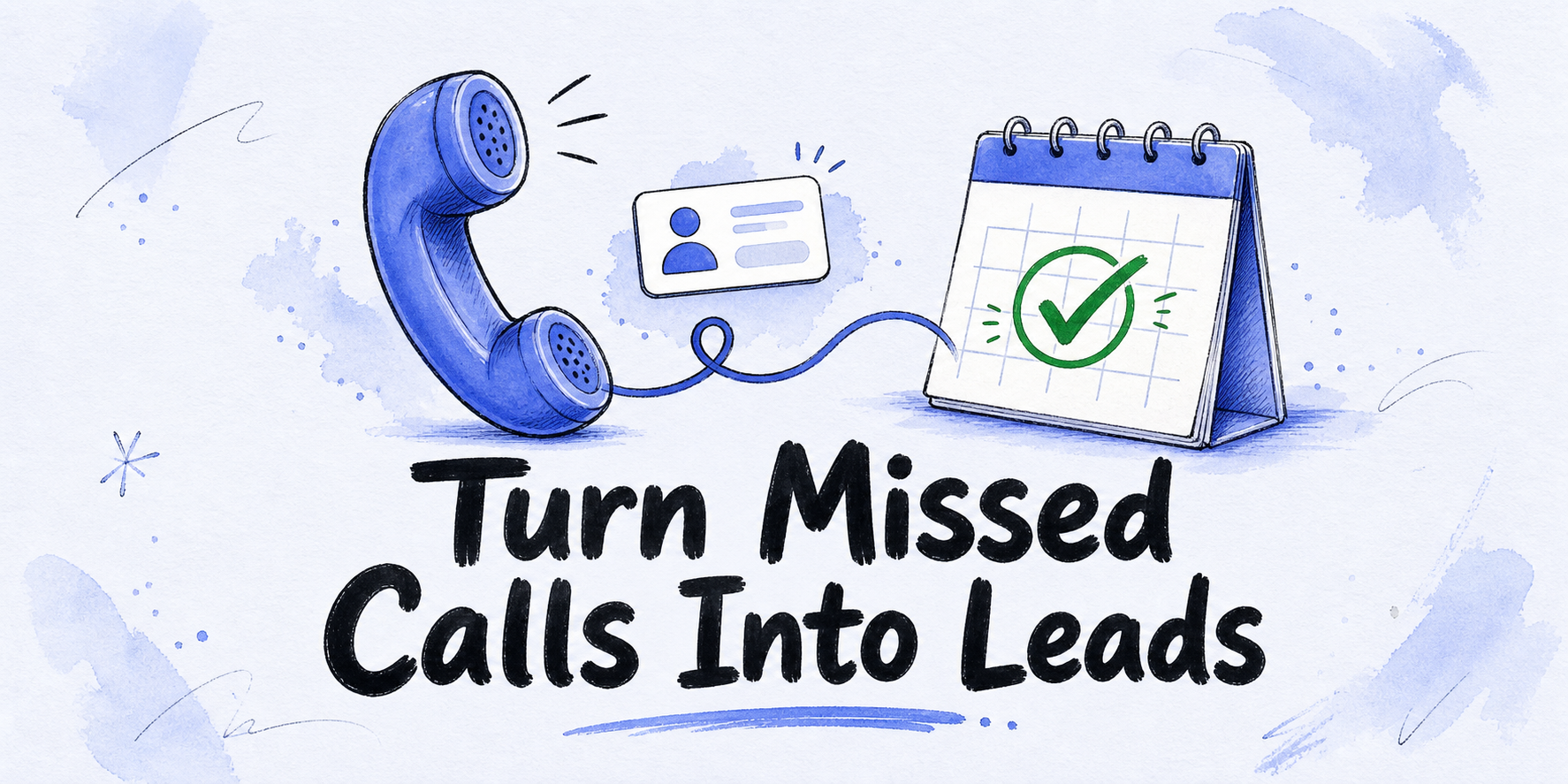
A ready-to-book customer calls after closing, asks one question about your service, and hangs up when nobody answers. The problem is not simply that the phone rang unattended. The business lost the chance to answer, qualify the caller, agree on a next step, and give an employee enough context to follow through. Choosing an AI receptionist for small business calls therefore requires an end-to-end test: can it turn that unanswered call into a useful, correctly routed lead without exceeding its authority?
Key Takeaways
- A call is not a captured lead until usable details and conversation context reach the person responsible for the next action.
- Good source material controls what the receptionist can answer. Clear escalation rules control what happens when it should not answer.
- A trial should be judged by completed workflow outcomes, not a polished demonstration or a long feature list.
- Total cost depends on the capacity and operating requirements your business actually needs, including ongoing review work.
Use the Missed-Lead AI Receptionist Checklist
Use the Missed-Lead AI Receptionist Checklist during product comparisons and trials. It has nine gates. For each gate, write down a representative test, the expected result, and what would make you reject or reconfigure the workflow.
| Evaluation gate | What to test | What failure looks like |
|---|---|---|
| 1. Call answering | Call after hours, during a busy period, and from a number not already known to the business. | The call does not reach the receptionist, starts incorrectly, or leaves the caller unsure that they reached the right business. |
| 2. Business-content accuracy | Ask about a service, policy, location, business hour, or qualification rule covered by approved material. | The answer conflicts with current business information, invents a detail, or speaks with certainty when the source is unclear. |
| 3. Lead details | Provide some information but omit a required field, such as a phone number, email address, location, service need, or preferred time. | The system ends the call with an incomplete record or fails to confirm important details. |
| 4. Appointment booking | Request an eligible time, an unavailable time, and a service that requires staff approval. | The wrong calendar, service, employee, duration, or time is used, or the system books something outside its rules. |
| 5. Escalation or live takeover | Ask for a person, describe an urgent problem, or present an exception. | The receptionist keeps questioning the caller, offers an unsupported answer, or sends the call into an undefined route. |
| 6. Follow-up routing | Complete a qualified inquiry and check where the record, notification, and requested action arrive. | The lead reaches the wrong person, lacks an owner, or arrives without the details needed to respond. |
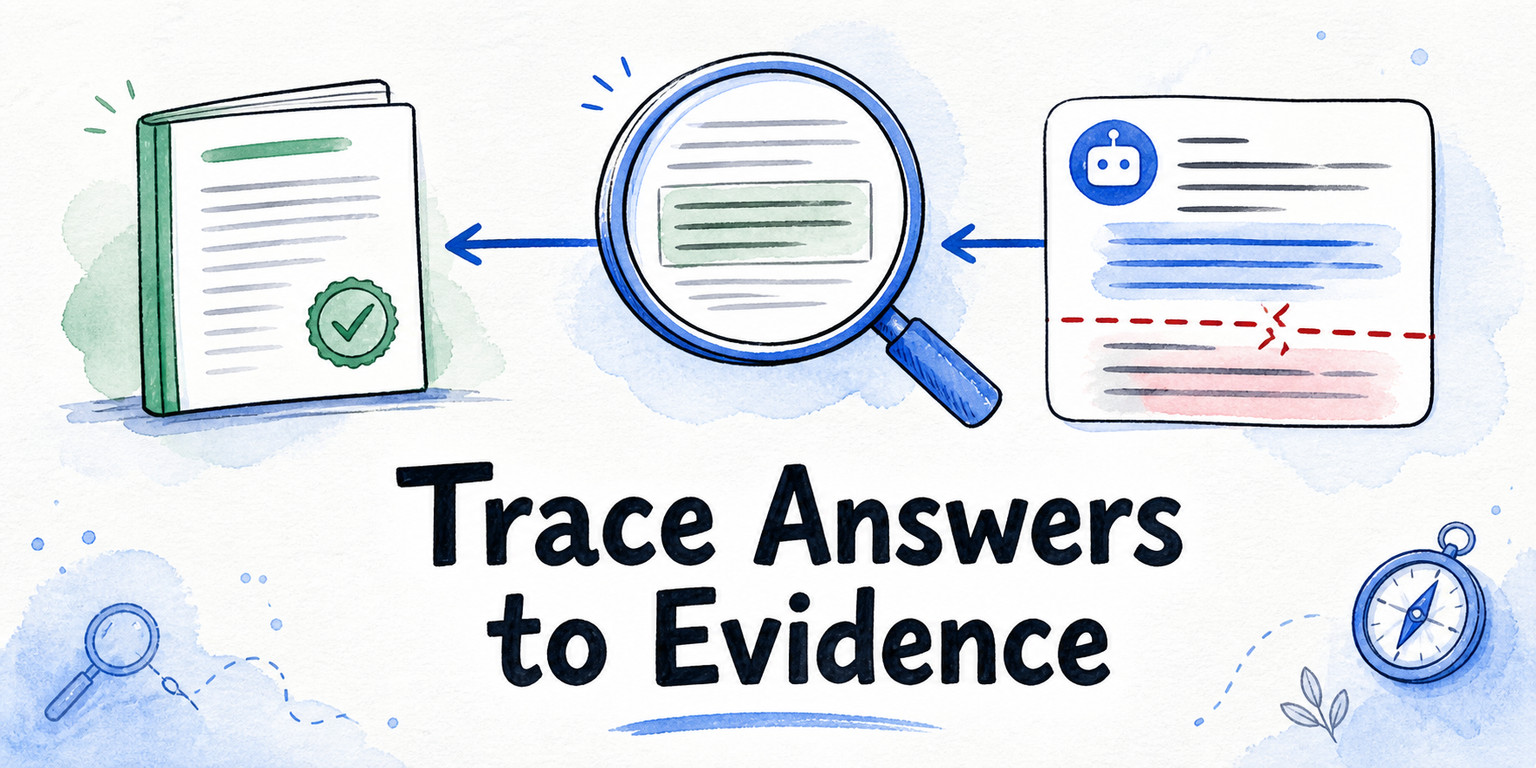
| 7. Transcript review | Compare the recording or transcript with the lead record and assigned outcome. | Important caller language is missing, the summary changes the meaning, or employees cannot find and review the conversation. |
| 8. Setup effort | Record the work needed to connect sources, configure phone handling, define rules, test calls, and correct failures. | The business cannot maintain the workflow with the people and time available. |
| 9. Total current cost | List the required plan capacity, phone usage, sources, seats, routing connections, booking needs, branding requirements, and staff review time. | A low headline price excludes capacity or operating work that the business needs. |
Treat accuracy, routing, escalation, and reviewability as blocking gates. A convenient booking screen cannot compensate for incorrect policy answers. A natural-sounding call cannot compensate for a lead that reaches nobody. If a critical gate fails, correct it and retest before relying on the system.
For businesses considering InsertChat as one implementation, its materials describe phone answering, lead capture, booking, saved-lead notifications, and human takeover. These are relevant because they map to the workflow above, but each still needs to pass your own calls and rules. Review the current phone, lead capture, and conversation review features against the checklist rather than treating availability alone as proof of fit.
Trace an after-hours caller through the complete workflow
Consider this illustrative scenario. It is a test case, not a customer result.
A caller contacts a small home-service company at 7:30 p.m. They ask whether the company handles a particular type of repair in their area. The AI phone receptionist answers using an approved service page and coverage information. It does not estimate a price because the business requires an inspection first.
The receptionist gathers the caller's name, callback number, service address, problem description, preferred timing, and whether the issue presents an immediate safety concern. It repeats the phone number and address so the caller can correct them.
If the request fits the company's booking rules, the receptionist offers approved appointment times. The caller selects a slot, and the booking is recorded on the correct calendar. The saved lead includes the service requested, answers to the qualification questions, appointment details, and conversation record.
Now change one condition: the caller describes an unusual problem that requires a technician to decide what happens next. The receptionist should not force the request into a standard booking. It should explain that a qualified person needs to review it, collect the best callback time, and create a callback request.
In either branch, the workflow remains unfinished until the right employee receives a notification with the caller's details and context. For the booking branch, that employee verifies that the appointment entered the expected schedule. For the callback branch, the assigned person contacts the caller and records the outcome.
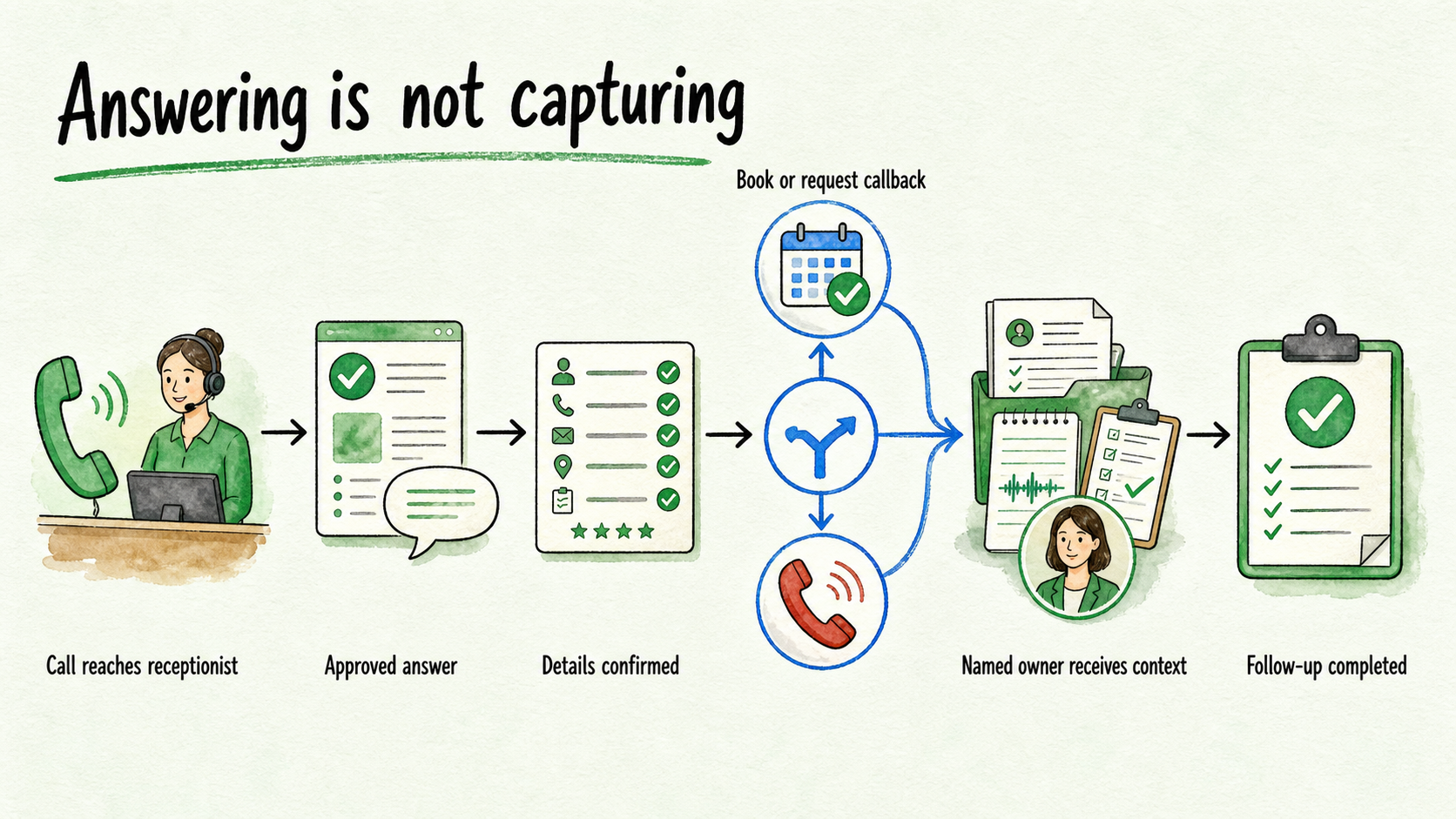
This scenario reveals the difference between answering and capturing. Answering is one event. Capturing is a chain of information and ownership:
- The call reaches the receptionist.
- The caller receives an answer supported by approved business information.
- Required qualification and contact fields are collected and confirmed.
- The system takes an allowed action, either booking or requesting a callback.
- The lead, transcript, and next action reach a named owner.
- The human-owned follow-up is completed and recorded.
A break at any point can leave the business with the appearance of coverage but no usable outcome.
Validate the workflow with representative test calls
A friendly demonstration usually follows the easiest path. Your acceptance test should include the language, omissions, and exceptions heard in actual calls.
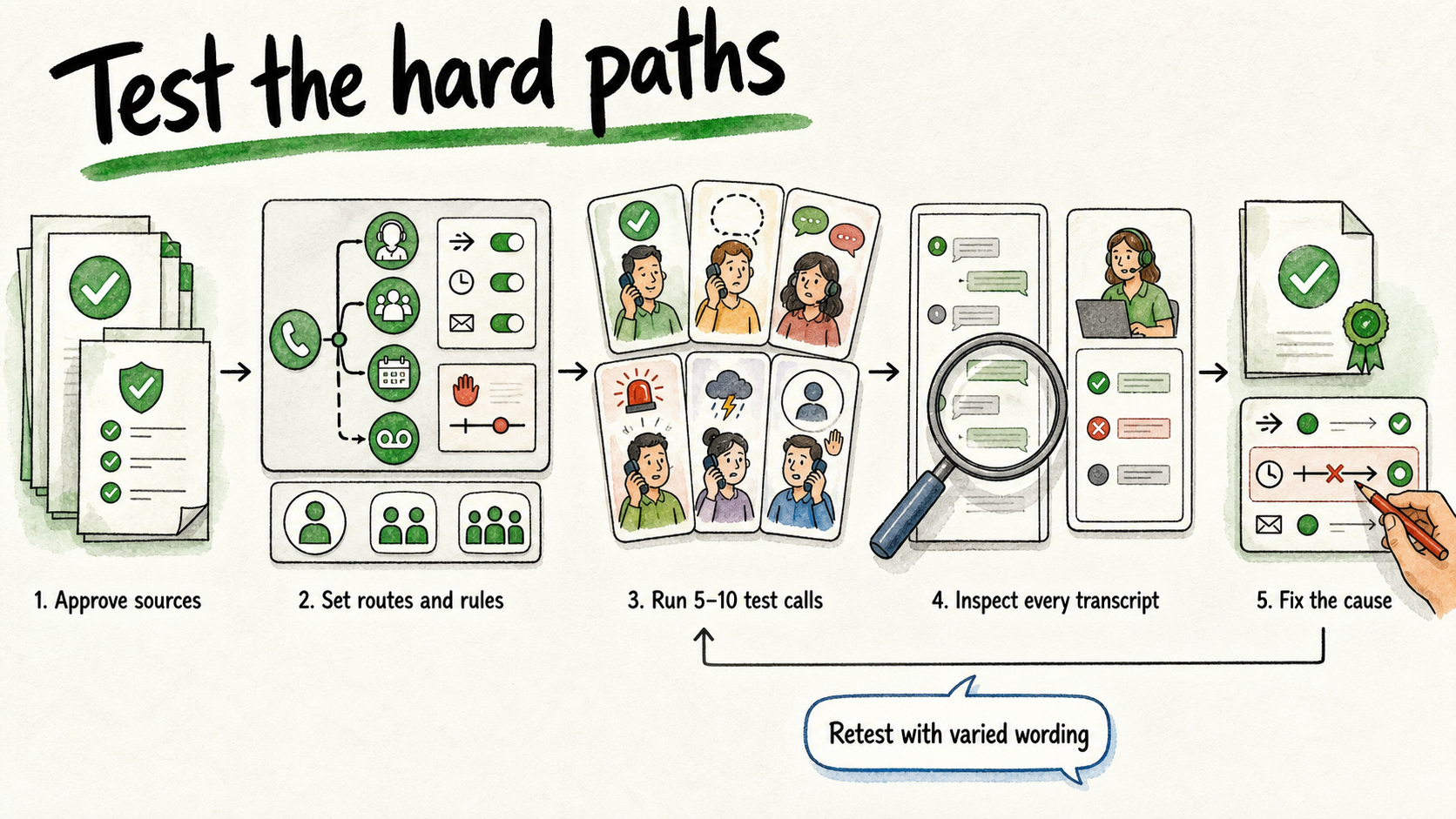
Start with this sequence:
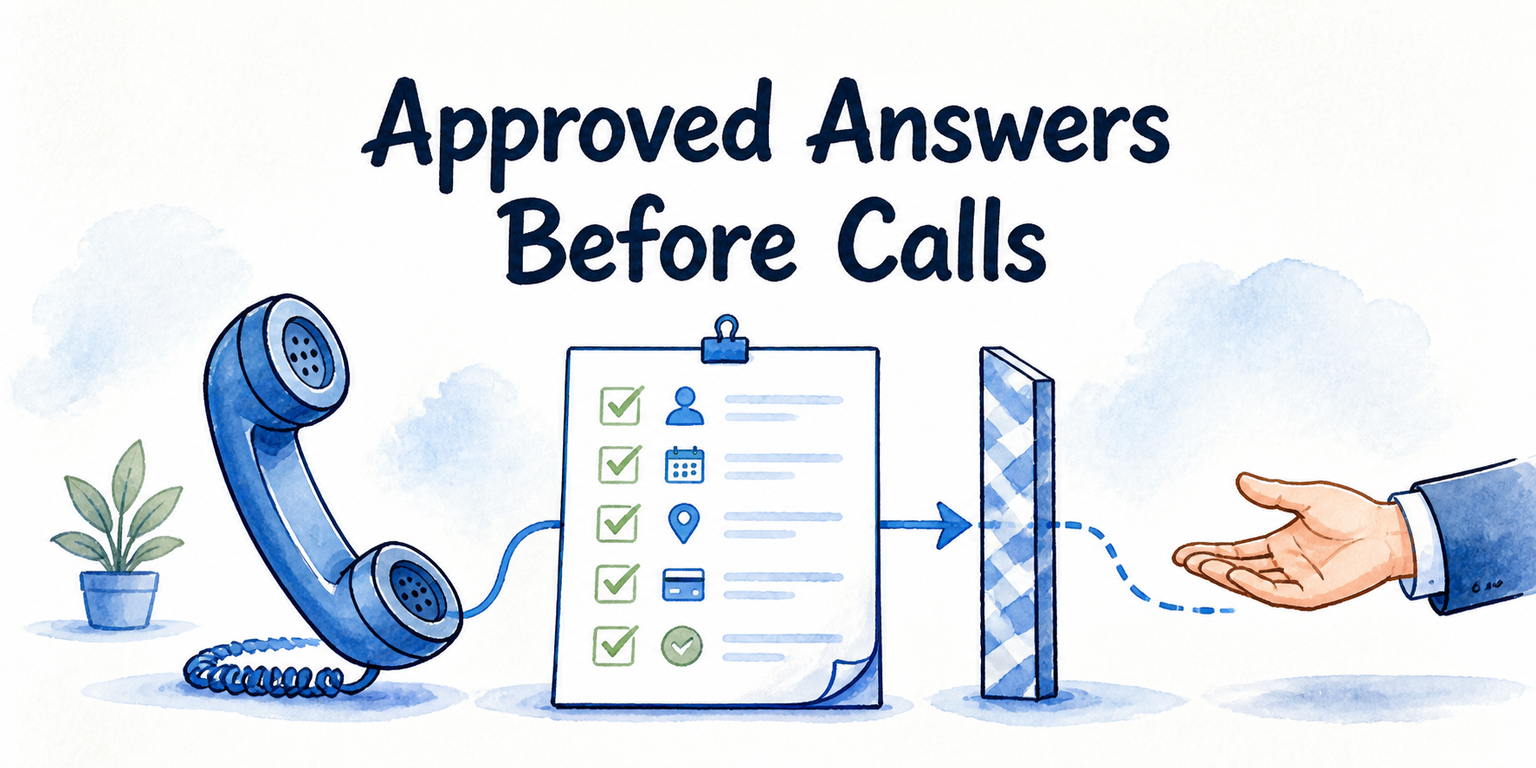
Connect approved sources. Add the pages, policies, service details, hours, locations, qualification rules, and scheduling information the receptionist may use. Remove outdated or contradictory material. If an answer requires judgment, write an escalation rule instead of adding vague source text.
Configure the phone and destination routes. Decide which calls reach the receptionist, when coverage applies, and where leads, booking records, and callback requests go. Give each route a person or team responsible for it.
Define automatic actions and takeover rules. Specify what the receptionist may answer, what it may book, which fields it must collect, and which situations require a person. Include a response for callers who explicitly ask for human help.
Create five to ten representative tests. Include a common service question, incomplete contact details, an eligible booking, a booking conflict, an out-of-policy request, urgent language, a complex exception, and a direct request for a person. Write the expected answer, required fields, route, and final owner before placing each call.
Run the calls and inspect every transcript. Check what the caller heard and what the employee received. Look for altered phone numbers, missing qualifiers, unsupported answers, incorrect bookings, weak summaries, and ambiguous next actions.
Correct the source or rule that caused each failure. Do not patch only the wording of one test. If the answer was wrong, inspect the underlying source. If the lead stalled, inspect the route and ownership rule. Run the failed test again, then vary the caller's wording.
InsertChat says its assistants can use approved business sources and retain controls for behavior and handoff. It also provides setup and pricing FAQs for buyers checking source connection, testing, publishing, and packaging. Those capabilities can shorten initial configuration, but the business still owns source quality, escalation boundaries, test design, and follow-up discipline.
Measure captured leads and calculate operating cost
Count outcomes that reveal where the workflow succeeds or breaks. A compact weekly scorecard can include:
- Calls answered: Calls that reached the receptionist and began correctly.
- Qualified leads captured: Calls that produced the contact and qualification details your sales process requires.
- Appointments booked correctly: Bookings placed on the intended calendar with the correct service, duration, person, and time.
- Correct escalations: Calls routed according to your written rules, including requests for a person and situations outside the receptionist's authority.
- Callbacks completed: Callback requests that received a human response and a recorded outcome.
- Transcripts passing review: Conversations with acceptable answers, complete details, accurate summaries, and a clear next action.
Do not combine these into one vague success number. If answered calls rise but completed callbacks do not, the bottleneck is probably downstream. If qualification details are often missing, revise the required fields or conversation flow. If transcripts contain wrong business facts, correct the approved sources and retest.
Set targets from your own call patterns, staffing, and service standards. There is no single useful booking or escalation benchmark for every small business. A repair company, consulting firm, and appointment-based clinic can receive very different calls and require different human boundaries.
Assess cost with the same operational detail. List subscription capacity, expected usage, phone requirements, number of assistants, business sources, user seats, booking or routing connections, branding needs, and any overage conditions. Add the staff time required to maintain content, review transcripts, investigate failures, and complete callbacks.
Plan details and limits can change, so verify current pricing and limits against that list. Do not choose from the monthly figure alone. The useful comparison is the current cost of a configuration that passes your critical gates and can handle the expected workload.
Know which calls still need immediate human judgment
An AI receptionist is a stronger candidate when calls follow clear rules, answers exist in maintained business material, and permitted next actions can be stated precisely. Caution increases when the correct response depends on professional judgment, sensitive information, or an unusual exception.
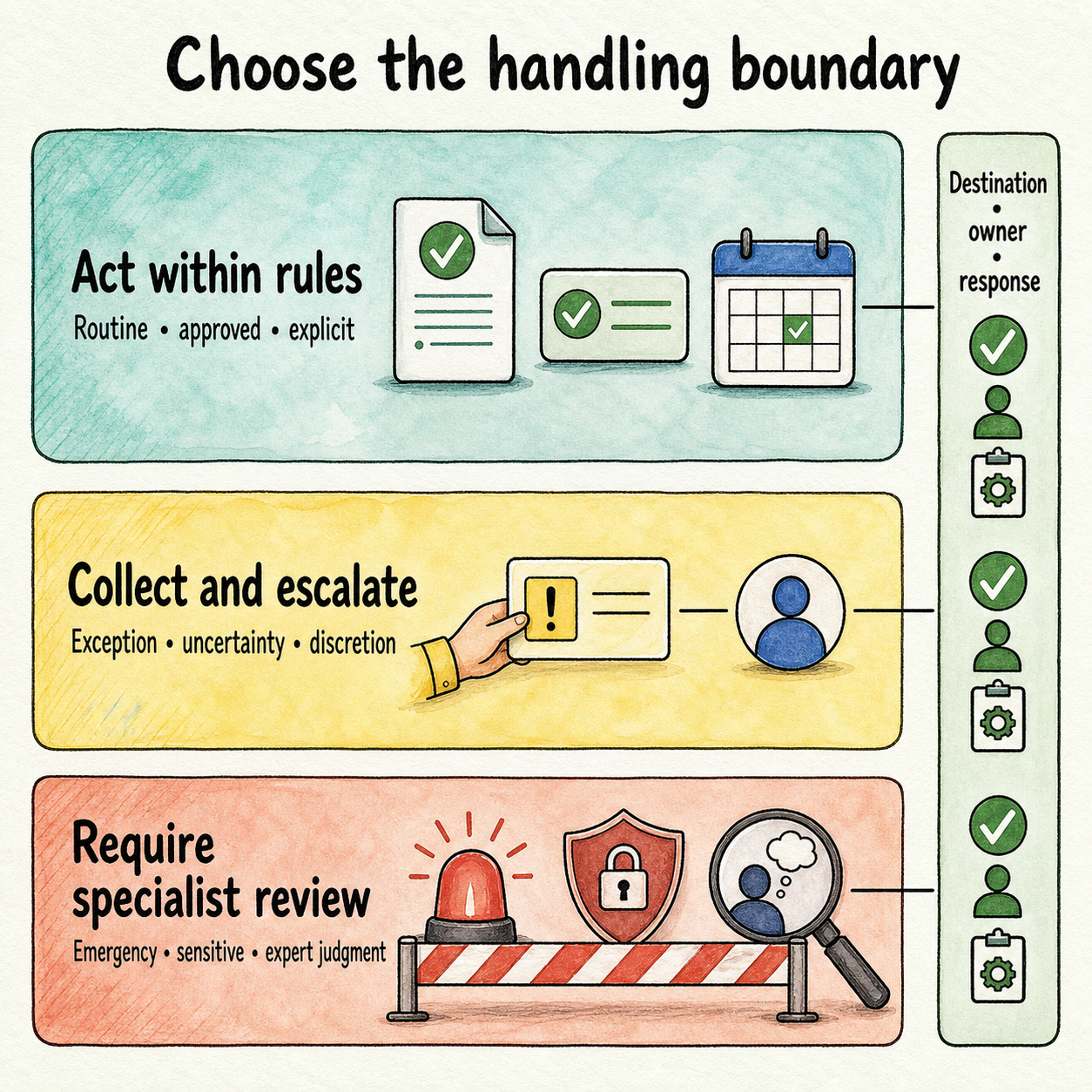
Use three handling categories:
- Answer or act within rules: Routine questions with approved answers, standard lead qualification, and appointment types with explicit eligibility and scheduling rules.
- Collect and escalate: Complex service exceptions, uncertain eligibility, complaints requiring discretion, requests outside policy, or situations where a qualified employee must choose the next action.
- Do not automate without further review: Emergency requests, regulated or sensitive conversations, and calls requiring immediate legal, medical, financial, safety, or other expert judgment. These need approved procedures and appropriate specialist, privacy, or security review.
Weak source material is another stop signal. If policies conflict across pages or staff rely on unwritten exceptions, the receptionist has no dependable rule to apply. Fix the business information first. Likewise, do not launch until every escalation has a destination, an owner, and an expected response process.
Your next step is concrete: choose five to ten missed-call situations, define the expected answer, required details, allowed action, escalation path, and follow-up owner for each. Then run a transcript-reviewed trial. If InsertChat fits the checklist, a self-serve trial can be used for that test. Depend on the workflow only after the critical gates pass and employees can complete the resulting follow-up.
FAQ
Can an AI receptionist answer every caller accurately?
No system should be assumed to answer every caller correctly. Reliability depends on approved, current business sources, clear behavior rules, and appropriate escalation. Test paraphrased questions and incomplete requests, then review transcripts for unsupported details or misplaced certainty.
What lead details should it collect?
Collect only the fields needed for the next action. These commonly include a name, reliable contact method, service need, location, timing, and preferred next step. Your sales or booking process may require different fields. Require the receptionist to confirm details that are easy to mishear, especially phone numbers, email addresses, dates, and addresses.
Should an AI appointment booking receptionist book every request?
No. Automatic booking works best when eligibility, appointment type, duration, availability, and assigned calendar are explicit. Requests involving exceptions or professional judgment should become callback requests or human handoffs.
How should live takeover work?
Define when takeover is available, who receives the call, and what happens when that person cannot answer. The employee should receive the conversation context already collected so the caller does not need to start again. Outside takeover hours, use a clear callback route with an owner.
How should I compare AI receptionist pricing?
Compare the current configuration required for your workflow, including assistants, sources, usage, seats, phone needs, booking or routing connections, branding requirements, and review work. Confirm current tiers, limits, and overage conditions directly before buying. Avoid relying on an old starting price or a plan that lacks a required workflow component.
What must pass before launch?
Routine questions, missing-detail recovery, correct bookings, booking conflicts, requests for a person, urgent language, complex exceptions, routing, notifications, and transcript review should all behave as expected. Assign a human owner to each final action and rerun failed tests after corrections. Launch only the call types whose sources, rules, routes, and review process are ready.