TL;DR
- Keep a general-purpose AI tool when the job is open-ended internal creation, such as drafting, brainstorming, analysis, or rewriting.
- Add a governed website assistant when visitors need answers from approved business sources, visible citations, your branding, human escalation, or controlled actions.
- Use both when employees need creative freedom but customers need bounded, accountable answers.
- Do not start a public test until six conditions pass: current approved content, answer boundaries, an escalation destination, representative test questions, a named review owner, and one measurable workflow.
A marketing team can happily use a general-purpose AI tool to draft campaigns, then make a costly category error by putting a similar experience in front of website visitors. The public assistant may be asked about prices, returns, product fit, order status, contractual terms, or exceptions. Those questions require approved facts, explicit limits, a responsible destination when the answer is unclear, and someone who owns the system after launch.
Key Takeaways
- “Replacement” describes a job change, not necessarily a product swap.
- Internal creation, public answering, and customer workflow execution impose different requirements.
- Model quality cannot compensate for missing policies, weak source material, undefined escalation, or absent ownership.
- A public assistant should fail closed: when an approved answer or permitted action is unavailable, it should route the visitor rather than improvise.
- The smallest credible test is one assistant performing one measurable visitor job on one controlled page.
Classify the job before comparing tools
Start by writing down who will use the system, what they expect from it, and what happens if its response is wrong. Most requests for a ChatGPT replacement for a website contain three different jobs that should not be evaluated as one.
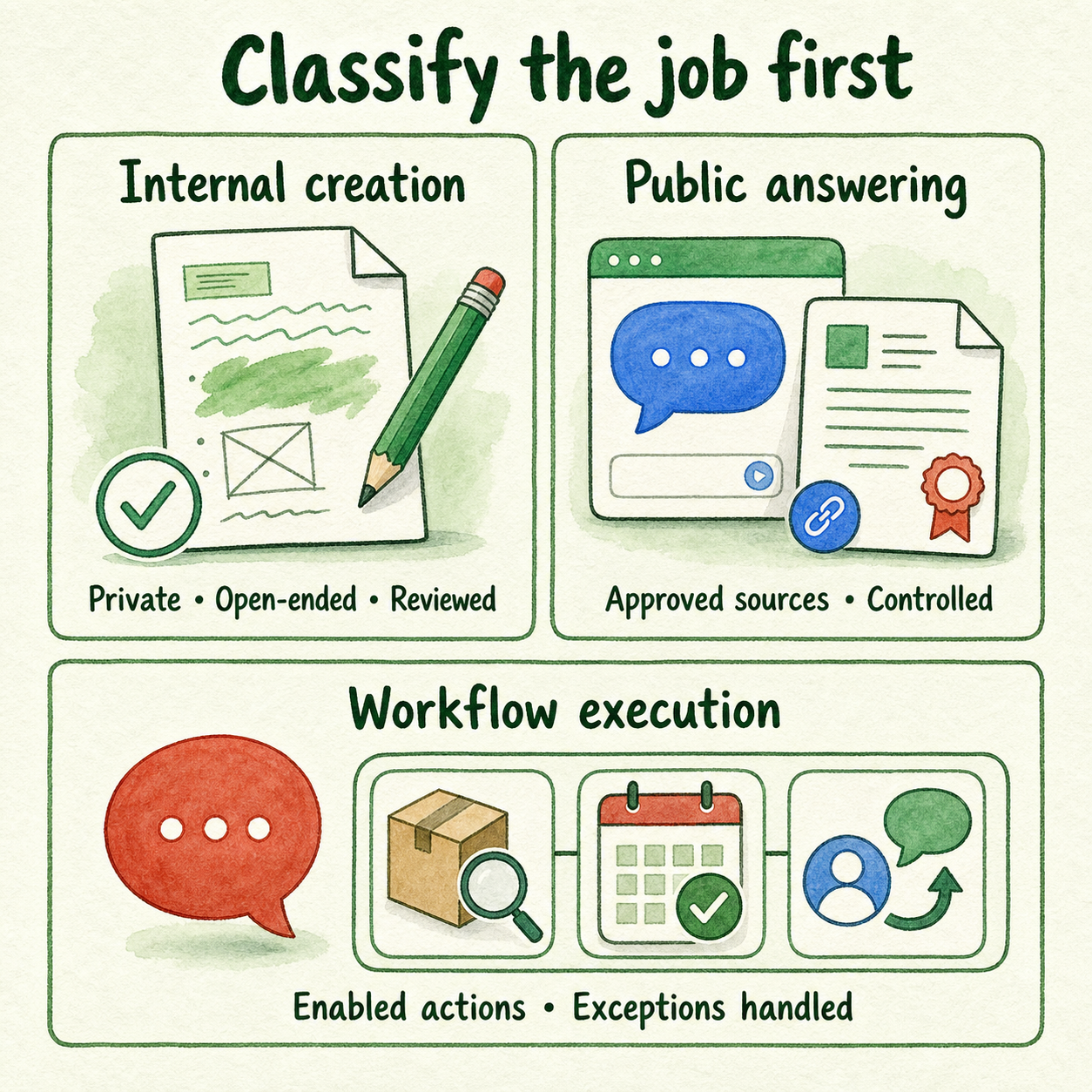
1. Internal creation
Employees use AI privately to brainstorm, summarize, draft, revise, analyze, or explore possibilities. The work is open-ended, and a person normally reviews the output before it reaches a customer.
A marketing team drafting landing-page variants fits this category. It benefits from flexibility, broad reasoning, and a familiar interface. Public branding, visitor analytics, order lookup, and live handoff are irrelevant to the core job.
Keep ChatGPT or another general-purpose tool when this is the only requirement. Changing tools may add migration work without solving a new business problem.
2. Public source-backed answering
Website visitors ask questions, and the business wants answers limited to approved pages, documents, policies, product information, or support material. The answer may need to show its source, match the brand, refuse unsupported topics, and route uncertain cases to a person.
This is not simply internal chat moved onto a website. The audience cannot see the employee review process, so controls must be part of the deployed experience.
3. Customer workflow execution
The visitor needs the conversation to produce an action: capture a qualified lead, book an appointment, accept a payment, check an order, create a ticket, or transfer the conversation with its context intact.
Actions increase the consequences of errors. An ecommerce assistant that explains a shipping policy performs public answering. Once it looks up a specific order or initiates a return path, it performs workflow execution and needs narrower permissions, tested destinations, and exception handling.
An agency may encounter all three jobs. Its staff may use a general-purpose tool for drafts, while each client assistant needs distinct branding, sources, access boundaries, and escalation. That points to separate layers, not one universal chat product.
Use the architecture matrix to choose keep, add, or combine
The following matrix chooses an operating architecture. It is not a vendor scorecard and does not rank models.
| Requirement | Keep a general-purpose tool | Add a governed website assistant | Combine both |
|---|---|---|---|
| Primary audience | Employees | Website visitors or customers | Employees and visitors |
| Source authority | Broad context and user-supplied material | Approved business sources, ideally with citations | Open-ended internal context plus controlled public sources |
| Branding | Usually secondary | Customer-facing name, tone, colors, and presentation | Separate internal and public experiences |
| Deployment surfaces | Private chat interface | Website, embedded page, phone, inbox, Slack, or API as required | Private workspace plus selected public channels |
| Actions | Draft or recommend | Perform explicitly enabled customer actions | Explore internally, execute only through the governed layer |
| Human handoff | Normal employee review | Named escalation destination with conversation context | Internal review plus customer escalation |
| Analytics | Individual or team usage may be enough | Questions, weak answers, sources, actions, and handoffs matter | Separate creation and visitor-workflow measures |
| Model choice | Chosen for broad work | Chosen within source, cost, latency, and workflow controls | Specialist models can remain outside the public workflow |
| Access controls | Employee account access | Roles, scoped tools, private sources, and workspace boundaries | Different controls for each layer |
| Ongoing owner | Tool administrator and users | Business-content owner plus operational reviewer | Owners for both environments |
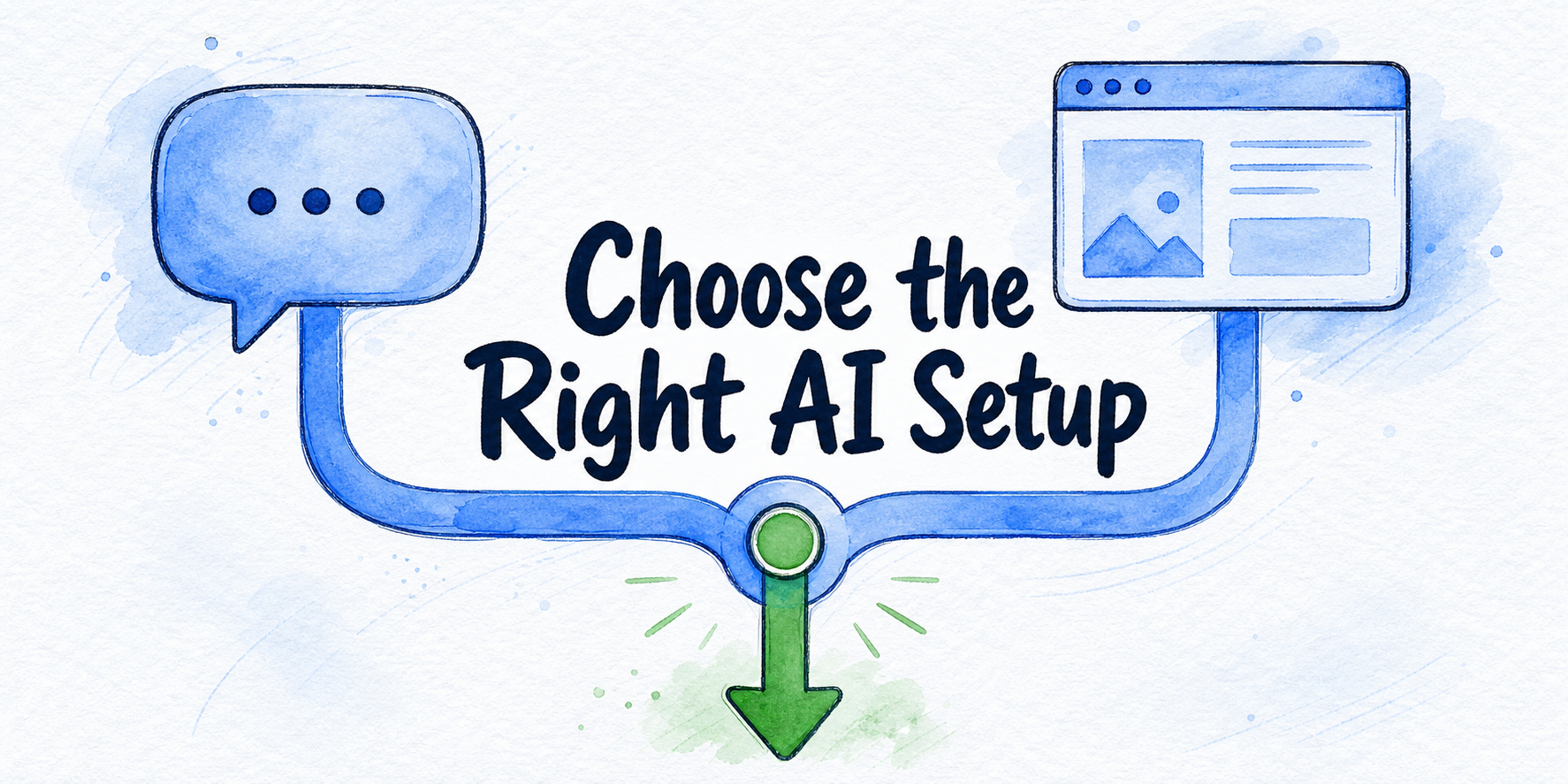
Choose keep when employees are the only users and a person reviews the work. Choose add when the current internal tool is not central but the website needs controlled answers or actions. Choose combine when the business still benefits from open-ended internal drafting while customers need a bounded public experience.
The combined architecture is often the honest answer. A governed website assistant should not absorb specialist work merely to reduce the number of subscriptions. Likewise, an internal creation tool should not become the public answer layer just because employees already know how to use it.
Fail the deployment if any readiness condition is missing
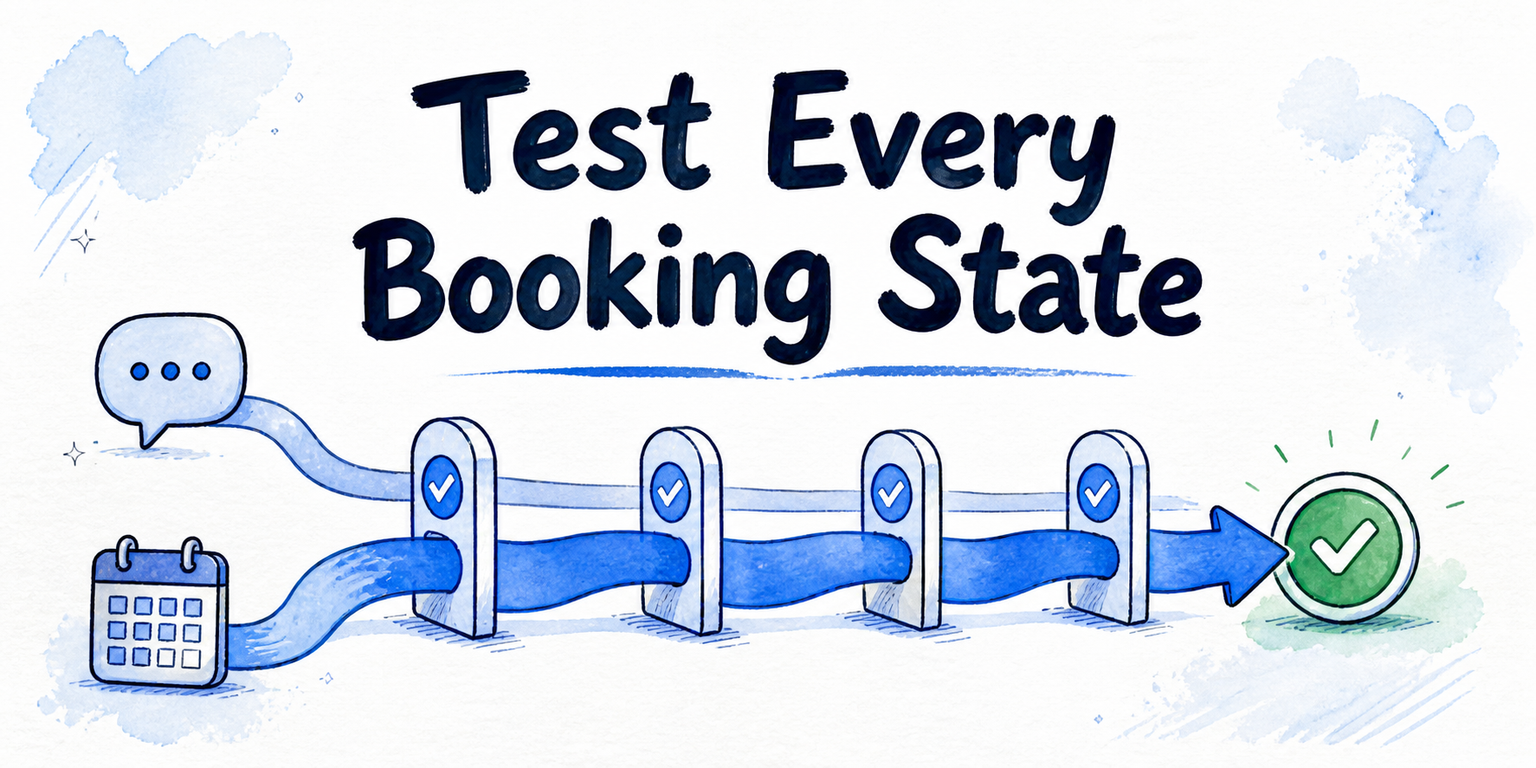
A correct tool category does not make a public deployment ready. Apply this six-condition gate before exposing even a pilot to visitors.
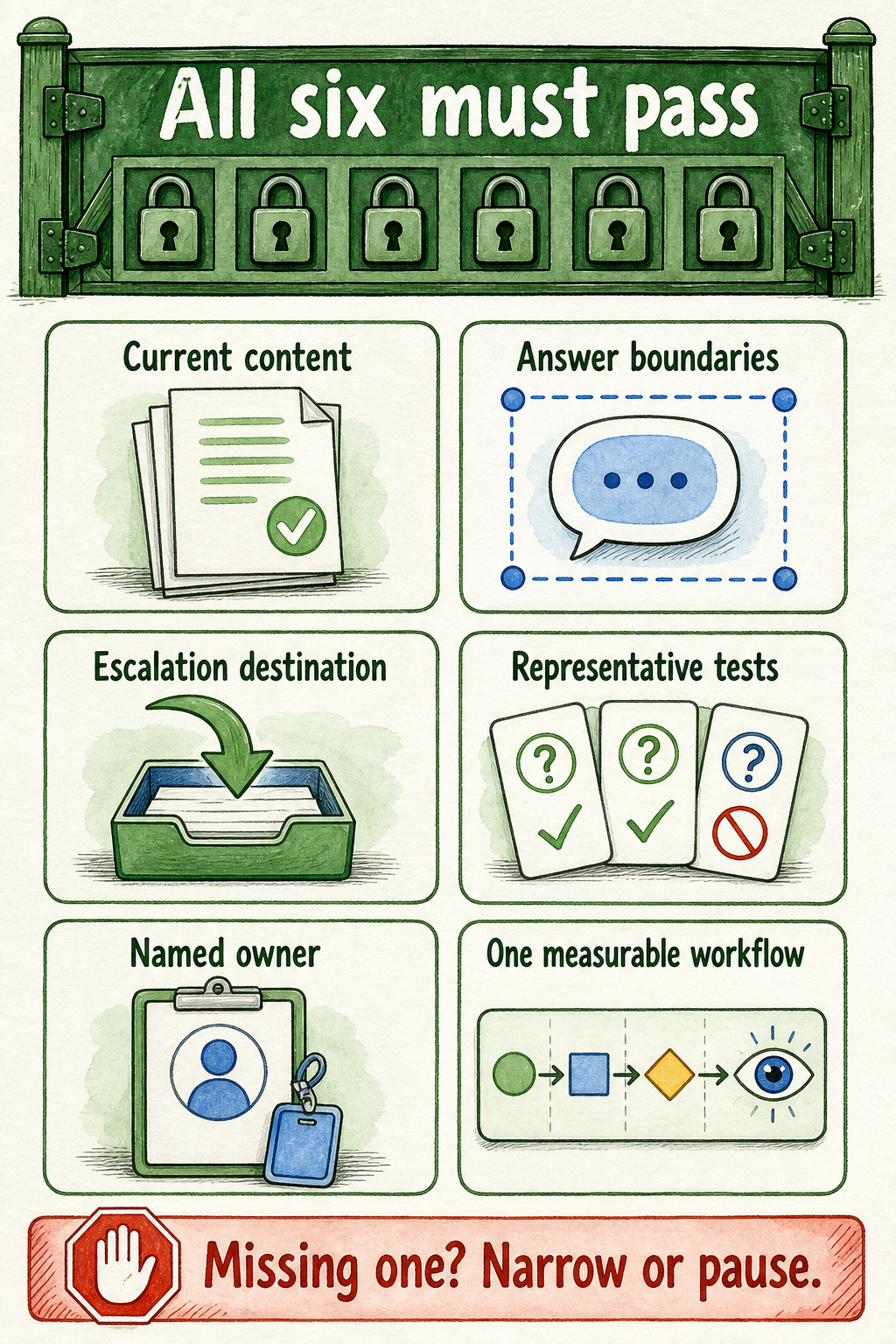
- Current approved content: The source set contains the policies, product details, service information, and instructions the assistant is permitted to use. Conflicting or stale pages are corrected or excluded.
- Answer boundaries: The team defines what the assistant may answer, what it must refuse, and which topics require a person. A source citation cannot create guidance the business has never approved.
- Escalation destination: Every refusal, exception, sensitive request, or failed action has somewhere to go. Name the inbox, queue, phone route, form, or employee responsible for receiving it.
- Representative test questions: Test ordinary questions, vague wording, missing details, contradictions, requests for a person, and cases outside the approved scope. Retest failures after changing sources or rules.
- Named review owner: One person or role owns source updates, conversation review, failure correction, and escalation quality. Shared responsibility without a named owner usually becomes no responsibility.
- One measurable first workflow: Define the visitor job and the observable result. Examples include correctly citing the shipping policy, collecting complete lead details, routing exceptions to the support inbox, or returning an authorized order status.
Treat the gate as fail-fast. If five conditions pass and one does not, narrow or pause the public test.
Suppose a retailer has accurate shipping pages and a useful set of test questions, but no destination for damaged-item exceptions. The assistant can launch with shipping-information answers only if it clearly routes exceptions through an existing contact path. It should not be given a broader returns role until the escalation destination and owner exist.
This gate imposes more discipline than an internal experiment. That is appropriate because public speed without source maintenance, testing, and ownership shifts the cleanup to customers and frontline staff.
Apply the test to one question-heavy website
Consider this illustrative scenario: an ecommerce site receives repeated questions about product fit, shipping times, returns, and order status. The team is considering replacing its generic website chat experience.
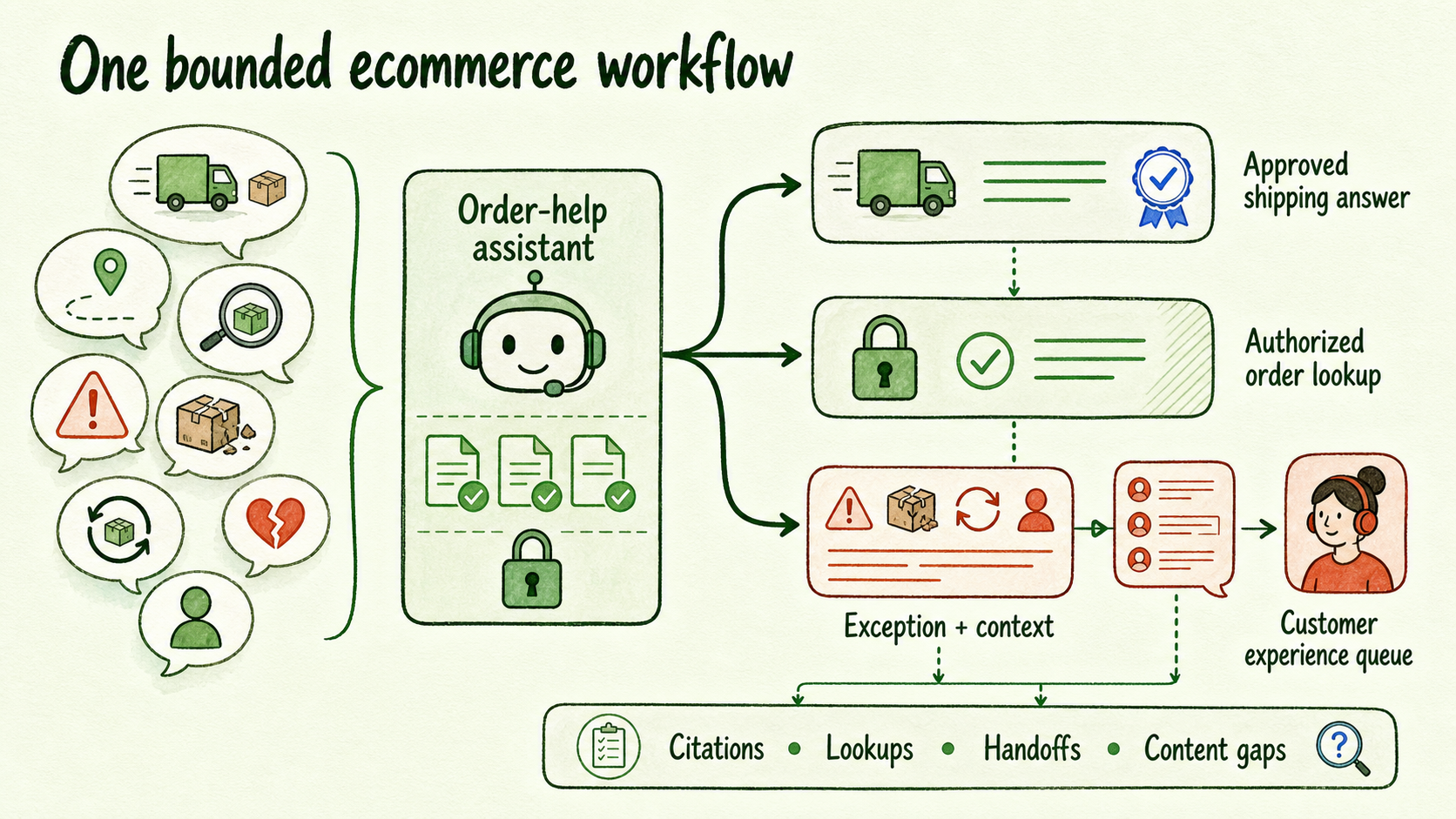
First, classify the jobs. Product and shipping questions are public source-backed answering. Shopify or WooCommerce order lookup is customer workflow execution. Internal product-copy drafting remains internal creation and does not belong in the same public workflow.
Next, apply the readiness gate:
- Approved sources include the current product catalog, shipping policy, return policy, and order-help page.
- The assistant may explain published product and shipping information. It may not approve policy exceptions or promise an unlisted delivery date.
- Order lookup is limited to the minimum information and permission needed for that task.
- Damaged items, disputed delivery, unusual returns, and requests for a person route to the customer experience queue with the conversation context.
- Test questions cover ordinary shipping, incomplete order details, an unsupported exception, a request for a refund, and a direct request for a person.
- The customer experience lead owns weekly conversation review and policy-source updates.
The first-workflow brief can now be written in one sentence: One assistant on the order-help page will answer approved shipping questions, perform an authorized order-status lookup, and route exceptions to the customer experience queue.
Measurement stays close to that job. Track whether supported questions cite the right policy, whether authorized lookups complete, whether exceptions reach the correct queue with useful context, and which questions expose missing or stale content. Do not treat chat volume alone as success.
If this workflow becomes stable, the team can decide whether to add another page or action. It should not add payments, phone service, multiple storefronts, and several languages before the first answer and escalation path works reliably.
Match the product and next action to the chosen path
After the category decision, InsertChat is a relevant fit to examine for governed public answering and customer workflow execution. Its official site states that answers can be restricted to business sources and include citations. It also describes branded website and phone assistance, chat bubbles, inline and full-page experiences, lead capture, booking, payments, Shopify and WooCommerce order checks, ticketing, and human takeover. These capabilities map to the controlled answering, action, and escalation requirements above. InsertChat homepage, verified July 27, 2026
The same official source states support for multiple AI models, bring-your-own-key options, analytics, conversation history, team roles, and password controls. Those features can support model flexibility and human oversight, but they do not replace source maintenance, access design, testing, or a named owner. Current model availability and the suitability of each control for the intended deployment still require verification. InsertChat homepage, verified July 27, 2026
InsertChat should therefore be treated as an evidenced category fit, not an automatic winner. A marketing team could keep its general-purpose tool for open-ended drafting and use InsertChat for approved website answers. An ecommerce team could evaluate it for bounded order lookup and exception handoff. An agency could assess separate branding and workspace controls for client delivery, while leaving service packaging and resale economics to a separate evaluation.
Verification note, July 27, 2026: The official homepage was checked on this date for the capability claims above. Before committing or publishing a comparison, recheck the current homepage, feature pages, comparison pages, pricing and trial terms, security page, privacy notice, and DPA language. Confirm packaging, limits, custom-domain entitlement, integrations, model-provider availability, data handling, retention, and security statements for the intended configuration. If descriptions conflict, obtain written confirmation rather than selecting the more favorable wording.
Apply the same standard to every alternative under consideration. Use current official documentation and record the access date, intended audience, source-grounding behavior, public deployment options, handoff, actions, governance controls, and pricing status. Without that record, a vendor comparison will age faster than the architecture decision it is meant to support.
Your next action depends on the path:
- Retain the current tool if the job is internal creation and employees already have an adequate review process.
- Move to website-assistant evaluation if public answering or execution is required but the team has not selected a platform. Use the existing website-assistant comparison or selection page once its current destination has been confirmed.
- Start a bounded, non-sensitive InsertChat trial if all six readiness conditions pass. Test one assistant, one visitor job, and one controlled page against predefined questions and handoff cases. Review current trial terms before starting.
- Contact InsertChat for enterprise review when security, privacy, procurement, regional deployment, self-hosting, custom integration, or contractual requirements cannot be validated through a self-serve test.
FAQ
Does a website assistant replace support staff or human review?
No. It can handle bounded, documented questions or permitted actions, but people remain responsible for policy exceptions, high-stakes requests, source approval, failed actions, and ongoing review. A useful deployment defines when the assistant stops and who takes over.
What if the business has no approved answer to a common visitor question?
Create or approve the business guidance before asking an assistant to answer. Until then, narrow the topic or route the question to a person. Adding more analytics or changing models cannot repair absent policy.
Should sensitive or regulated workflows begin in a free trial?
Begin with non-sensitive content and a low-risk workflow. Any deployment involving regulated data, strict residency requirements, contractual controls, or material customer consequences needs review by the appropriate security, privacy, legal, and operational owners.
How long should the first test run?
Use enough representative conversations to exercise routine questions, edge cases, refusals, handoffs, and the selected action. Calendar duration alone is a weak completion rule. Finish when the team has reviewed the required cases, corrected failures, and confirmed ownership for continued operation.
Which pricing plan or model should the team choose?
Choose only after defining sources, expected usage, channels, actions, seats, access boundaries, and review needs. Then verify current official pricing, packaging, trial conditions, provider families, and model availability on the decision date. Do not rely on an older comparison or assume that a feature shown on one page is included in every configuration.