TL;DR
- Shortlist an AI receptionist when most calls follow approved information and repeatable actions.
- Shortlist a human answering service when callers regularly need interpretation, exceptions, reassurance, or decisions with meaningful consequences.
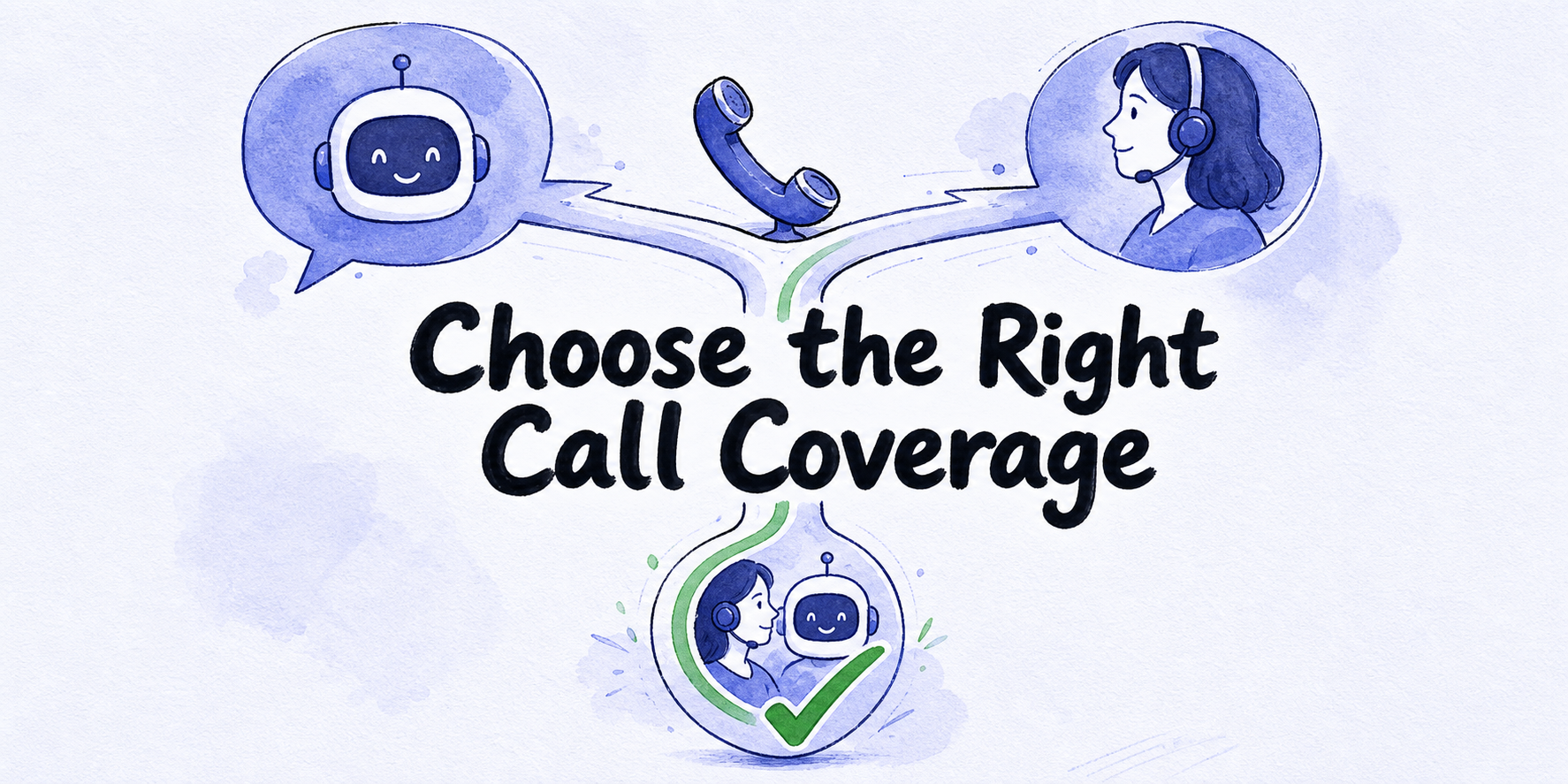
- Choose hybrid coverage when routine and judgment-heavy calls share the same queue. Define exactly when a person enters the call.
- Do not assume a category label guarantees availability, staffing, escalation, or review access. Verify each provider’s current terms.
Two calls arrive after closing. The first caller wants Sunday hours and an available appointment. The second disputes a policy and wants an exception after a service problem. Both calls need an answer, but they do not need the same kind of handler. A useful AI receptionist vs answering service comparison starts at the point where approved information stops being sufficient and judgment begins.
Key Takeaways
- Call behavior is a better selection criterion than labels. Start with what callers ask and what the handler is allowed to do.
- Consistency and judgment solve different problems. Automation can repeat an approved path; a person can interpret ambiguity and consider exceptions.
- Hybrid coverage is an operating rule, not a vague compromise. It needs named call types, observable transfer triggers, and a fallback.
- Always-available answering still creates work for the business. Information, call quality, escalation rules, and failures need owners.
- Provider details can change. Confirm staffing, service levels, availability, pricing, supported phone regions, escalation behavior, and review access directly with every shortlisted vendor.
Compare the Three Coverage Models on the Same Criteria
The fairest comparison uses the same call-flow questions for AI, human, and hybrid coverage. These are category tendencies, not promises about every provider.
| Decision factor | AI receptionist | Human answering service | Hybrid coverage |
|---|---|---|---|
| Call type | Strong candidate for hours, locations, approved FAQs, basic intake, and defined booking paths | Strong candidate for ambiguous requests, complaints, exceptions, and conversations that need interpretation | Separates repeatable calls from calls that cross a defined human boundary |
| Judgment required | Best when approved information or rules are sufficient | Better suited to calls requiring context, discretion, reassurance, or authority, subject to the agent’s training and remit | Reserves judgment for a person while keeping routine handling on the automated path |
| Availability | Can answer without waiting for a scheduled human, subject to provider and system availability | Depends on the provider’s documented staffing hours and service terms | Can keep the routine path open while using a defined fallback when people are unavailable |
| Consistency | Can repeat approved answers and workflows consistently, provided its information and rules are maintained | Responses may adapt to the caller, but consistency depends on training, scripts, and quality controls | Uses automation for repeatability and people for situations where adaptation matters |
| Control | Control comes from approved information, permitted actions, and escalation rules | Control comes from instructions, agent training, permissions, and provider management | Requires both sets of controls plus a clear division of call ownership |
| Escalation risk | A weak handoff can leave a caller repeating details or reaching no one | Escalation quality depends on agent authority, routing, and provider procedures | Adds a transfer point that must preserve context and specify a fallback |
| Review responsibility | Your team must maintain information, inspect failures, and adjust rules | Your team must review service quality and correct instructions with the provider | Your team must review both call handling and the boundary between systems and people |
Read across each row using your actual calls. If approved facts and permitted actions resolve most calls, AI belongs on the shortlist. If many calls require interpretation or authority, human coverage deserves priority. If both patterns occur often, forcing the whole queue into one model creates avoidable risk. A hybrid boundary is usually the more precise category choice.
This comparison does not establish which provider is best. Category labels do not prove how a particular service staffs calls, supports regions, prices usage, records conversations, or handles escalation.
Draw the Human Boundary Where Judgment Begins
A handoff promise is useful only when everyone knows what triggers it. “Transfer difficult calls” leaves too much room for interpretation. Define the boundary with observable conditions.
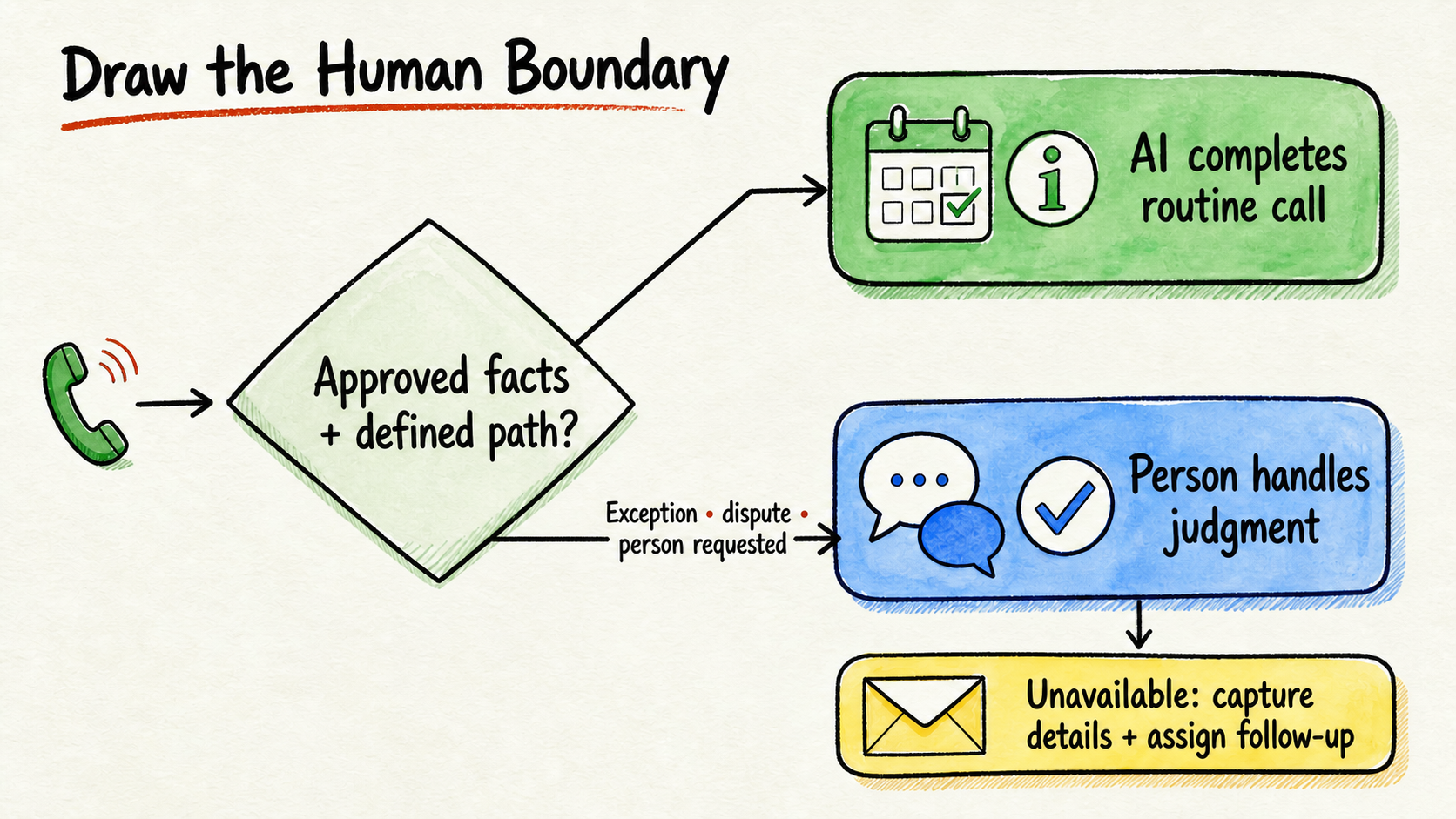
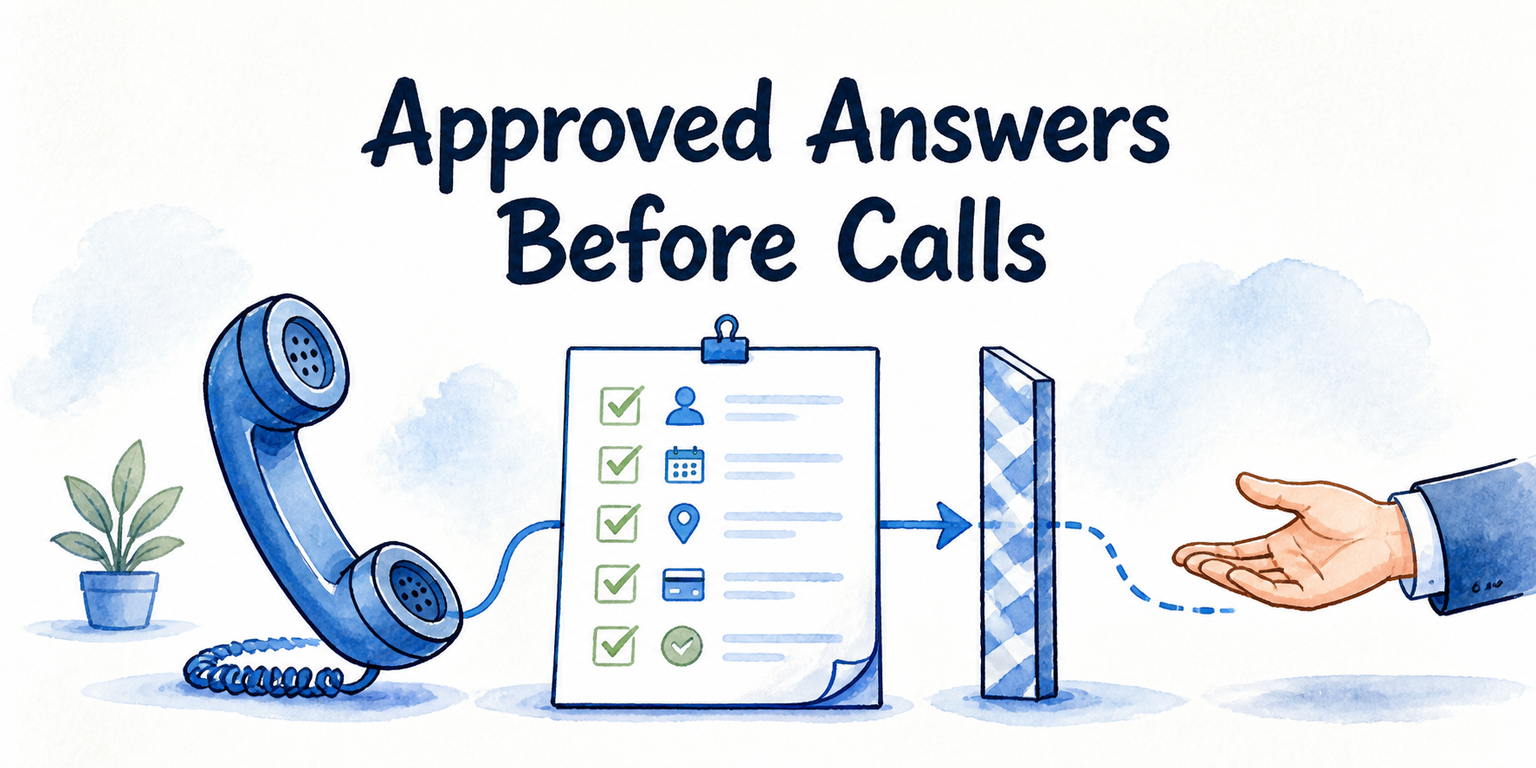
AI may handle calls when the answer appears in approved business information and the requested action follows a defined path. Examples include stating opening hours, collecting contact details, or offering available appointment slots under existing rules.
A person should handle calls that require a policy exception, account-specific discretion, a final approval, sensitive information, conflict resolution, or a decision whose consequences exceed the automated handler’s authority. Hesitation, repeated misunderstanding, or an explicit request for a person can also serve as transfer triggers.
Write the rule in four parts:
- Automated ownership: Name the call types AI may complete.
- Human ownership: Name the calls that always require a person.
- Transfer trigger: Specify the caller request, topic, or failed action that starts handoff.
- Fallback: State what happens if nobody can accept the call, such as taking a message without promising an outcome and assigning follow-up to a named role.
For example: “AI handles business hours, standard service questions, contact capture, and booking within published availability. A person handles complaints, refund requests, policy exceptions, and sensitive account questions. Transfer when the caller requests an exception, disputes an answer, or asks for a person. If no person is available, collect approved details and create a follow-up request for the duty manager.”
Use extra caution for regulated, safety-related, legal, medical, financial, or other high-consequence calls. Qualified advice and sector-specific routing rules cannot be inferred from a general receptionist category.
Apply the Scorecard to a Mixed Call Queue
Consider an illustrative appointment business that receives two common after-hours calls.
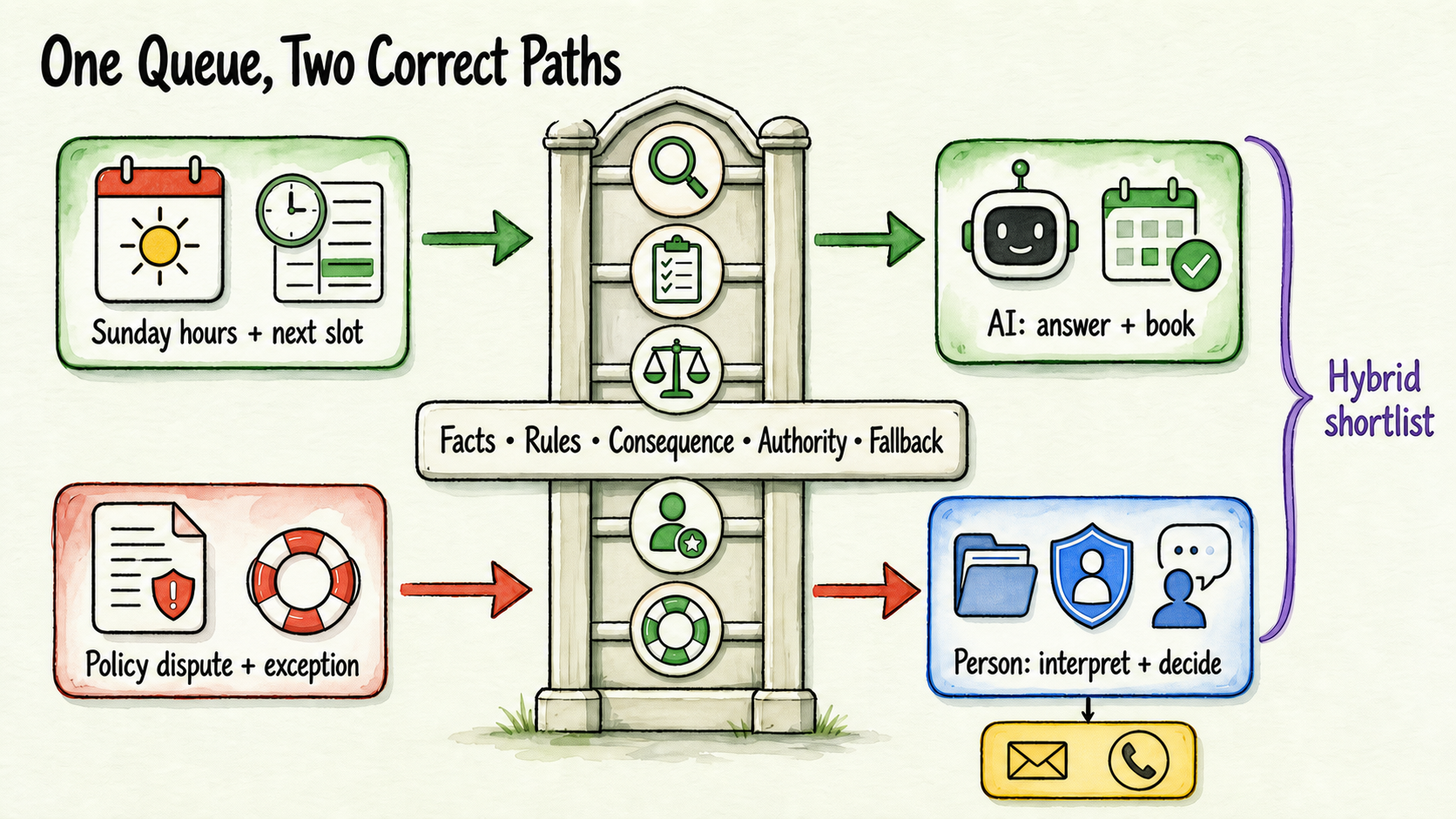
The first caller asks whether the business opens on Sunday and wants the next available appointment. The hours are published, the booking rules are fixed, and available slots can be offered without an exception. This is a repeatable path. An AI receptionist is a plausible category fit because approved information and permitted actions can complete the call.
The second caller says a previous appointment went badly, disputes the stated policy, and asks for an exception. A correct response now depends on context, authority, and the effect on the customer relationship. Repeating the policy may make matters worse. This call crosses the human boundary.
Apply the scorecard in sequence:
- Identify whether approved information can resolve the request.
- Check whether the requested action falls within an existing rule.
- Consider the consequence of misunderstanding or an incorrect action.
- Assign a handler with suitable authority.
- Define the fallback if that handler is unavailable.
The result is a hybrid category shortlist: AI for hours and standard booking, a person for disputes and exceptions, and a controlled fallback when live transfer is unavailable. That result does not prove that the business is ready to deploy a particular system. It defines the operating model vendors must be able to support.
InsertChat describes itself as an AI chat, voice, and phone agent platform for businesses on its current product page. When evaluating it for this kind of hybrid flow, confirm on the current authoritative product page or with the company that the required phone number and live call takeover functions are available for your intended setup, region, and plan. Do not treat a general phone-agent label as proof of those details.
Assign the Work That Continues After Setup
Call coverage does not remove operating responsibility. It changes where that responsibility sits. Before comparing vendors, assign four owners.
| Responsibility | What the owner controls | How the model changes the work |
|---|---|---|
| Approved-information owner | Hours, policies, services, booking rules, and other callable facts | AI requires maintained source information; human services require current instructions; hybrid coverage needs both to agree |
| Service-quality owner | Whether calls are handled accurately and appropriately | Reviews automated conversations, human service quality, or both |
| Escalation owner | Transfer triggers, destinations, permissions, and fallback | Especially important for hybrid coverage because failures can occur at the boundary |
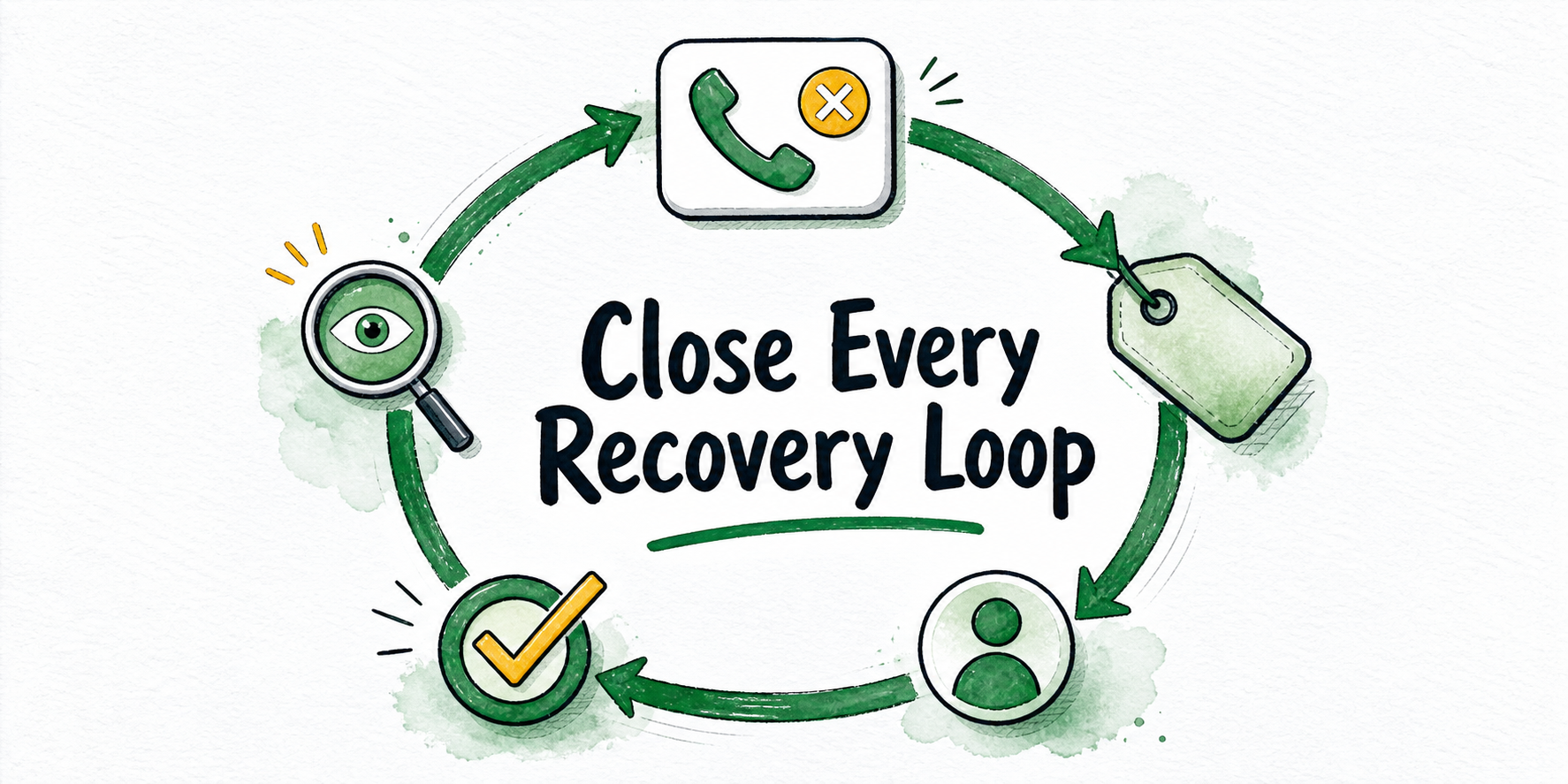
| Failure-review owner | Incorrect answers, missed transfers, dropped context, and follow-up | Determines what failed and whether information, instructions, routing, or staffing must change |
For AI coverage, operating oversight focuses on the information and rules used to answer. Human coverage shifts more daily execution to agents, but your business still owns the accuracy of instructions and the authority agents receive. Hybrid coverage creates an additional question: who reviews a call that was handled correctly at first but transferred poorly?
Review effort should reflect call consequence. A routine hours error and a mishandled sensitive complaint do not carry the same risk. The exact review schedule depends on call volume, provider terms, and the decisions handlers are allowed to make.
Validate the Model Before Choosing a Vendor
Once the category and boundary are written, vendor conversations become more concrete. Ask questions that test the intended call flow:
- Which of our named call types can your service complete without assistance?
- Who handles ambiguity, complaints, exceptions, and requests for a person?
- What exact event triggers escalation, and what context moves with the call?
- What happens when the intended human recipient is unavailable?
- Which calls, transcripts, outcomes, or service records can our team review?
- Who is responsible for updating approved information and escalation instructions?
- What availability, staffing, response, and service commitments are documented today?
- Which pricing conditions, limits, phone regions, or transfer charges affect this call flow?
Require current written answers for every shortlisted provider. Staffing models, service levels, prices, availability, supported regions, and escalation processes can differ and can change. A sales demonstration is not a substitute for the terms that will govern your account.
Then produce two short outputs:
Category shortlist: AI, human, or hybrid.
Boundary statement: “Shortlist [category]. [Handler] owns [routine call types]. A person takes over when [observable trigger]. If unavailable, [fallback]. [Role] reviews [failure record or outcome].”
That statement is enough to keep feature and price discussions tied to the calls you need covered. If your shortlist requires AI phone handling plus human takeover, verify that InsertChat’s current phone capabilities and conditions match the boundary, then consider its low-friction Start for Free path. If the model depends primarily on staffed human judgment, take the same boundary statement to human answering-service providers and compare their documented terms.
FAQ
Can an AI receptionist replace a human answering service?
It can take ownership of defined, repeatable call paths when approved information and permitted actions are sufficient. It should not be assumed to replace human judgment, exception authority, sensitive handling, or qualified professional review. Many businesses will reach a narrower AI or hybrid decision rather than complete replacement.
When is hybrid coverage preferable?
Hybrid coverage is useful when routine and judgment-heavy calls both occur often enough to need a planned path. It works only when the transfer trigger, human destination, shared context, and unavailable-person fallback are explicit.
Should availability decide between automated and human answering?
Availability matters, but it should not decide the model by itself. A call can be answered immediately and still be mishandled if the handler lacks suitable information or authority. Compare availability alongside call type, consequence, escalation, and review responsibility.
What should I verify before comparing prices?
Confirm which calls the quoted service covers, who answers them, when usage or transfer charges apply, what staffing or availability commitments exist, which phone regions are supported, and what review access is included. Without that scope, two prices may represent different operating models.
Who owns a mistake after a failed handoff?
Assign that responsibility before launch. Your internal escalation owner should have a clear route for reviewing the original response, transfer event, destination, retained context, and follow-up. Provider responsibilities should also be documented in current service terms.