TL;DR
- Start with FAQ and service discovery when the local business has approved answers, service pages, hours, service areas, and a clear handoff path.
- Use local SEO content support for drafting and organizing descriptions, posts, Q&A, and LocalBusiness content, not for ranking promises.
- Keep lead triage bounded to intake and routing. Staff should own price, availability, advice, complaints, emergencies, and final commitments.
- Use extra caution for healthcare, legal, finance, insurance, real estate, childcare, and safety-sensitive services.
- Ask validation questions before you scope the offer so you can sell, narrow, or pause with a clear reason.
If you searched for ai chatbots for local businesses reseller opportunities, the real decision is not whether local businesses could use chat. It is which package is simple enough for a local owner to understand, specific enough for you to implement, and bounded enough that one bad answer does not create a client problem.
Key Takeaways
- The easiest local business chatbot packages are built from content the owner already trusts: FAQs, services, policies, hours, location, service area, and contact paths.
- FAQ and service discovery is usually the cleanest first offer because it answers repeat questions and routes edge cases to staff.
- Local SEO content support should be framed as drafting, source cleanup, and owner review, not as proof of better rankings.
- Lead triage should collect basic context and hand off anything involving price, availability, regulated advice, safety, complaints, or binding commitments.
- Sensitive local verticals may still fit basic information and intake packages, but advice-heavy workflows need tighter review or a pause.
Choose Local Business Packages by Content Readiness and Risk
A local business is a better first chatbot client when its answers already exist somewhere reliable. Look for published services, clear hours, service areas, location details, intake steps, refund or cancellation policies, staff contact paths, and a small set of questions the owner hears every week.
Select the Package by Readiness and Risk
| Package | Source requirement | Safe scope | Boundary | |
|---|---|---|---|---|
| Low risk | FAQ and service discovery | Published and owner-approved | Repeated factual questions | Escalate anything outside scope |
| Moderate risk | Local SEO content support | Verified local business facts | Drafting and organization | No ranking promises |
| Controlled risk | Lead triage | Approved intake fields and routing | Collect and route | No final price or availability |
| High risk | Advice-sensitive request | Qualified human review | Basic information only | Do not advise or commit |
That makes the first fit rule simple: sell the package that uses the strongest source content and carries the least answer risk.
| Local business state | Better first package | Why it fits |
|---|---|---|
| Has clear service pages, hours, locations, and FAQs | FAQ and service discovery | The assistant can answer from approved business information |
| Has weak local descriptions but owner can review content | Local SEO content support | The work is drafting and organization, not autonomous advice |
| Gets many vague inquiries but staff closes every job | Bounded lead triage | The assistant collects context and routes the lead |
| Has sparse content, changing prices, or unclear policies | Narrow scope or pause | The source material is not ready enough |
| Gives regulated, safety, legal, medical, or financial guidance | Basic intake only, or pause | Wrong answers can create higher exposure |
Chat With is relevant to this package choice because its stated positioning is building branded AI assistants for content-rich websites with grounded answers, lead capture, handoff, and workflow automation. That wording matters. The best local business package is not a vague promise that the assistant will run the front desk. It is a source-based assistant with a defined job and a handoff path.
A landscaper with separate pages for lawn care, seasonal cleanup, service areas, business hours, and request steps is easier to serve than a contractor whose website says only "call for all jobs." The first business gives you content to ground answers. The second business may still be a prospect, but the first paid task may be cleaning up service content before launching a customer-facing assistant.
Package 1: FAQ and Service Discovery Assistant
The lowest-complexity local business offer is usually an FAQ and service discovery assistant. It helps visitors understand what the business does, which service might fit their situation, what areas are covered, what hours apply, and what the next contact step is.
A strong package sentence sounds like this: "We will build a website assistant that answers your repeated service questions from approved content, helps visitors find the right service page, collects basic inquiry details, and hands off anything outside scope to your team."
Keep the scope plain:
- Answer common questions about services, hours, locations, service areas, preparation steps, and contact options.
- Explain differences between services using owner-approved language.
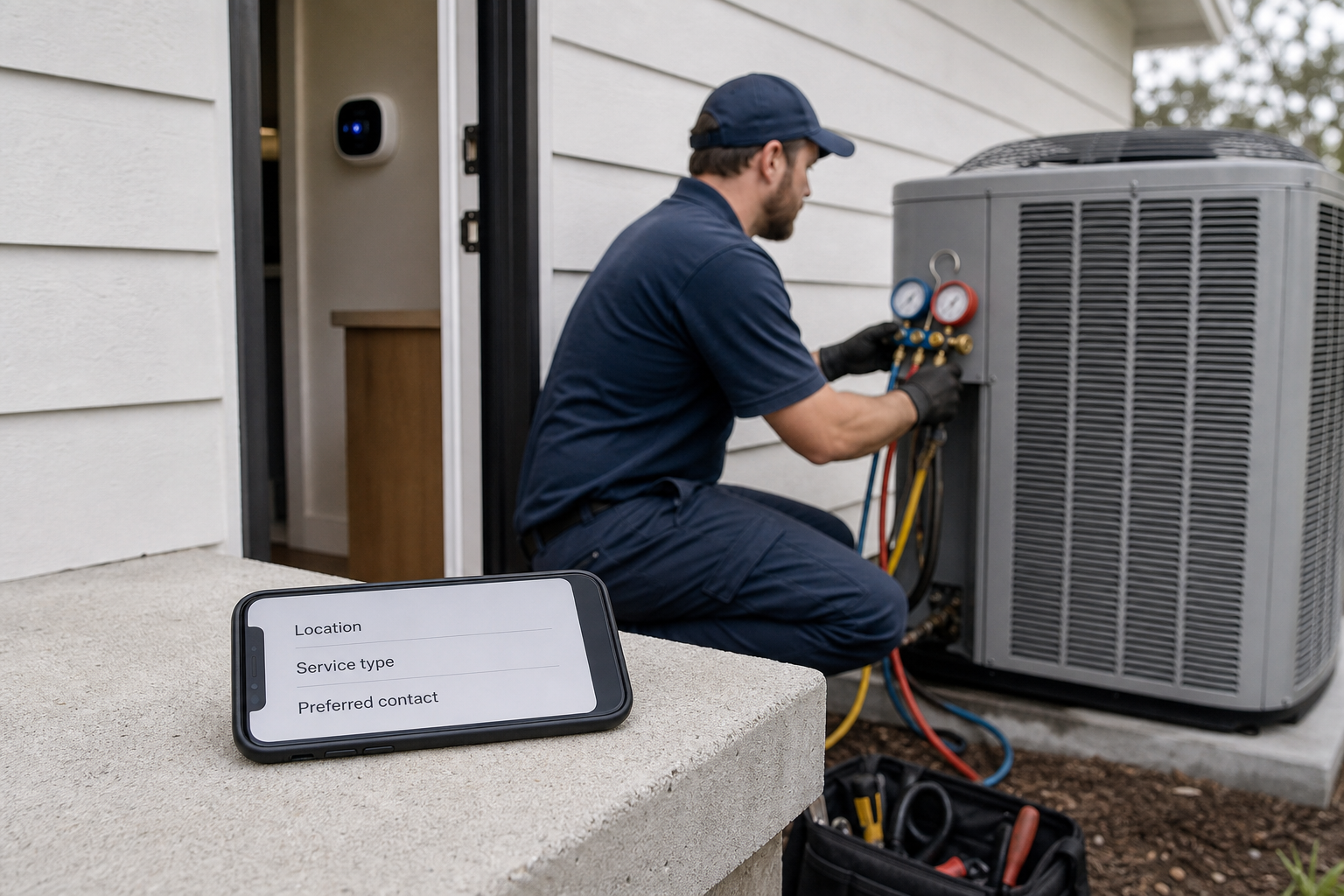
- Ask a few discovery questions, such as location, service type, urgency, and preferred contact method.
- Route unclear, sensitive, or final-decision questions to staff.
- Flag missing source content before launch.
This package fits businesses such as cleaning services, salons, repair shops, gyms, studios, landscapers, pest control companies, local consultants, and specialty retailers when the answers are not heavily regulated and the owner can approve the wording.
It does not fit when the owner expects the assistant to diagnose a problem, quote a final price, confirm exact availability, decide eligibility, or complete a booking or CRM workflow without verified setup details. You can mention appointment interest as an intake field, but do not turn this package into exact booking configuration unless the client and platform evidence support that scope.
Package 2: Local SEO Content Support Without Ranking Promises
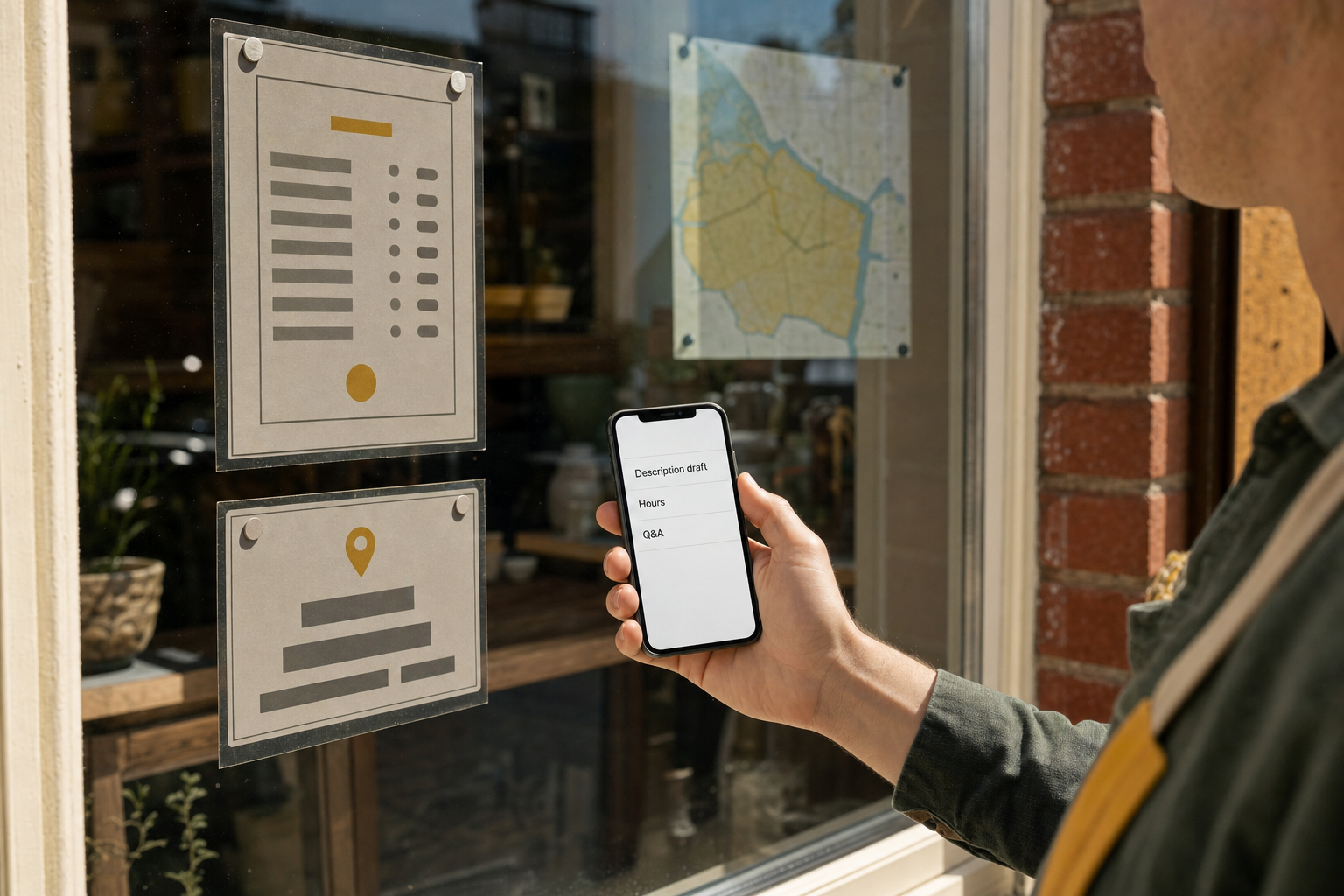
Local business owners often need better descriptions, service explanations, Google Business Profile content, Q&A drafts, and location-specific wording. That can be a practical package for a reseller, but the boundary is important: sell content support, not ranking guarantees.

InsertChat's Local SEO Description Generator supports location-optimized business descriptions for Google Business Profile, directories, and local landing pages. The Google Business Profile Generator supports descriptions, posts, and Q&A content. The site context also includes SEO checklist and JSON-LD schema tools, including local business content structure ideas.
Use that context as workflow evidence. A local SEO content support package can include:
- Drafting business descriptions for owner review.
- Turning service lists into clearer service descriptions.
- Drafting Google Business Profile posts or Q&A entries.
- Identifying missing source content the assistant would need later.
- Organizing local landing page facts, such as service area, business category, hours, and contact steps.
- Preparing LocalBusiness structured content ideas for review by the person responsible for the website.
A good local owner conversation might sound like this: "We can help you turn your service list, city coverage, and common questions into draft descriptions and Q&A content. You approve the wording before it goes live, and we do not treat this as a promise of Maps or organic ranking improvement."
That caveat protects the offer. The supplied context supports drafting and organization. It does not support claims about better rankings, higher calls, more traffic, or map pack movement. If the buyer is an SEO agency rather than a local owner, the more specific handoff is AI chatbots for SEO agencies, which owns the agency workflow angle.
Set Lead Triage Boundaries Before the Assistant Talks to Prospects
Lead triage is useful for local businesses because many inquiries arrive with missing details. The assistant can collect enough context for staff to follow up, but it should not make final commitments unless the workflow has been explicitly verified.
Use this boundary table before you propose the package:
| Assistant action | Usually acceptable | Needs staff handoff |
|---|---|---|
| Answer | Hours, location, service area, basic service descriptions, preparation steps from approved content | Advice, diagnosis, legal terms, safety instructions, pricing exceptions |
| Collect | Name, contact method, service needed, location, urgency, preferred follow-up window | Payment details, sensitive health or financial details, confidential case facts |
| Route | Send inquiry to owner or staff queue, identify urgency level, suggest next contact step | Emergency handling, final scheduling, complaints, refund disputes |
| Decline or escalate | Questions outside source content, unclear requests, high-risk topics | Any binding promise or regulated decision |
A bounded lead triage assistant for a home services business might ask: What service do you need? What city are you in? Is this urgent? How should the team contact you? Then it routes the inquiry to staff. It should not say the job will cost a specific amount, guarantee same-day availability, or tell the visitor a repair is safe to delay.
This package is easiest to explain when the owner already has a clear intake path. If every inquiry requires judgment from a senior employee, the assistant can still collect basic details, but the promise should be narrower: cleaner handoff notes and clearer routing. Avoid turning it into a full CRM, calendar, payment, or quoting setup in this article's scope.
Use Extra Caution in Advice-Sensitive Local Verticals
Some local businesses can use a chatbot safely for basic information but need tight limits around advice. The risk is not the business category by itself. The risk is the answer type.

Use extra caution with:
- Healthcare, wellness, dental, therapy, and medical-adjacent services.
- Legal services, tax, accounting, finance, lending, and insurance.
- Real estate, property management, and tenant or contract issues.
- Childcare, education, elder care, and care-related services.
- Home repair, electrical, plumbing, roofing, pest control, and other safety-sensitive work.
- Any business where eligibility, compliance, diagnosis, emergency handling, or financial outcome depends on the answer.
For these verticals, basic information may still be appropriate: hours, location, service categories, insurance accepted if published and reviewed, intake steps, and how to contact staff. The assistant should not interpret legal rights, diagnose symptoms, recommend treatment, make financial decisions, assess insurance coverage, give safety instructions beyond approved source content, or decide whether a situation is urgent.
The InsertChat terms context covers source management, workspace access, customer-facing deployments, data handling, and account responsibilities. The practical reseller lesson is to avoid writing a broad assistant scope that makes you responsible for decisions the local business should review. Keep the assistant grounded in approved content and route sensitive topics to the business owner or qualified staff.
Ask Local Owners These Validation Questions Before You Scope the Offer
Before you sell chatbots to local businesses, use validation questions to decide the package. These are not broad market research questions. They are scoping questions that tell you what the assistant can safely answer, collect, and route.
Six Checks Before You Scope the Offer
- Find repetition
List the questions visitors, callers, and social leads ask every week.
- Verify answers
Separate owner-approved answers from answers that still require judgment.
- Audit sources
Confirm service pages, hours, areas, descriptions, and contact steps are current.
- Mark change risk
Flag answers that vary by season, staff availability, price, location, or policy.
- Set routing
Define the details staff need and which inquiries are urgent or human-only.
- Assign ownership
Name the person who reviews wording before launch and after changes.
Ask about repeat questions:
- What questions do visitors, callers, and social media leads ask every week?
- Which of those questions already have approved answers?
- Which answers change by season, staff availability, price, location, or policy?
Ask about source content:
- Which pages should the assistant trust?
- Are service descriptions current?
- Are hours, service areas, and contact steps accurate everywhere?
- Who approves wording before anything is customer-facing?
Ask about lead handling:
- What details does staff need before follow-up?
- Which inquiries should be treated as urgent?
- Which questions should always go to a person?
- What should the assistant say when it cannot answer?
Ask about local SEO content support:
- Which descriptions are rewritten often?
- Does the owner need Google Business Profile descriptions, posts, or Q&A drafts?
- Who reviews local content before it is published?
- Are there locations, services, or categories that should not be mentioned?
Ask about risk:
- Could a wrong answer create a legal, health, safety, financial, or compliance problem?
- Are there topics the assistant must never answer?
- Are there customer complaints or refund issues that should bypass the assistant?
The output should be one of four decisions: sell the FAQ and service discovery package, sell local SEO content support, narrow to lead triage only, or pause until source content and owner review are ready.
Worked Scenario: Pick One Package for a Local Service Business
Suppose you are speaking with a local HVAC company. The owner has service pages for repair, maintenance, installation, and indoor air quality. The site lists hours, service areas, phone number, financing language, and a contact form. The office gets repeated questions about service area, emergency availability, maintenance plans, brands serviced, and what information to provide before a technician calls back.
The owner also asks whether an AI assistant can "handle leads and help with local SEO."
Use the package selector instead of saying yes to everything.
First, content readiness is decent. The business has service pages, location information, and repeat questions. That points to an FAQ and service discovery assistant.
Second, lead triage is useful but needs boundaries. The assistant can collect name, contact details, city, system type, issue category, urgency, and preferred follow-up window. It should hand off pricing, safety questions, emergency judgment, warranty exceptions, financing details, and exact appointment availability.
Third, local SEO content support can be a later add-on. The reseller can help draft improved service descriptions, Google Business Profile Q&A, and post ideas for owner review. The reseller should not promise ranking gains or map placement.
The first proposal should be FAQ plus bounded lead triage. The second phase can be local content support after the owner confirms who reviews descriptions and which service claims are approved. That sequence keeps the first package easier to explain, easier to test, and less exposed to unsupported promises.
Hand Off Broader Reseller Decisions to the Cluster
Keep this page narrow when you are planning your own service line. Local business packages are about owner-approved answers, local service content, Google Business Profile support ideas, and bounded inquiry routing.
If your buyer is an SEO agency packaging chatbot workflows for its own clients, use the SEO-specific support page already linked above. If your buyer owns campaign planning, segment prompts, copy review, or email workflow handoffs, use the email-agency page on AI chatbots for email marketing agencies.
For a local business owner conversation, the next action is simpler: choose one package, name the source content, define the handoff rules, and ask who approves answers before launch.
FAQ
What is the best first package for an ai chatbots for local businesses reseller?
The best first package is usually FAQ and service discovery. It is easy to explain, uses existing business content, and gives the owner a clear review job. It works best when the business already has approved answers for services, hours, locations, service areas, policies, and contact steps.
Can I sell chatbots to local businesses for local SEO?
Yes, but frame the offer as local SEO content support, not ranking improvement. You can help draft and organize business descriptions, Google Business Profile content, Q&A entries, service descriptions, and local source material for owner review. Do not claim ranking gains unless you have separate evidence and a broader SEO scope that supports that claim.
What should a local business chatbot not answer?
It should not answer questions that require final price, exact availability, legal advice, medical advice, financial advice, insurance interpretation, safety judgment, emergency handling, refund disputes, complaints, or binding service commitments unless the business has approved that workflow and review path. When in doubt, the assistant should hand off to staff.
Which local businesses need extra caution?
Healthcare, legal, finance, insurance, real estate, childcare, care services, and safety-sensitive home services need tighter scope. Many can still use basic information, intake, and handoff. The risky part is advice, eligibility, diagnosis, compliance interpretation, or anything that could create harm if wrong.
What should I ask a local owner before proposing a chatbot?
Ask what questions customers repeat, which answers are already approved, what content the assistant should trust, who reviews changes, what details staff need for follow-up, which topics always go to a person, and what a wrong answer could affect. Those answers tell you whether to sell FAQ support, local content support, bounded lead triage, or pause until the business is ready.